At a glance
- The blue comes from suspended aluminium hydroxide colloids in the water, which scatter light in a process called Rayleigh scattering.[1]
- The winter illumination season runs from October 24, 2025 to April 22, 2026, with the lighting on until 9:00 PM.[2]
- Dohoku Bus route 39 takes about 20 minutes from Biei Station, and 60 to 70 minutes from Asahikawa.[3]
- Dead Japanese larch and white birch trees stand in the pond, a dry patch of forest that now looks like a sculpture garden.[4]
- Stops on the Colored Hokkaido day tour include Patchwork Road, Shirogane Blue Pond, Shikisai No Oka, a local restaurant and Farm Tomita.[5]
- Top choice Furano, Biei and Blue Pond from US$48 Duration1 day[5]Rating4.56 from 122 reviews[5]Guide languagesEnglish, Chinese, Japanese, Korean[5]CancellationCancel up to 24 hours in advance[5] Check availability
- Asahiyama Zoo and Blue Pond from US$48 Duration9 hours - 1 day[6]Rating4.49 from 47 reviews[6]Guide languagesChinese, English[6]CancellationCancel up to 24 hours in advance[6] See this tour
- Biei Best 5 Must-Visit Tour from US$60 Duration10 - 10.5 hours[7]Rating4.72 from 77 reviews[7]Guide languagesEnglish, Korean, Chinese[7]CancellationCancel up to 24 hours in advance[7] See this tour
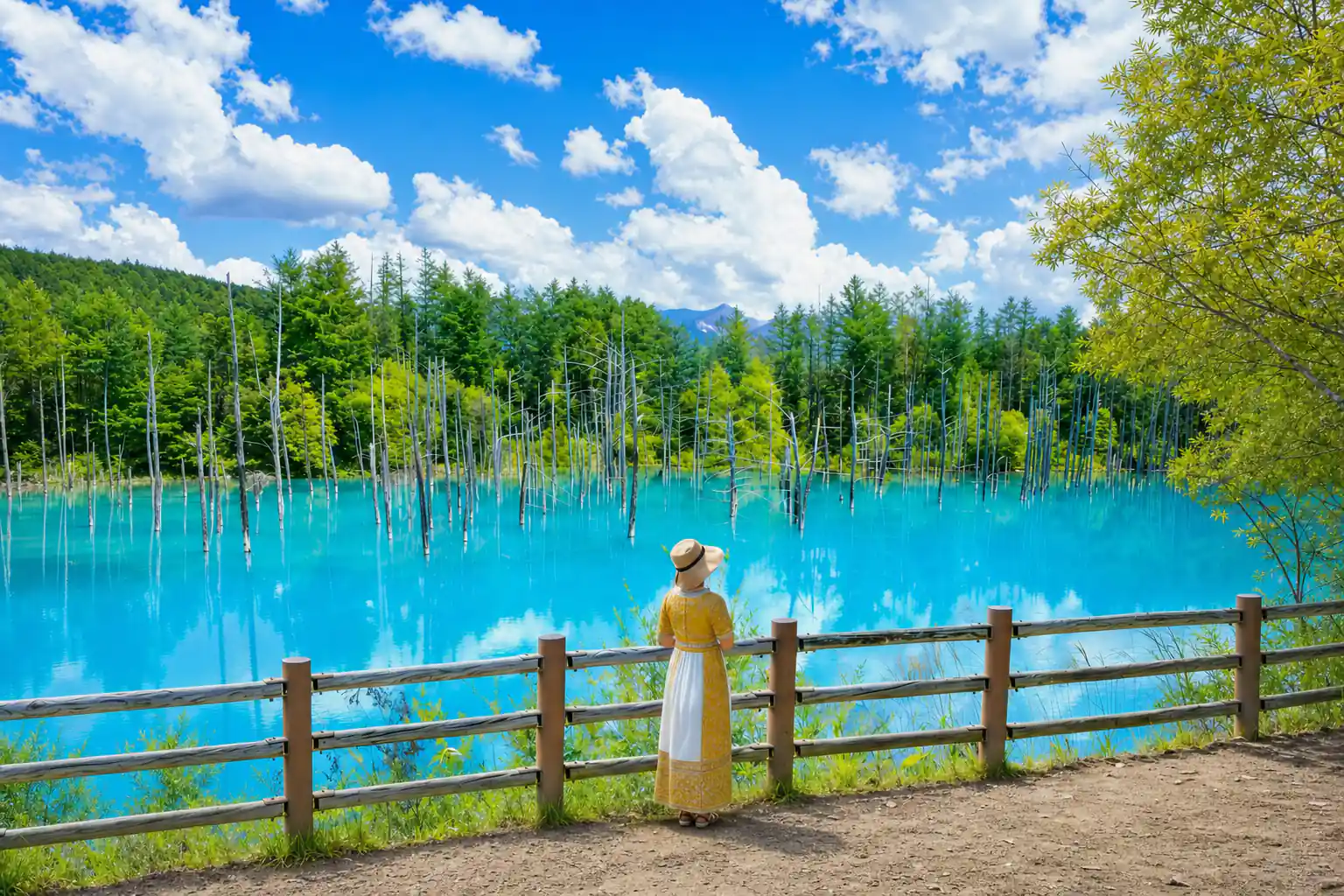
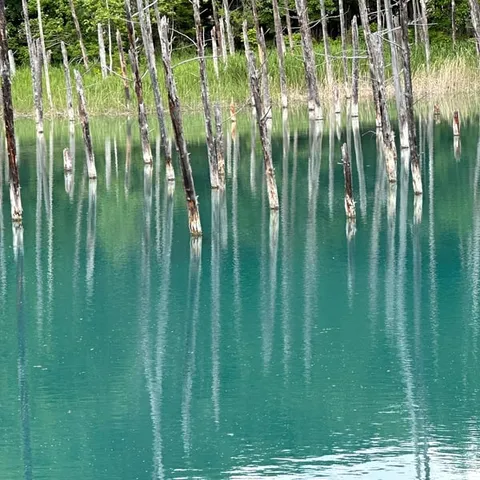
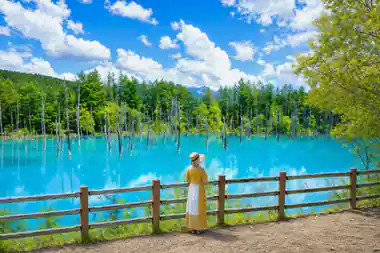
One of the most haunting elements of the scene is the ghost-like silhouettes of dead Japanese larch and white birch trees rising from the water. What was once a dry patch of forest now stands like nature’s own sculpture garden, fragile and quiet against the gentle lap of blue water.
Is the Blue Pond worth a day of your trip?
Booking and logistics
Seasons, weather, getting there
- Lavender at Farm Tomita's Traditional Lavender Field blooms from late June to late July[8]
- Biei has a cold continental climate with warm summers and freezing winters[9]
- Winter illumination lighting runs until 9:00 PM, from October 24, 2025 to April 22, 2026[2]
- Dohoku Bus route 39 takes about 20 minutes from Biei Station to the pond[3]
Why the Shirogane Blue Pond looks blue
The brilliant colour of the Shirogane Blue Pond comes from suspended aluminium hydroxide colloids in the water, which scatter blue light in a process called Rayleigh scattering.[1] The pond was never designed as a beauty spot. Erosion control dams built along the Biei River in 1988, to protect against mudflows from the active volcano Tokachidake, created the pool that photographers now travel across Hokkaido to see.[10] Nothing about it is fixed either, since the shade you get on the day depends on the light, the weather and how much of the sky is caught at the edges.
From the gravel path the water reads as opaque rather than glassy, an even milky turquoise that shifts with the angle of the light and the time of year. Dead Japanese larch and white birch trees stand upright in the pond, a dry patch of forest that now looks like a sculpture garden.[4] Above the valley, Tokachidake stands at 2,077 m (6,814 ft) and last erupted in 2004, so the whole scene is young in geological terms.[11] A wide lens takes in the sweep of trunks and water, but tighter compositions, one tree against the blue, often hold up better months later. Walk the full length of the path before you settle on a spot, because the view changes with every few steps.
Expect company. This is a compact site with a viewing platform and a short path along the water, and at busy times the rail fills with phones and tripods. Patience and a slightly different vantage point do more for your pictures than any new piece of equipment. If your schedule allows, come twice: once in the middle of the day to learn the layout, and once early or late when the light is gentler and the colour is less flat.
Light, seasons and the best months
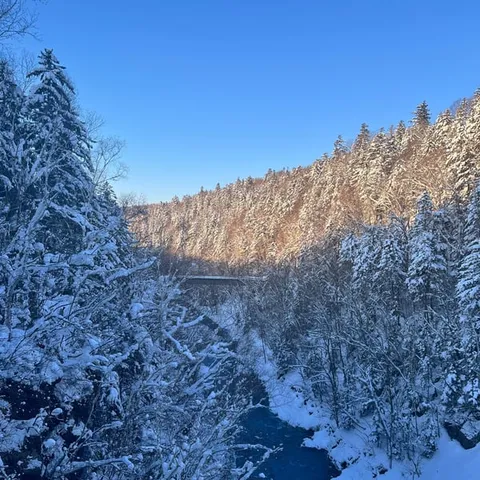
The Blue Pond winter illumination season runs from October 24, 2025 to April 22, 2026, and the lighting stays on until 9:00 PM. Start times move with the sunset: 5:00 PM in October, November and January, 4:30 PM in December, 5:30 PM in February, 6:00 PM in March and 6:30 PM in April.[2] Arrive before the switch-on and find your place along the rail, then let your eyes adjust. The blue reads differently once artificial light joins it, and a long exposure turns the water into something closer to ink.
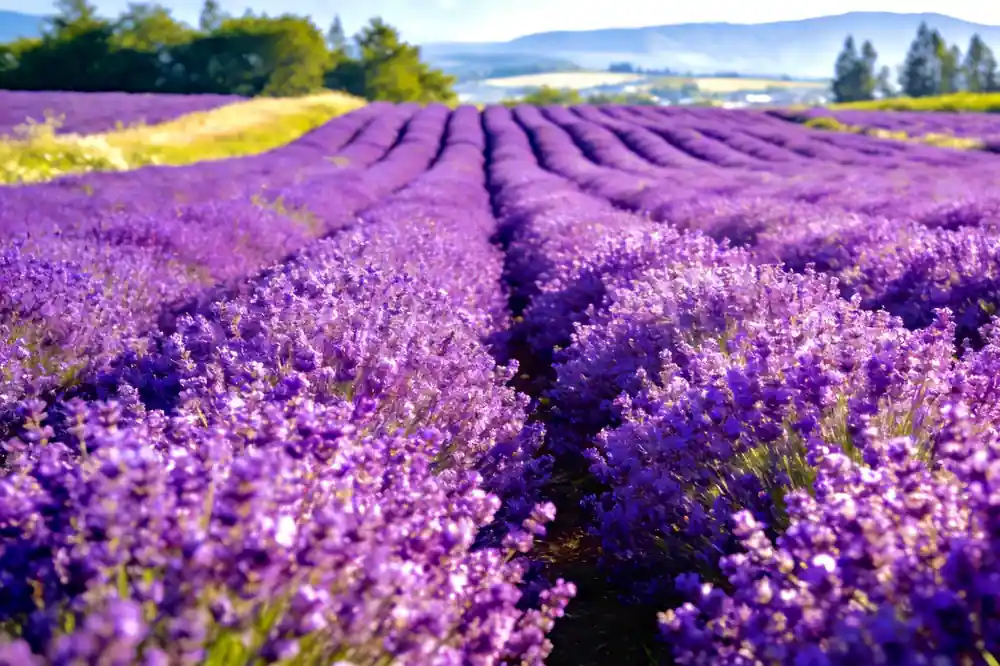
Flower photographers should aim at Farm Tomita's Traditional Lavender Field, where lavender blooms from late June to late July and the best viewing season runs from early to mid-July.[8] A Shirogane Blue Pond sunset is less about a clock and more about patience: in summer the light lingers, so stay late and let the day visitors thin out. Shirogane Blue Pond autumn trips are a quieter proposition again, with the flower fields finished, the hills changing and winter still ahead. Biei has a cold continental climate with warm summers and freezing winters,[9] so the practical shooting window changes a great deal across the year. Build the trip around one season rather than trying to catch all of them.
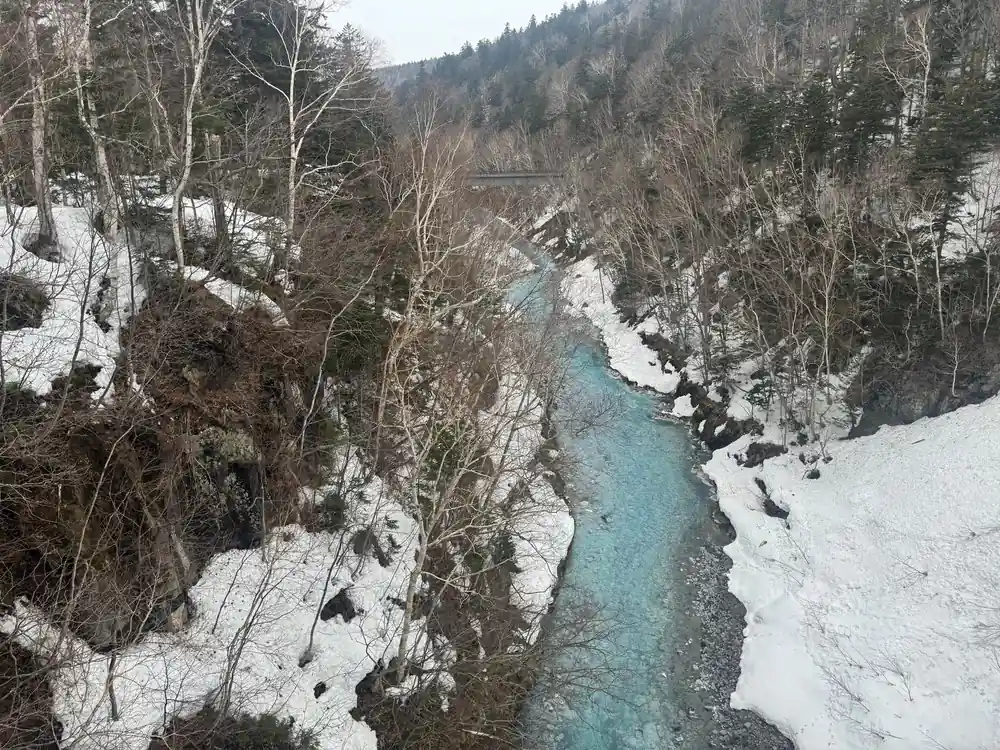
Dead larch and birch trunks standing in the blue water of the pond.
Getting to the pond without a car
Public transport reaches the Blue Pond, but it rewards planning. From Biei Station the pond is about 20 minutes by Dohoku Bus route 39, and from Sapporo the journey is about 1 hour 25 minutes by JR Limited Express to Asahikawa plus 60 to 70 minutes by bus.[3] That makes a long day built around timetables, and it leaves little room for waiting out a shower or lingering at a viewpoint you like.
If you are coming from Sapporo, treat the trip as a full day rather than a quick excursion, and check the timetable for your own dates before you set out. Many visitors skip the connections and join a coach tour instead, which puts the driving, the parking and the timing in someone else's hands. In winter that trade is easy to justify, since you get a warm seat and your attention stays on the landscape rather than on a bus map and a phone battery that is draining in the cold.
Camera settings for a blue that stays blue
The pond is a bright, saturated subject, and cameras love to overexpose it. Meter for the water rather than the sky, watch the highlight warning, and dial in a little negative exposure compensation when the turquoise starts to bleach out. A polarising filter helps control glare on wet rock and foliage, and a graduated filter or a bracketed sequence is useful when the sky is far brighter than the water. Shoot raw, because the colour has more range than a compressed file will hold.
Composition here is mostly about the trees. The vertical trunks give you natural leading lines, and their dark silhouettes read strongly against the pale water, so look for gaps that separate one trunk from the mass. Start with the classic wide view, then work along the path for framing branches and reflections. Early morning and late afternoon give softer contrast than the middle of the day, and mist or light rain adds depth rather than ruining the shot, provided you keep a cloth handy and check the front element often.
from US$48
The Colored Hokkaido: Furano Flower and Biei Blue Pond tour from Sapporo starts from US$48 and is rated 4.56 from 122 reviews.[5]
What to wear and what to carry
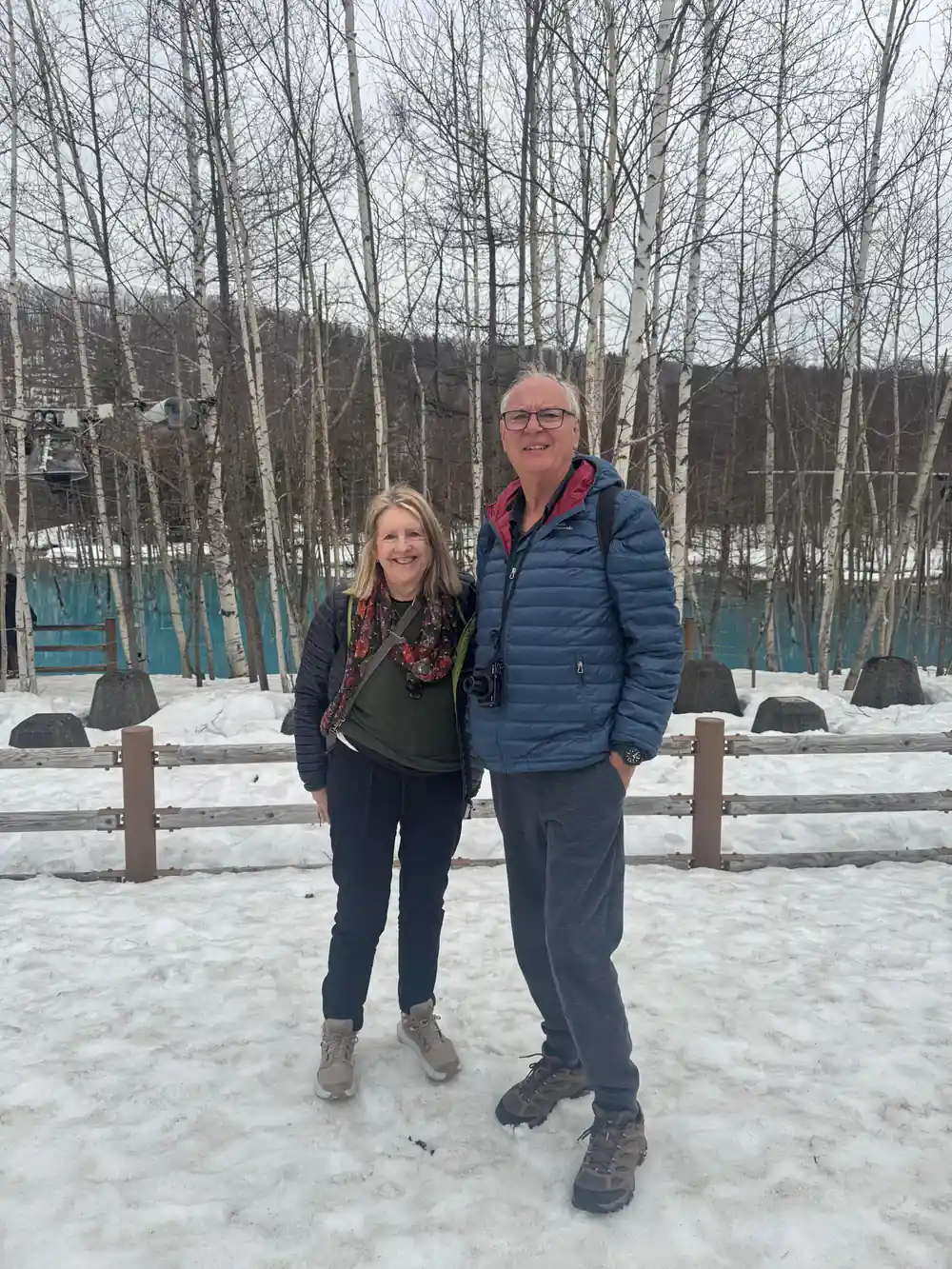
Biei has a cold continental climate with warm summers and freezing winters,[9] so your kit list depends heavily on the month. In summer a light layer, a hat and insect repellent are usually enough, and the long daylight hours let you shoot into the evening. In winter, treat it as a proper cold-weather assignment: insulated boots with grip, gloves thin enough to work the controls, a spare battery kept inside your jacket, and a cloth for the condensation that forms when you step back into a warm bus or car.
Whatever the season, the ground around the pond can be wet and the paths can be slippery, so footwear matters more than it sounds. A tripod earns its place at illumination time, and a plastic bag keeps spray off your lens if you also visit the waterfalls nearby. Bring water and something to eat, because the immediate area is not somewhere to count on finding a cafe at the moment you want one, and allow more time than you think you need. This is a place that rewards standing still.
The Sapporo day tour that includes the pond
The Colored Hokkaido: Furano Flower and Biei Blue Pond tour from Sapporo starts from US$48 and is rated 4.56 from 122 reviews. It runs for 1 day with a live tour guide speaking English, Chinese, Japanese or Korean, and it can be reserved now and paid later, with free cancellation up to 24 hours in advance for a full refund.[5]
The route stops at Patchwork Road in Biei, then Shirogane Blue Pond, Shikisai No Oka, a local restaurant and Farm Tomita, with two starting location options and two drop-off locations.[5] For a photographer that is a sensible spread: water, flowers and farmland in one loop, with the driving handled. Decide in advance which stops matter most to you and be ready to shoot as soon as you step off the coach, rather than working out where to stand once you arrive.
Filling the rest of your Biei and Furano day
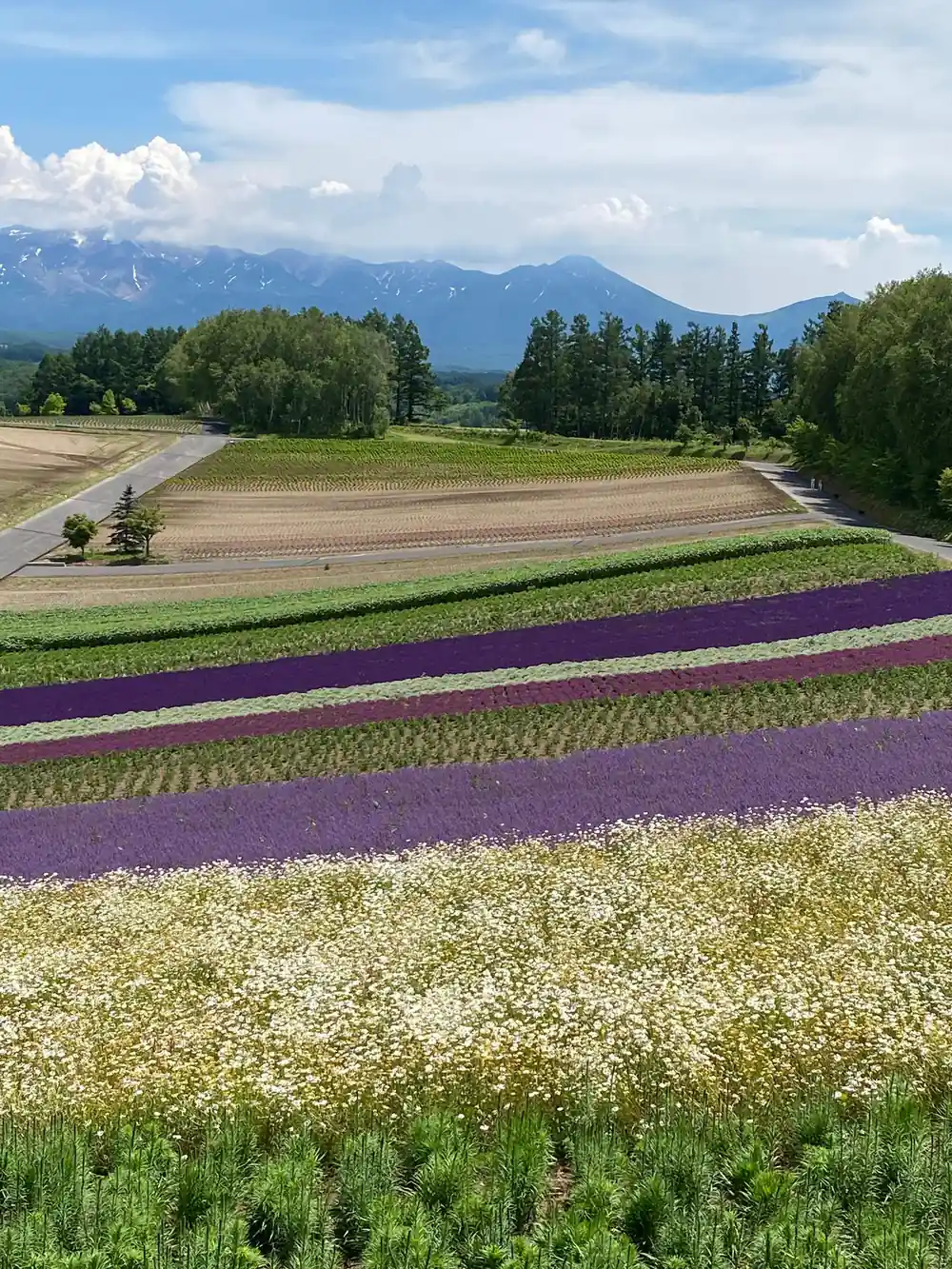
Shikisai-no-oka is a set of panoramic flower gardens spread across fifteen hectares of land in Biei.[12] The hills around it are farmland rather than parkland, and the colours you see from the road come from working fields: wheat, potatoes, beans and sugar beet are the four main crops in Biei's crop rotation cycle, and together they build the patchwork landscape that gives the area its name.[13]
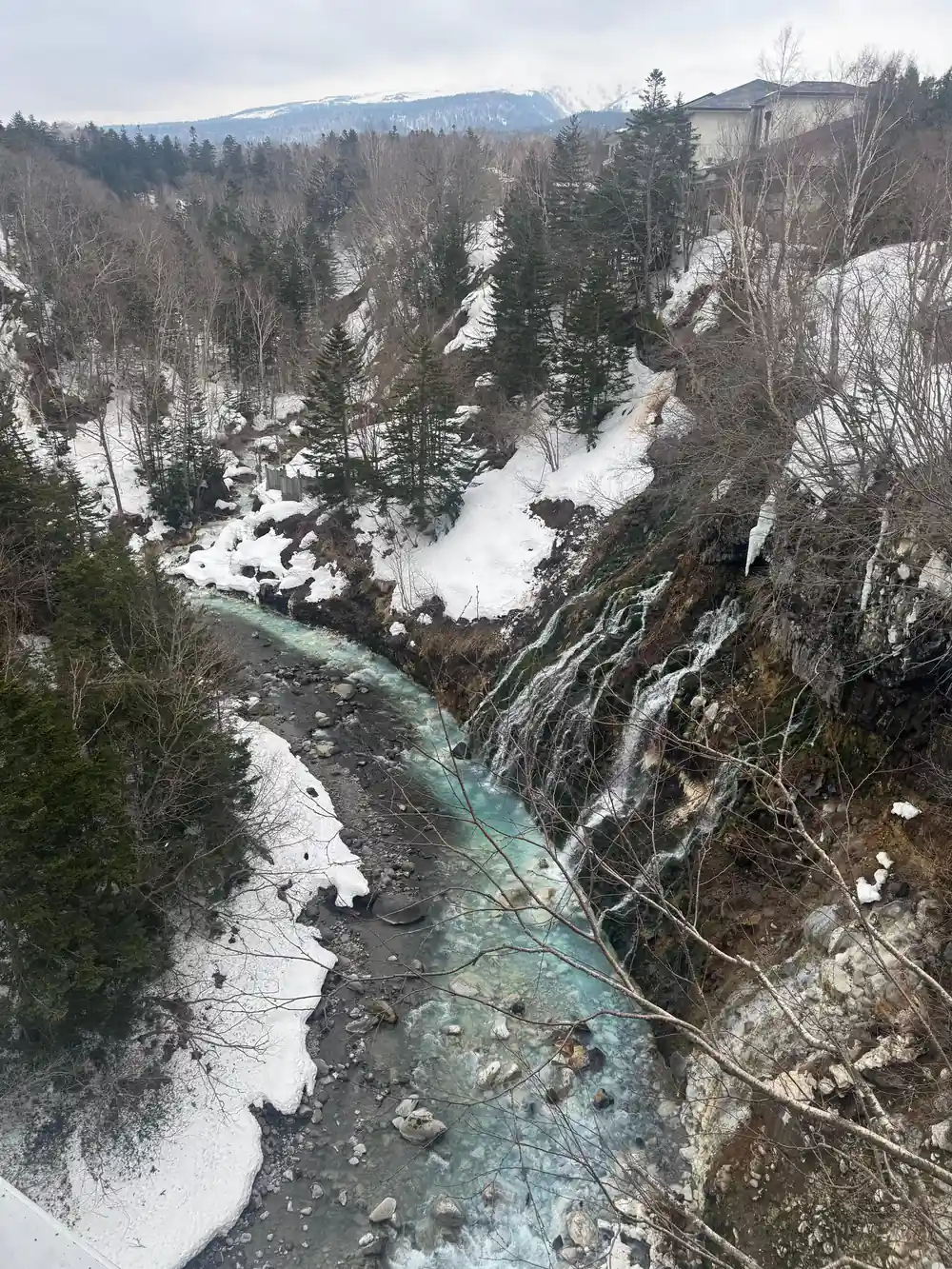
Shirahige Falls drops approximately 30 meters into the Biei River and is a rare subterranean stream waterfall, with water flowing directly from cracks in the rock face, which makes it an easy addition to a photography day.[14] If you would rather keep the camera out all afternoon, other departures cover similar ground, including a photo-focused Biei day tour from US$60 and a summer flower fields and Blue Pond photo tour from US$50.[7][15] Whichever you choose, the day works best when you accept the schedule and use each stop for pictures rather than for shopping.
Time on tour for Sapporo day trips including Blue Pond
Tour durations in hours for Sapporo day tours that include the Blue Pond.[15][16][17][18]
From-prices for Sapporo day tours
From-prices in US dollars for Sapporo day tours that include the Blue Pond.[5][6][7][15]
When to time your visit
Plan your Blue Pond photos
Pick your season
Lavender at Farm Tomita blooms late June to late July; the winter illumination runs from October 24, 2025 to April 22, 2026.[2][8]
Decide how to get there
From Biei Station the pond is about 20 minutes by Dohoku Bus route 39, and 60 to 70 minutes from Asahikawa.[3]
Book the Sapporo day tour
Stops include Patchwork Road, Shirogane Blue Pond, Shikisai No Oka, a local restaurant and Farm Tomita.[5]
Time the light
Lighting starts at 4:30 PM in December and at 5:00 PM in October, November and January, running until 9:00 PM.[2]
Pack for the weather
Biei has a cold continental climate with warm summers and freezing winters, so pack layers for early starts.[9]
Ready to photograph the Blue Pond in person?
from US$48Reserve now & pay later