At a glance
- Farm Tomita is a working flower farm in the Furano area and a stop on the Colored Hokkaido coach tour from Sapporo, on a route that also takes in the Biei hills.[1]
- The Traditional Lavender Field at Farm Tomita blooms from late June to late July, with the best viewing season from early to mid-July.[2]
- A visit outside the bloom window lands before the lavender opens, so expect working farm country and a calmer day than the summer peak.[2]
- The Colored Hokkaido listing shows fares from US$48, free cancellation up to 24 hours in advance and Reserve now and pay later.[1]
- The same route stops at the Shirogane Blue Pond, created accidentally in 1988 when erosion control dams were built along the Biei River.[3]
- Top choice Colored Hokkaido Tour from US$48 Duration1 day[1]Rating4.56 from 122 reviews[1]Guide languagesEnglish, Chinese, Japanese, Korean[1]CancellationCancel up to 24 hours in advance[1] Check availability
- Asahiyama Zoo and Blue Pond from US$48 Duration9 hours - 1 day[4]Rating4.49 from 47 reviews[4]Guide languagesChinese, English[4]CancellationCancel up to 24 hours in advance[4] See this tour
- Biei Best 5 Day Tour from US$60 Duration10 - 10.5 hours[5]Rating4.72 from 77 reviews[5]Guide languagesEnglish, Korean, Chinese[5]CancellationCancel up to 24 hours in advance[5] See this tour
Blooming season late June - late July Best viewing season early - mid-July
Is the Farm Tomita day tour worth it?
Booking the day tour
On the ground in Furano, Biei
Farm Tomita and the Lavender Fields of Furano
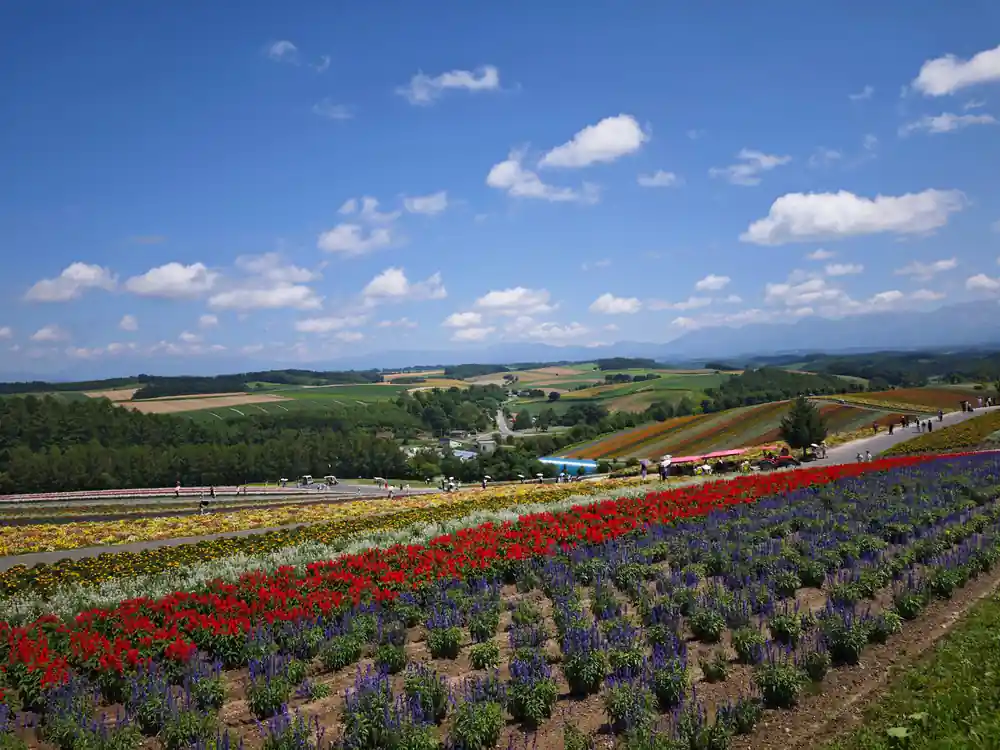
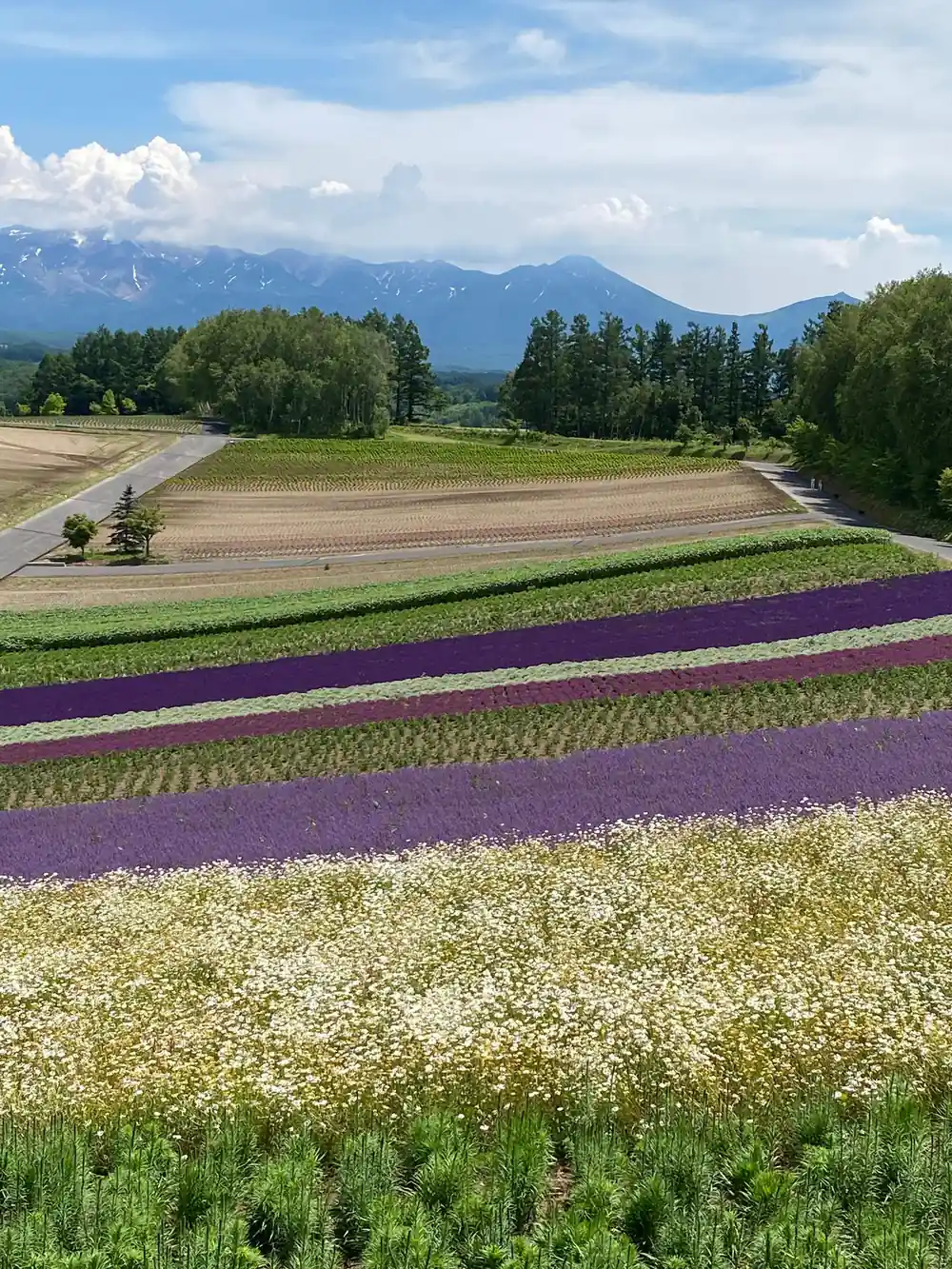
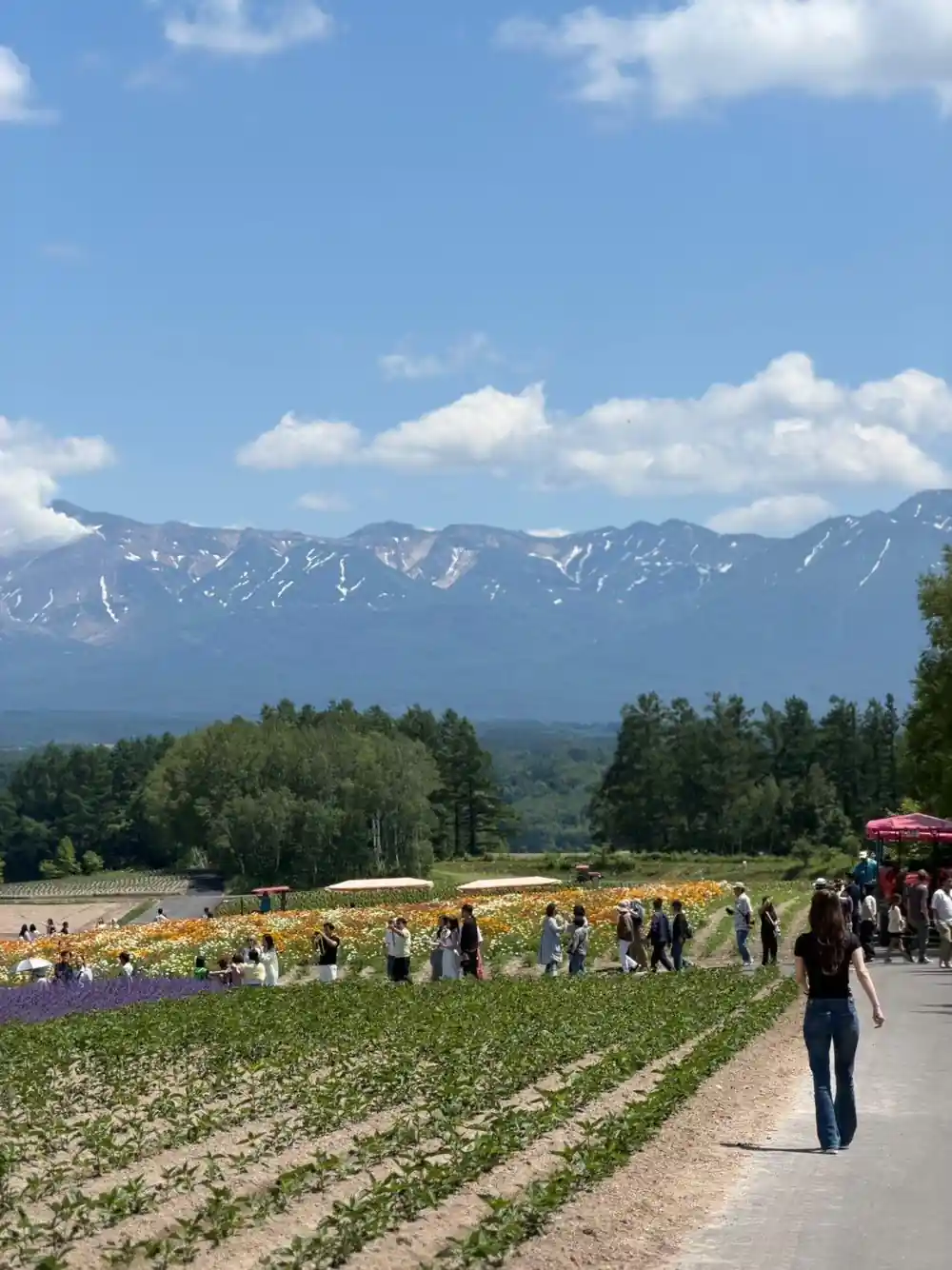
Farm Tomita sits in the farm country of central Hokkaido, near the small town of Nakafurano, where the land lifts into low hills striped with crops. The fields are laid out in long bands, so the colour arrives in rows rather than patches: purple, then white, then a warm orange, then purple again. It is a working farm with sheds, growers and a schedule, not a decorative park, and that is part of the appeal. Early in the morning the rows smell dry and sweet, and you can hear insects working the flowers long before the coaches pull in.
Farm Tomita is a stop on the Colored Hokkaido day tour from Sapporo, which also takes in Patchwork Road in Biei, the Shirogane Blue Pond, Shikisai No Oka and a local restaurant before ending at two drop-off locations.[1] The listing runs for 1 day, starts from US$48, and carries a live tour guide in English, Chinese, Japanese and Korean.[1] There are two starting location options in Sapporo, so check which one sits closest to your hotel before you book.[1]
Farm Tomita in May: What the Fields Look Like
A visit outside the lavender window asks for a small adjustment in expectations. The Traditional Lavender Field at Farm Tomita blooms from late June to late July, with the best viewing season from early to mid-July, so arriving before that window means the purple rows will not be out yet.[2] The growing season here starts late and then moves quickly: bare fields turn green in a matter of weeks, and snow still clings to the higher ridges while the lower ground is being worked.
What you get instead is the agricultural landscape at full stretch. Strips of new growth show sharply against dark soil, tractors are out, and the lanes between the farms are quiet. The coach route keeps running whatever the fields are doing, and the farm is a calmer place outside the bloom window than it is at the summer peak. If the purple rows are the whole reason for your trip, come later in the summer. If you want the farm country with room to breathe, a visit outside the peak works well.
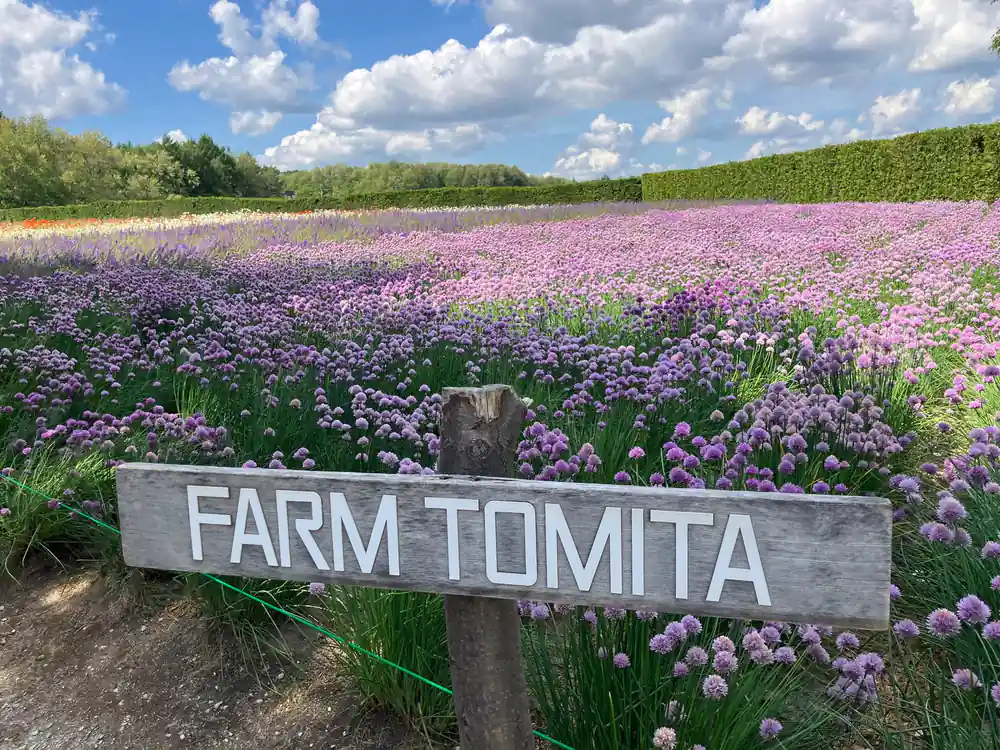
Rows of colour on the farm fields between Furano and Biei.
A Cool Climate Made for Lavender
Lavender wants a hard winter and a bright, warm summer, and that is what this corner of Hokkaido provides. Biei has a cold continental climate with warm summers and freezing winters.[6] The cold is no problem while the plants are dormant, the snow lies over the roots, and the long daylight of a northern summer pushes growth quickly once the ground warms. The result is a bloom window that is short and intense rather than long and gentle, which is why timing matters so much on a flower trip.
Around the flower farms the landscape is agricultural in the plainest sense. Wheat is one of the four main crops in Biei's crop rotation cycle, the others being potatoes, beans and sugar beet, and those crops are what paint the patchwork on the hills.[9] The town itself is small: 9,775 people as of 31 December 2020, spread across country that feels far emptier than the number suggests.[10] Seen from a coach window, the fields read like a quilt thrown over gentle ground, and the viewpoint trees people stop for are simply farm trees that happen to stand alone in a good light.
When Synthetic Lavender Ended an Industry
Furano's lavender did not survive on romance alone. Through the twentieth century, cheaper synthetic fragrance took over much of the market that natural lavender oil had supplied, and growers who could not sell a crop dug out their fields and planted something else. Hillsides that had been purple went back to vegetables and grain. What you walk through today is what survived that shift, kept going by the farms that stayed in the business and by visitors who came to look at a landscape they had already seen in pictures.
That history is worth holding in mind as you walk the rows. What stands in front of you is a crop, grown, cut and worked, and the fields change from week to week as different plantings come and go. Farms in this region have long opened their gates to visitors, and the layout of the flower fields is made to be walked, photographed and smelled. A morning here is part farm visit, part garden, and part lesson in how quickly a working landscape can turn into a tourist one.
from US$48
The Colored Hokkaido tour runs for 1 day from Sapporo, stopping at Farm Tomita and the Shirogane Blue Pond.[1]
A Photograph That Changed Everything
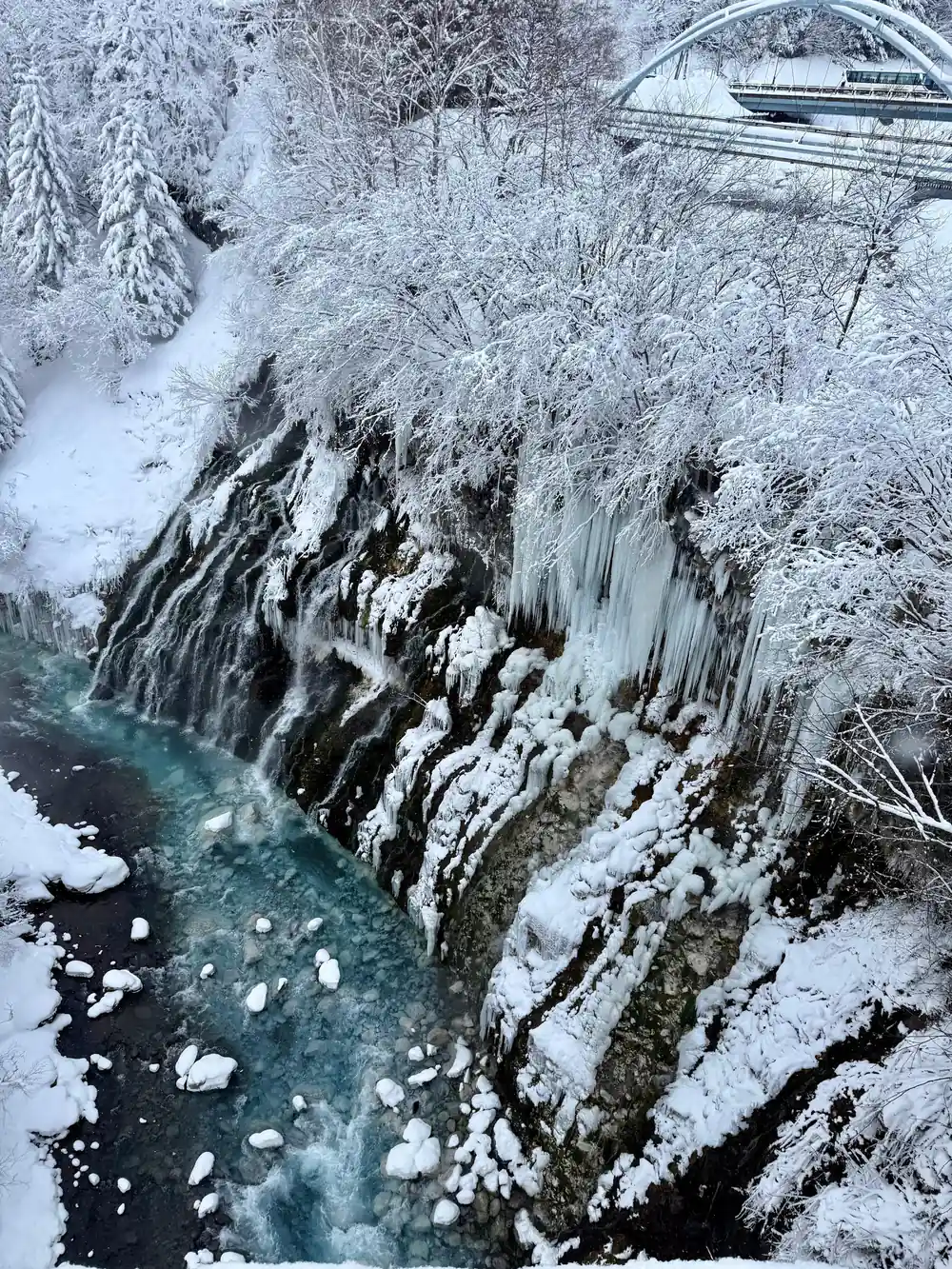
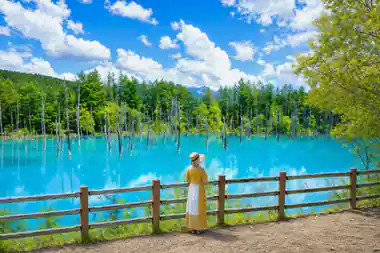
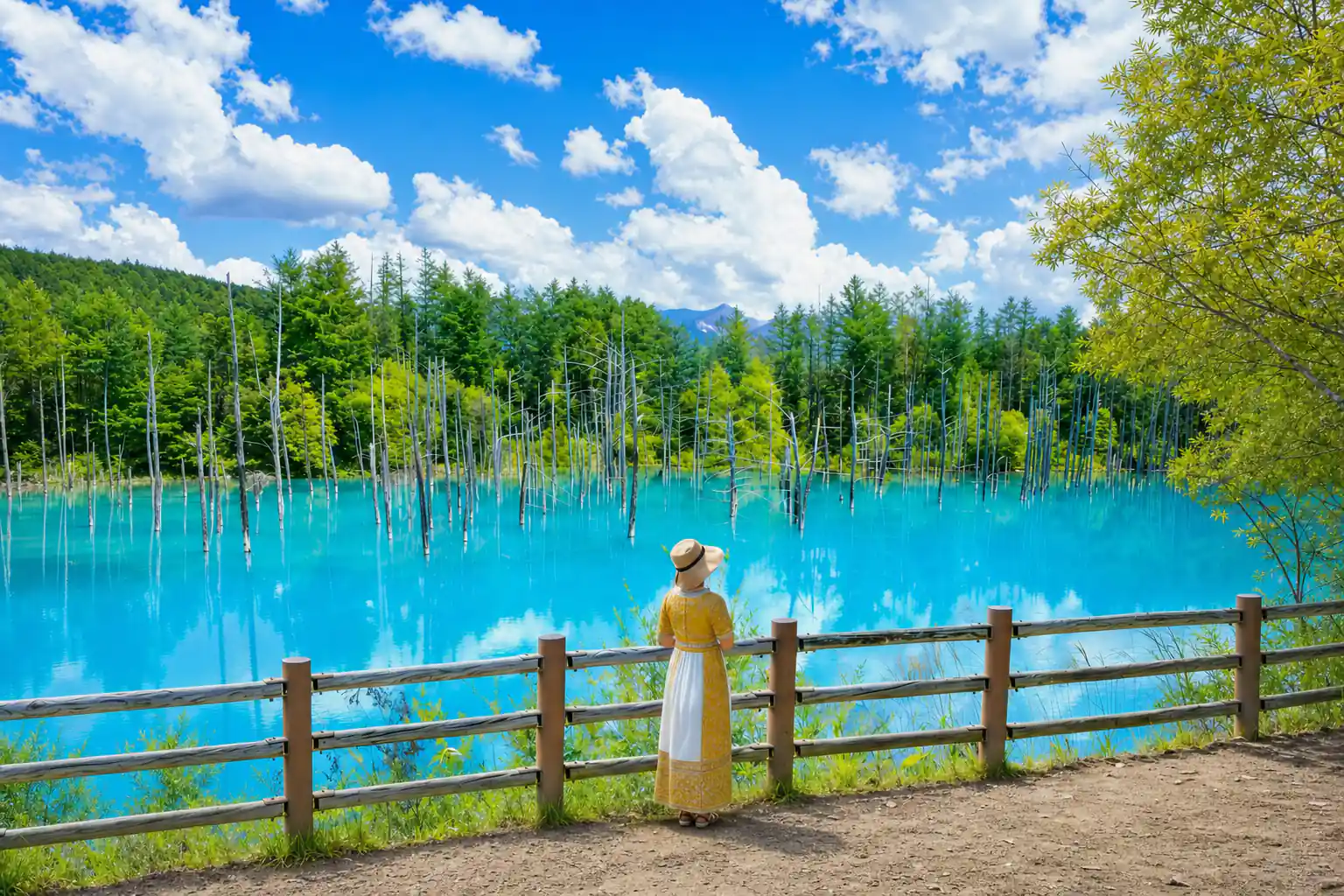
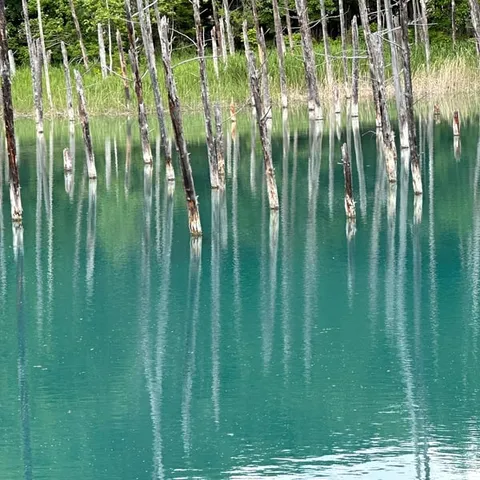
Places like this live partly in photographs. The Blue Pond at Shirogane, one of the stops on the Sapporo coach route, became familiar far beyond Japan when it was featured in Apple's WWDC 2012 MacBook Pro with Retina Display introduction.[11] It is not a natural lake. It was created accidentally in 1988, when erosion control dams were built along the Biei River to protect against mudflows from the active volcano Tokachidake.[3] The water reads blue because suspended aluminium hydroxide colloids scatter blue light, the same Rayleigh scattering that makes the sky look blue.[12]
Dead Japanese larch and white birch stand in that water, the remains of a patch of forest that once grew on dry ground and now stands like a sculpture garden.[13] A short distance away, Shirahige Falls drops approximately 30 meters into the Biei River, a rare subterranean stream waterfall whose water flows straight from cracks in the rock face.[14] Tokachidake, the volcano whose mudflows the dams were built to hold back, rises to 2,077 m (6,814 ft) and last erupted in 2004.[15] Photographs of the lavender fields did a similar job for Furano, travelling through magazines, calendars and now social feeds, and each time an image circulates, more people book a seat on a coach.
What You'll Smell, Taste and Take Home
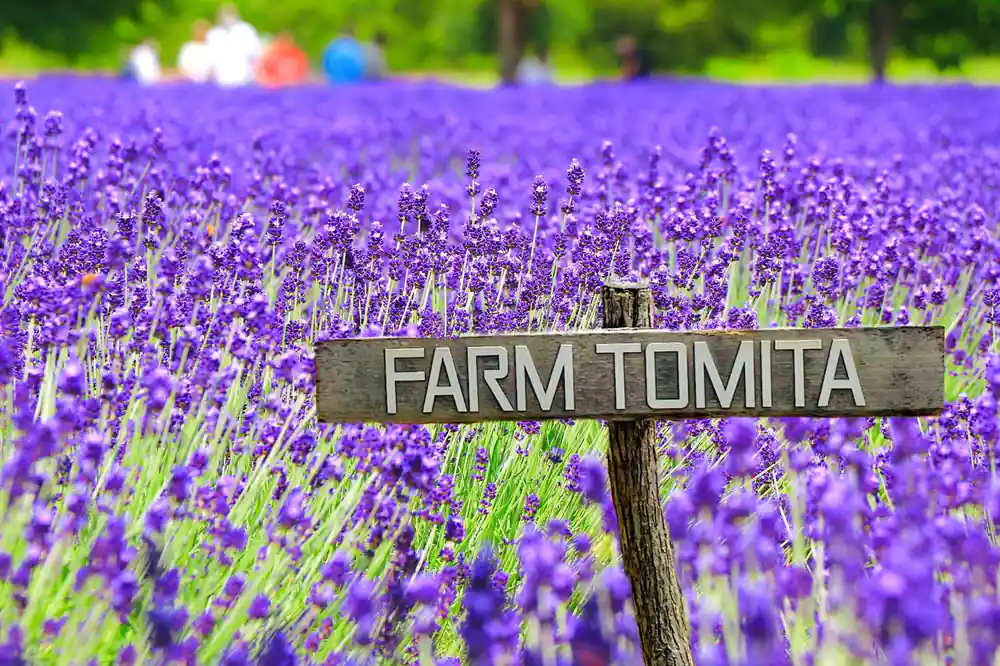
Lavender is a smell before it is a colour. Standing in a row on a warm afternoon, you get a dry, almost dusty sweetness that hangs in the air and follows you back onto the bus. The farm works its harvest into the things visitors want to carry home: soft serve and drinks at the food stands, soaps and sachets in the shop, dried bunches and small bottles of oil. Sample sizes are easy to pack, and a sachet tucked into a suitcase will scent a wardrobe for a long time.
Budget a little time for the shop and the food stands rather than treating the farm as a photo stop. Gels, oils and liquids belong in checked baggage, and anything scented is worth double-bagging in case a lid works loose in the cold. If you are buying for other people, dried flowers and sealed food items travel best. A local restaurant also appears among the stops on the day tour.[1]
Planning Your Visit: What to Expect on Tour
Coach tours are the simplest way to combine the flower fields and the Blue Pond in one day without hiring a car. The Colored Hokkaido listing runs for 1 day from Sapporo, lists free cancellation up to 24 hours in advance for a full refund, and offers Reserve now and pay later.[1] Fares start from US$48.[1] Meeting points are in the city, with two starting location options and two drop-off locations listed, and starting times vary, so check availability for the date you want.[1]
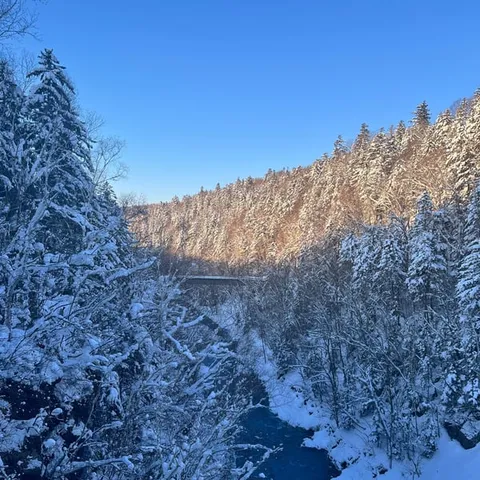
Pack for a long bus day and for weather that shifts. Biei has a cold continental climate with warm summers and freezing winters,[6] and the mountain air near Shirogane can feel cool even in midsummer, so bring a light jacket, comfortable shoes for gravel paths, a hat and a drink. If you would rather travel under your own steam, the Blue Pond is about 20 minutes from Biei Station by Dohoku Bus route 39, and from Sapporo it is about 1 hour 25 minutes by JR Limited Express to Asahikawa plus 60 to 70 minutes by bus.[8]
Reviews on Furano and Biei day tours
What a day tour from Sapporo costs
From-prices in US dollars as listed:[1][4][5][16]. Each listing shows one from price, shown here for adults and children alike.
Seasons at a glance
Plan your Farm Tomita day
Pick your dates
The Traditional Lavender Field blooms from late June to late July, with best viewing from early to mid-July.[2]
Book the coach
The Colored Hokkaido tour runs for 1 day from Sapporo and starts from US$48.[1]
Dress for the hills
Biei has a cold continental climate with warm summers and freezing winters, so bring layers.[6]
Know your stops
The route stops at Patchwork Road, Shirogane Blue Pond, Shikisai No Oka, a local restaurant and Farm Tomita.[1]
Keep the pond in mind
The Blue Pond was created in 1988, when erosion control dams were built along the Biei River.[3]
Ride from Sapporo to Farm Tomita and the Blue Pond
from US$48Reserve now & pay later