At a glance
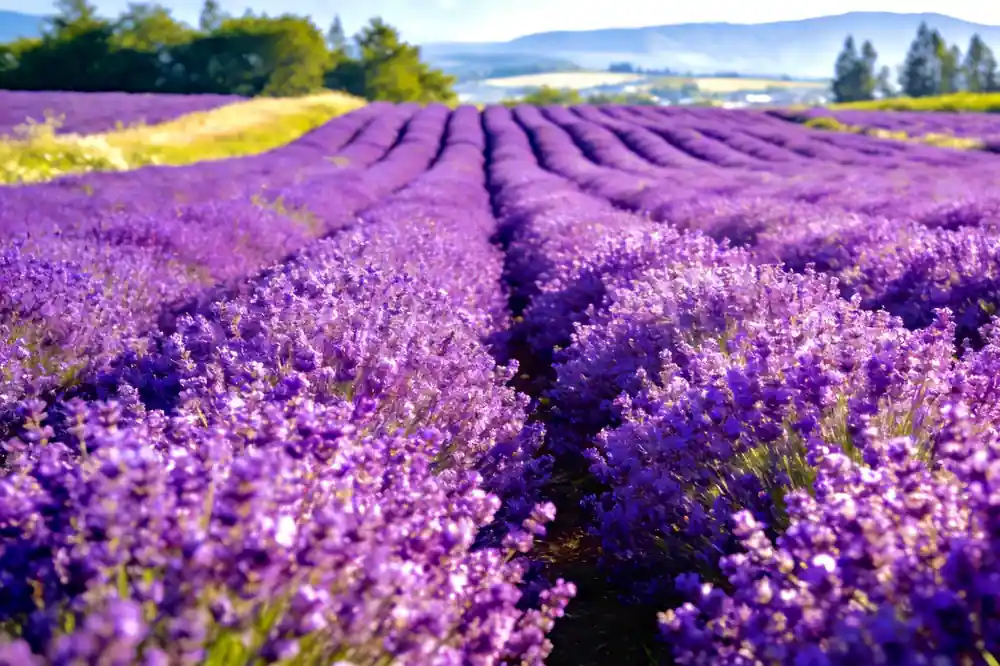
- Meltwater, high water and long daylight. Lavender at Farm Tomita's Traditional Lavender Field blooms from late June to late July, with the best viewing from early to mid-July.[1]
- Larch turns gold above the water and the hills show wheat, potatoes, beans and sugar beet in Biei's crop rotation.[2]
- The Blue Pond winter illumination runs from October 24, 2025 to April 22, 2026, with lighting until 9:00 PM.[3]
- Aluminium hydroxide colloids in the water scatter blue light, a process called Rayleigh scattering.[4]
- From Sapporo it is about 1 hour 25 minutes by JR Limited Express to Asahikawa plus 60 to 70 minutes by bus.[5]
- Top choice Furano Flowers & Blue Pond from US$48 Duration1 day[6]Guide languagesEnglish, Chinese, Japanese, Korean[6]Rating4.56 from 122 reviews[6]Free cancellationCancel up to 24 hours in advance[6] Check availability
- Biei Best 5 Day Tour from US$60 Duration10 - 10.5 hours[7]Guide languagesEnglish, Korean, Chinese[7]Rating4.72 from 77 reviews[7]Free cancellationCancel up to 24 hours in advance[7] See this tour
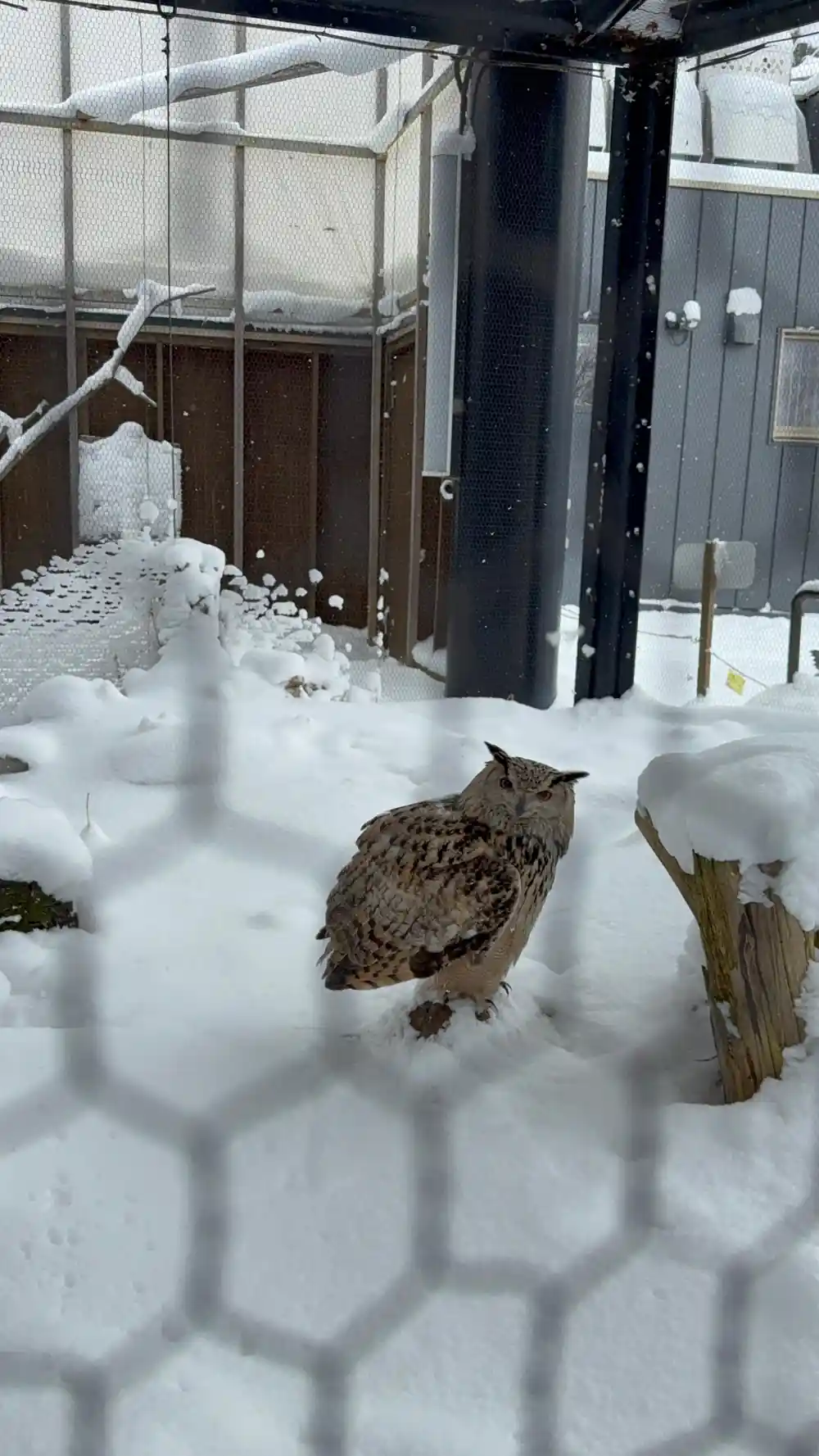
- Zoo, Waterfall & Blue Pond from US$48 Duration9 hours[8]Guide languagesEnglish, Chinese[8]Rating4.25 from 113 reviews[8]Free cancellationCancel up to 24 hours in advance[8] See this tour
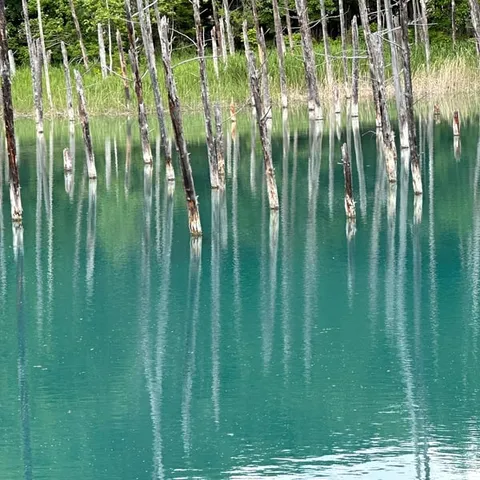

The brilliant blue of Shirogane Blue Pond in Hokkaido results from a phenomenon called Rayleigh scattering, the same process that makes the sky appear blue. When sunlight enters the water, it encounters suspended aluminium hydroxide colloids, microscopic particles left behind by volcanic minerals.
Our verdict on when to go
Before setting off
- Book a day tour or bus seat ahead in flower season
- Check live pond and road conditions on the morning you travel
- Carry some cash for buses, lockers and small farm shops
- Pack a waterproof layer, as mountain weather turns quickly
On the day
- Arrive early for calm water and fewer people
- Dress in warm layers for winter evenings by the water
- Bring sunglasses and a lens cloth for glare off the surface
- Keep an eye on the last bus or coach departure time
Peak blue: late spring through early summer
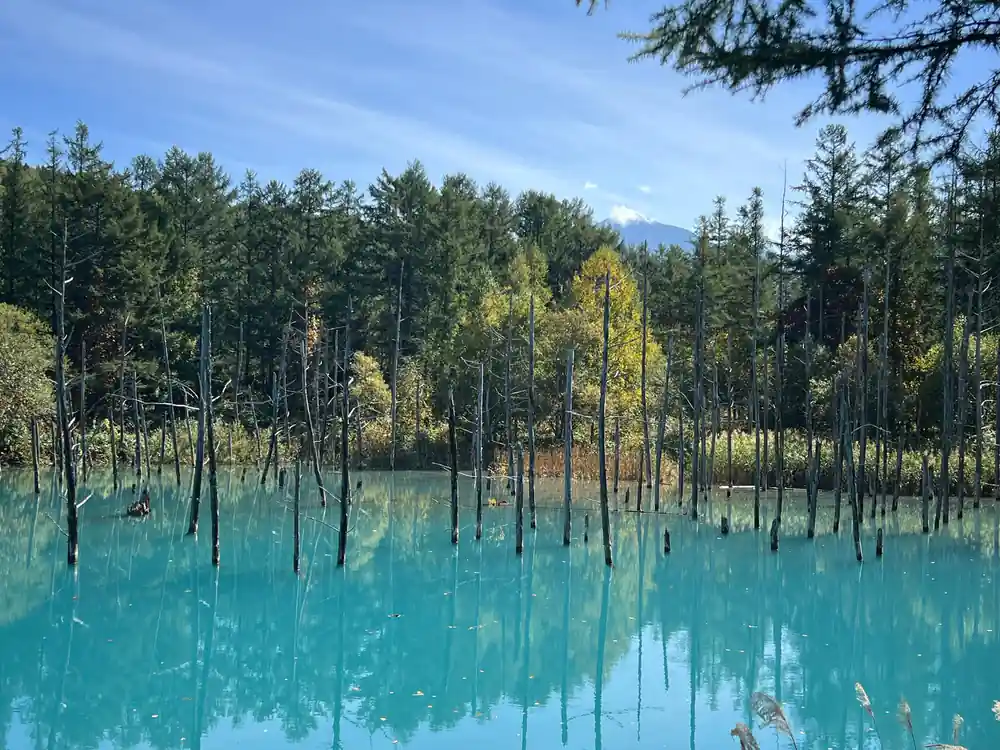
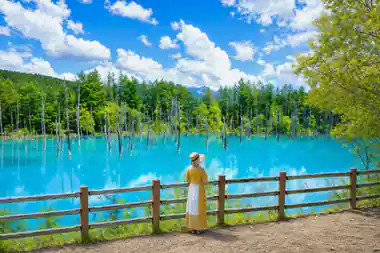
The colour of the Shirogane Blue Pond is not a camera trick. Sunlight entering the water meets suspended aluminium hydroxide colloids, microscopic particles left behind by volcanic minerals, and they scatter blue light in a process called Rayleigh scattering, the same effect that makes the sky look blue.[4] The pond is young: it formed by accident in 1988, when erosion control dams were built along the Biei River to protect against mudflows from the active volcano Tokachidake.[9] Dead Japanese larch and white birch still stand in the water, the remains of a dry patch of forest that is now flooded.[10]
Late spring and early summer are the months most people picture. Days are long, the hills are green, and the water often holds a bright, saturated blue. The colour follows the light rather than the calendar: a low sun, a still surface and a clear view into the water give the deepest tone, while flat grey cloud turns the pond pale and milky. Go early in the morning if you can. Winds are lighter, the surface is glassy, and you see the water before the day's coaches arrive.
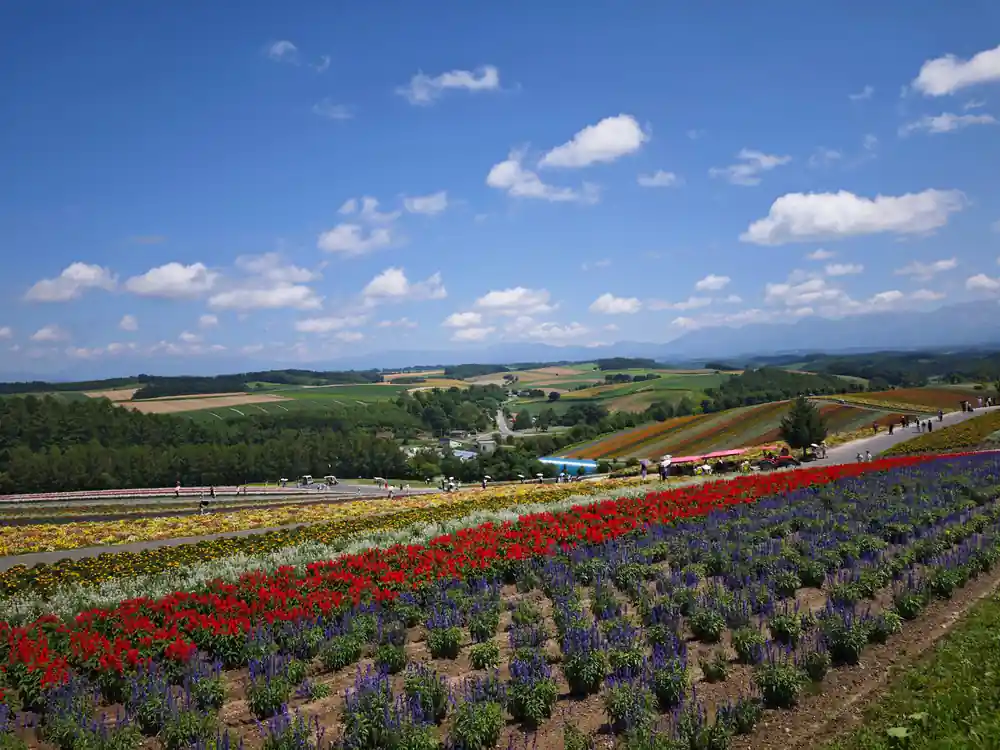
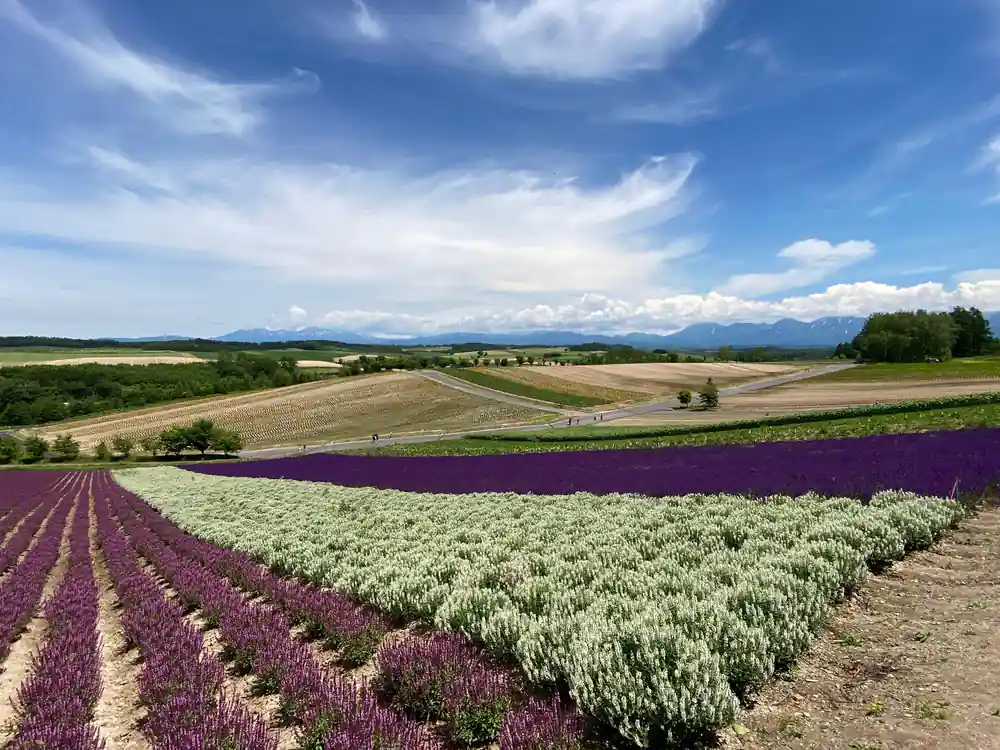
The flower farms are not at full colour for the whole of this window. The Traditional Lavender Field at Farm Tomita blooms from late June to late July, with the best viewing season from early to mid-July.[1] Outside those weeks you get green fields rather than purple rows. If lavender is the point of your visit, aim for that stretch, and expect the pond to be busier at the same time.
April snowmelt and the shift into summer
Spring at Shirogane is a slow thaw. Biei has a cold continental climate with warm summers and freezing winters[11], and snow can linger on the surrounding hills well into spring. Meltwater keeps the Biei River running high, the larch and birch are still bare, and the pond can look deeper and darker than it does in midsummer. Visit in this window and the place is close to empty, with cold, clean light that suits wide landscape photographs.
Getting there takes a little planning in every season. From Sapporo the trip is about 1 hour 25 minutes by JR Limited Express to Asahikawa plus 60 to 70 minutes by bus, while from Biei Station the Blue Pond is about 20 minutes by Dohoku Bus route 39.[5] Above the valley, Tokachidake stands at 2,077 m (6,814 ft) and last erupted in 2004.[12] The scenery around the pond is volcanic and open rather than wooded, and once summer arrives the whole area has turned green and the flower season has begun.
Still water and bare larch at Shirogane Blue Pond before the day's coaches arrive.
Autumn: larch gold against blue water
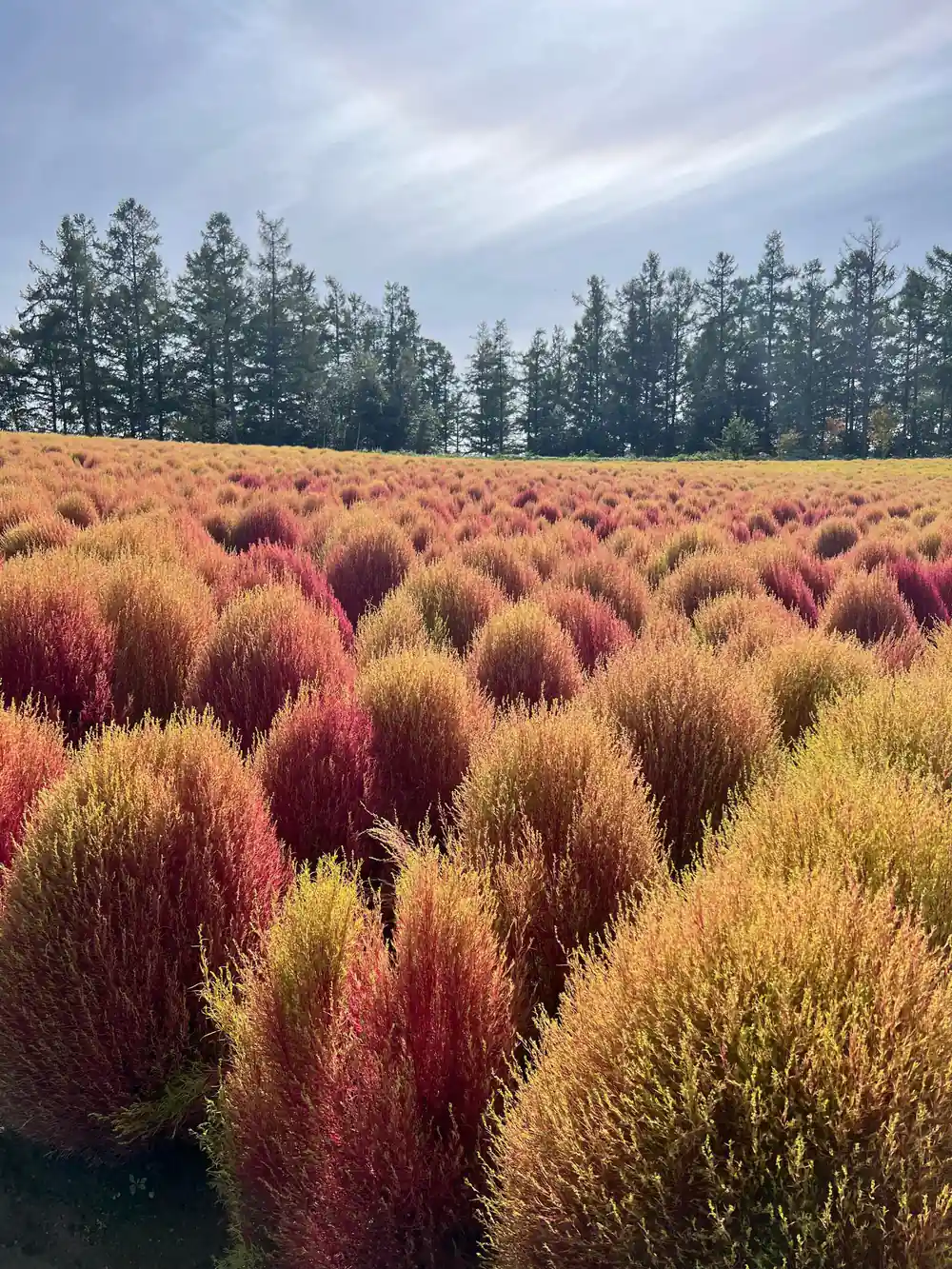
Autumn is the season when Biei's hills change colour twice. Wheat, potatoes, beans and sugar beet are the four main crops in the town's crop rotation cycle, and together they form the patchwork landscape on the hills.[2] Fields are harvested in stripes, with bare earth, stubble and green cover sitting side by side above the valley. Down at the pond, the water keeps its blue while the larch around it turns gold and the white birch trunks stand out against both.
Blue Pond Hokkaido autumn trips are usually planned for the middle of the season, when the larch is turning and the first snow has not yet arrived. Mornings often start misty, with fog sitting on the water and lifting as the sun clears the ridge. Afternoon light is warmer and brings out the contrast between gold trees and blue water. Rain is part of the season here, so pack a waterproof layer and expect the colour to shift from hour to hour.
Shikisai-no-oka keeps flowering through the warmer months. The panoramic flower gardens spread across fifteen hectares of land in Biei[13], and the beds are replanted as the season moves on. Combine the pond with a stop there and one day can give you blue water, gold larch and open flower fields in the same afternoon.
Winter freeze and the Blue Pond light up
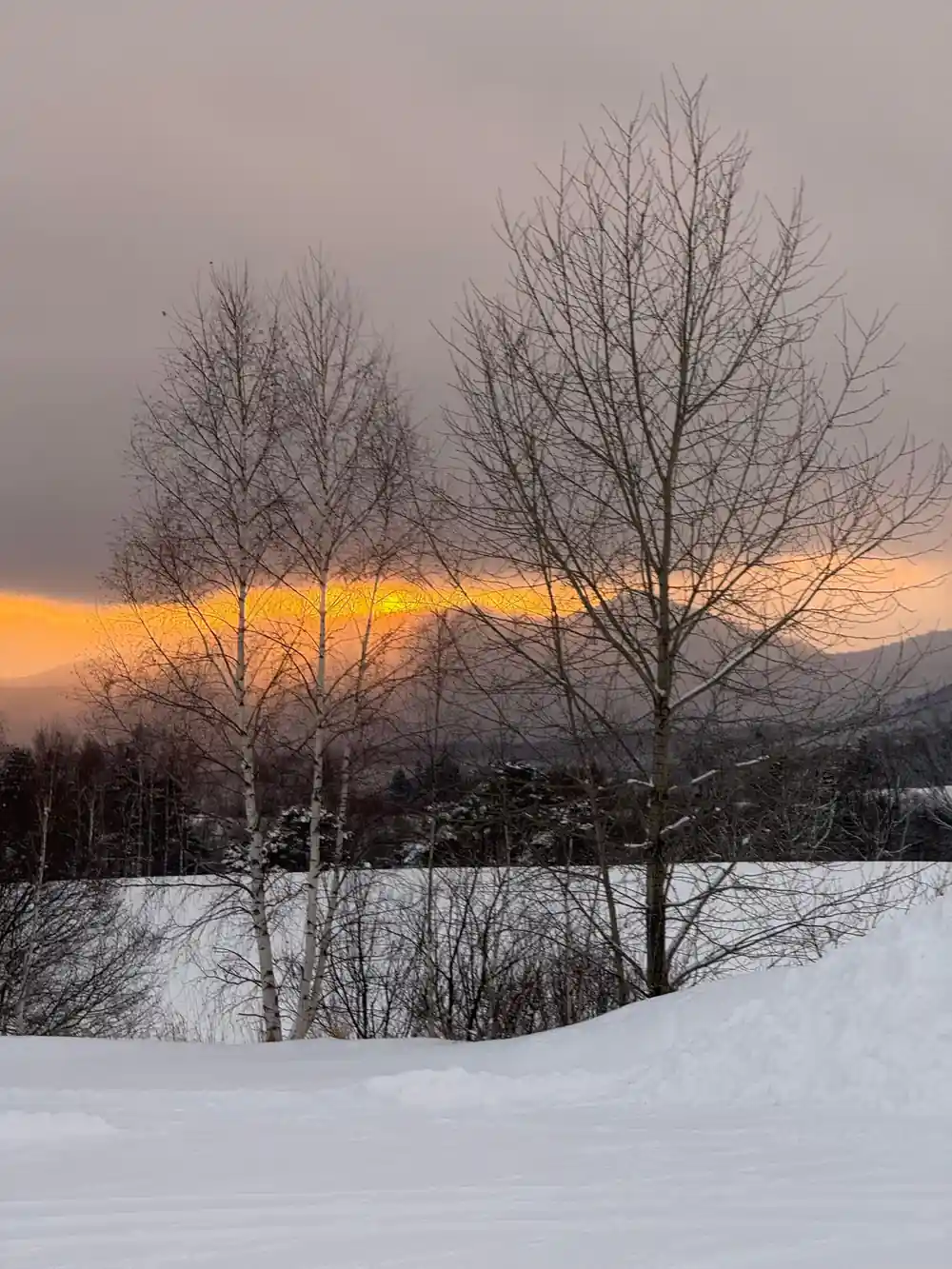
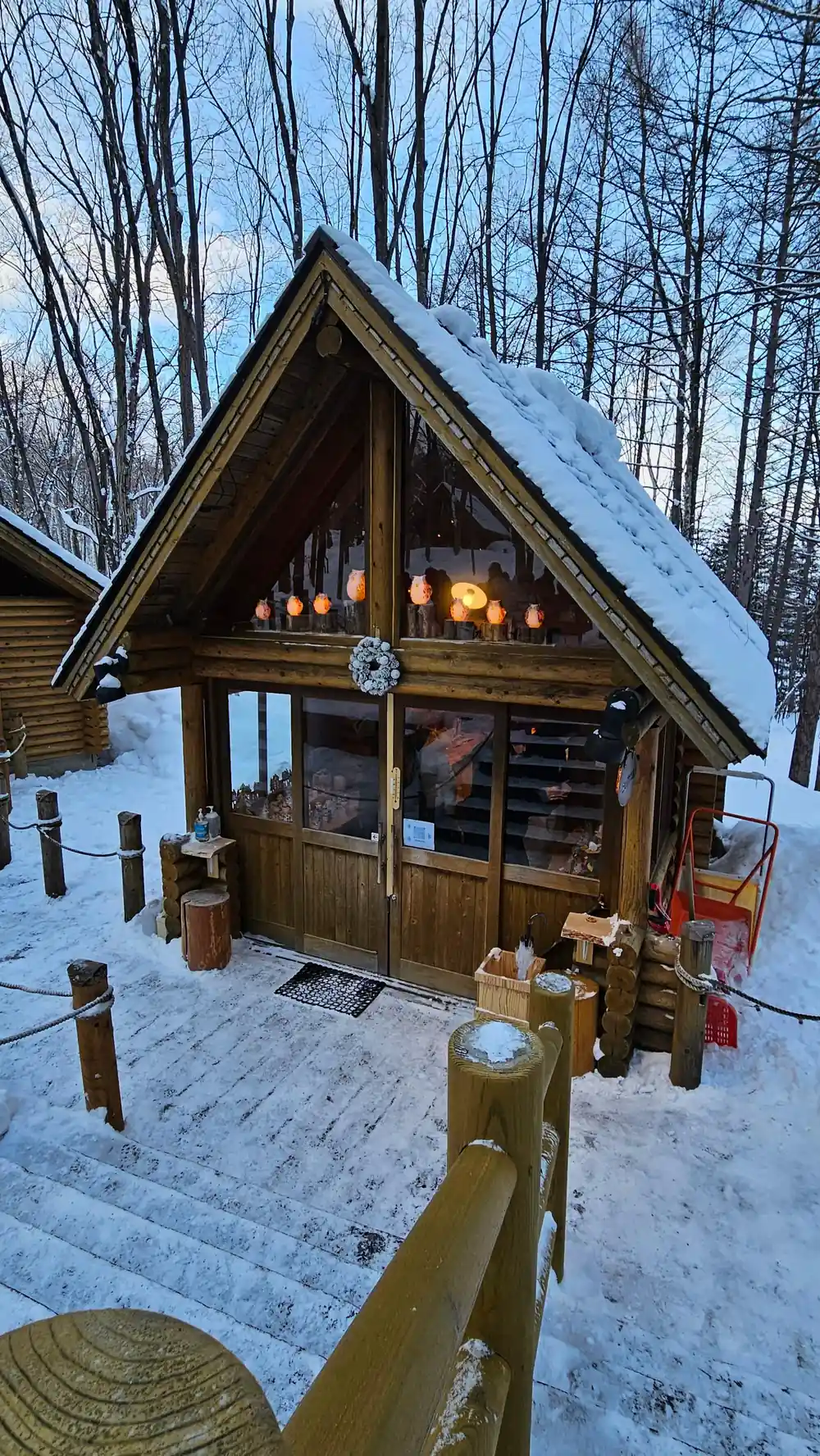
Winter changes the pond completely. Cold air and snow settle over Shirogane, ice forms along the edges, and the blue shows through in patches rather than as one smooth sheet. The light up is the big draw. The Blue Pond winter illumination runs from October 24, 2025 to April 22, 2026, with lighting until 9:00 PM.[3] Start times are 5:00 PM in October, November and January, 4:30 PM in December, 5:30 PM in February, 6:00 PM in March and 6:30 PM in April.[3]
Blue Pond Biei winter visits need more kit than summer ones. Snow boots with grip, a warm hat, gloves and a head torch or phone light all help on icy paths between the road and the water. A Blue Pond Hokkaido night in the depth of winter is beautiful but genuinely cold, and standing still for photographs makes it feel colder still. Bring a flask, keep spare camera batteries in an inside pocket, and allow extra time for snow covered roads.
from US$48
Colored Hokkaido day tour runs from Sapporo via Patchwork Road, Shirogane Blue Pond, Shikisai-no-oka, a restaurant and Farm Tomita.[6]
How rain and water levels change the colour
Rain is the quiet variable in the pond's colour. Heavy rain lifts sediment and can leave the water looking grey green for a while, while a still, bright day after wet weather often brings the strongest blue. Water level matters too: when the river runs high, more water moves through the system, the surface carries more texture, and reflections break up. That is part of why no two visits look the same.
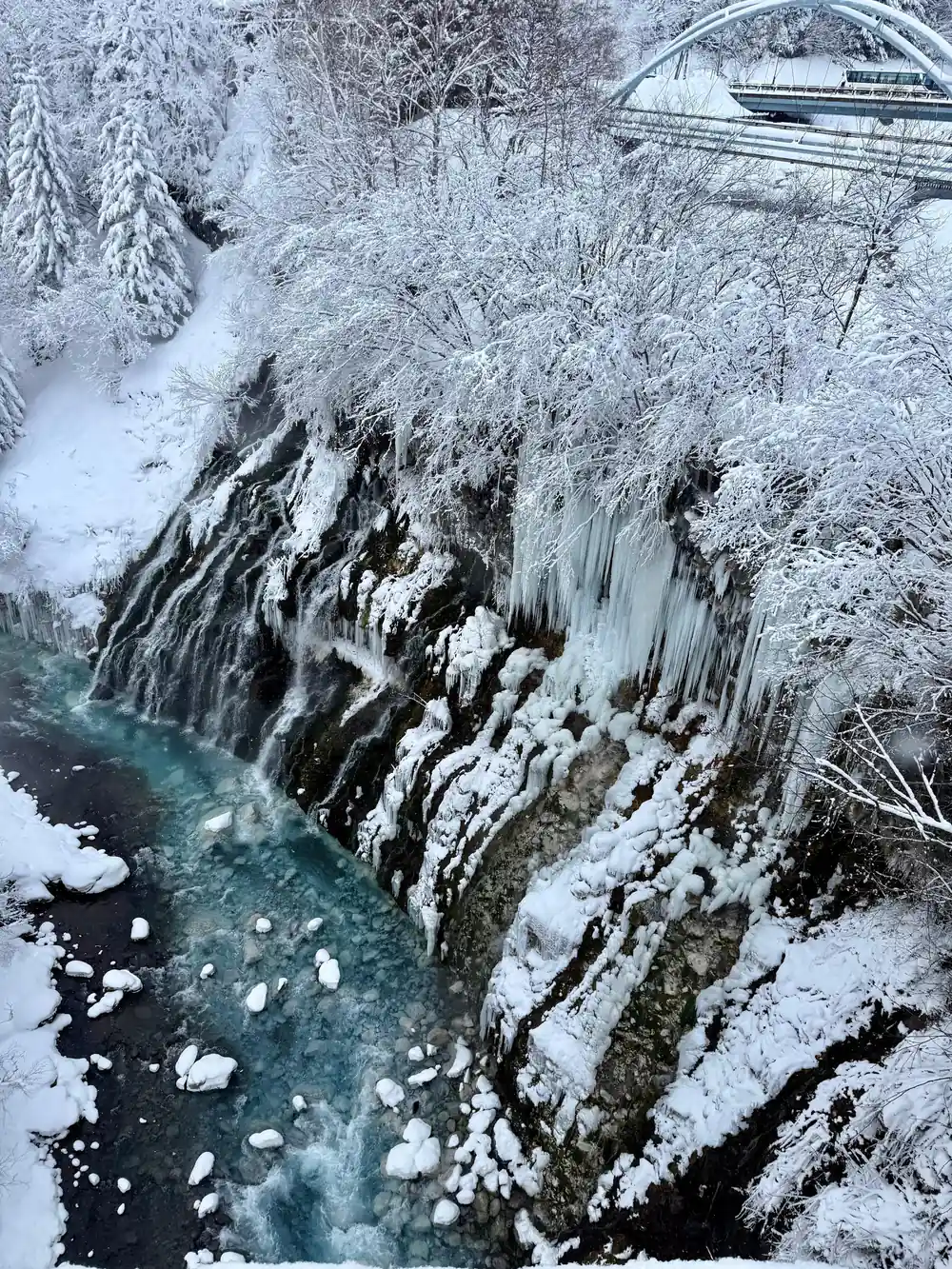
If the weather closes in, the falls nearby are worth the detour. Shirahige Falls drops approximately 30 meters into the Biei River and is a rare subterranean stream waterfall whose water flows directly from cracks in the rock face.[14] Mist and spray pour off the cliff, and the walk from the roadside is short, so you can see both the falls and the pond without losing much time. Some guided day tours from Sapporo pair the pond with the falls.
Checking conditions before you go
Conditions at Shirogane change fast, and winter weather can close the roads. Before setting out, check the latest live view or visitor update for a picture of Shirogane Blue Pond now, look at road reports for the Biei and Furano area, and confirm that your bus or coach is running. In summer the main challenge is crowds and parking; in winter it is ice, snow and short daylight. On a guided tour, the operator deals with route changes when the weather intervenes.
Biei is a small town, with a population of 9,775 as of 31 December 2020.[15] Buses fill quickly in the flower season, so reserve a seat in advance where you can, and keep some cash for small farm stalls and lockers. Refuel before you leave the city, carry water and snacks, and give yourself a buffer on either side of any fixed booking.
For anyone without a car, a coach day tour from Sapporo is the least complicated answer. You get a warm seat, a guide who knows the back roads, and a fixed plan that still leaves time at each stop. The Colored Hokkaido itinerary runs for 1 day and visits Patchwork Road, Shirogane Blue Pond, Shikisai-no-oka, a local restaurant and Farm Tomita.[6]
Photography timing and light through the day
The pond is small, and the light changes quickly across it. Early morning usually brings the stillest water and the softest contrast, with mist on the surface in spring and autumn. Around the middle of the day, sun straight overhead flattens the colour and drops hard shadows across the far bank. Late afternoon gives warmer side light that picks out the dead trees, and in winter the illumination turns the whole scene blue and white.
Use a polarising filter with care: it deepens the blue, but too much of it turns the water inky and removes the reflections that make the pond interesting. A wide lens suits the pond and the flower fields, while a short telephoto is better for the standing trees and for Shirahige Falls. The pond reached a global audience when it appeared in Apple's WWDC 2012 MacBook Pro with Retina Display introduction[16], and a clear morning shows the water at its most photogenic.
One last tip on timing: the colour is at its most changeable in the hour after sunrise and the hour before dark, when the light is low and the wind often drops. If you are on an organised tour, work out which stops matter most to you and go to them first. Everything else on the itinerary will still be there when you come back.
How long Sapporo day tours run
GetYourGuide Sapporo tour lengths: Biei Best 5 10 to 10.5 hours, zoo and waterfall 9 hours, two Furano and Biei tours 10 hours each.[7][8][17][18]
Day tour from-prices from Sapporo
From prices in US dollars for these GetYourGuide listings; child amounts mirror the same listing from price.[6][7][8]
When to book your dates
Plan your Blue Pond day
Pick your season
Write down what you want to see: flowers, larch, snow or lights. That choice decides the month far more than the pond itself does.
Decide how you will travel
Buses reach the pond but are limited, especially in winter. A guided coach from Sapporo removes the transfers and the parking problem.
Book before you fly
Flower season seats sell out early, so reserve your date a few weeks ahead and note the free cancellation window on your booking.
Pack for the season
Layers, a waterproof shell and shoes with grip cover every month. Winter evenings need a warm hat, gloves and a light for icy paths.
Build in a second stop
Pair the pond with Shirahige Falls, the patchwork hills or a flower farm, so a cloudy hour does not waste the whole day.
See the Blue Pond on a day tour from Sapporo
from US$48Reserve now & pay later