At a glance
- The Blue Pond winter illumination runs from October 24, 2025 to April 22, 2026, with the lights on until 9:00 PM each evening.[1]
- Lighting begins at 5:00 PM in October, November and January, 4:30 PM in December, 5:30 PM in February, 6:00 PM in March and 6:30 PM in April.[1]
- Suspended aluminium hydroxide colloids in the water scatter blue light in a process called Rayleigh scattering.[2]
- Erosion control dams built along the Biei River in 1988 to hold back mudflows from the volcanic Tokachidake created the pond by accident.[3]
- From Sapporo it is about 1 hour 25 minutes by JR Limited Express to Asahikawa plus 60 to 70 minutes by Dohoku Bus route 39.[4]
- Top choice Furano and Biei day tour from US$48 Duration1 day[5]Rating4.56 from 122 reviews[5]Guide languagesEnglish, Chinese, Japanese, Korean[5]Pay laterReserve now & pay later[5]CancellationFree cancellation up to 24 hours ahead[5] Check availability
- Asahiyama Zoo and Blue Pond from US$48 Duration9 hours[6]Rating4.25 from 113 reviews[6]Guide languagesEnglish, Chinese[6]Pay laterReserve now & pay later[6]CancellationFree cancellation up to 24 hours ahead[6] See this tour
- Biei Best 5 Photo Spots from US$60 Duration10 - 10.5 hours[7]Rating4.72 from 77 reviews[7]Guide languagesEnglish, Korean, Chinese[7]Pay laterReserve now & pay later[7]CancellationFree cancellation up to 24 hours ahead[7] See this tour
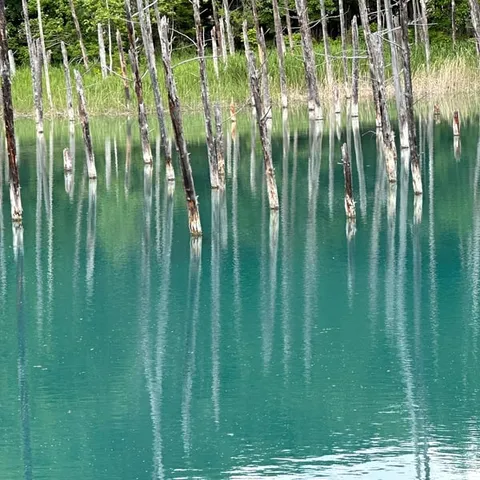
The pond was created accidentally. In 1988, erosion control dams were built along the Biei River to protect against mudflows from the active volcano Tokachidake.
Is the Blue Pond winter illumination worth it?
Getting there and back
What the pond looks like after dark
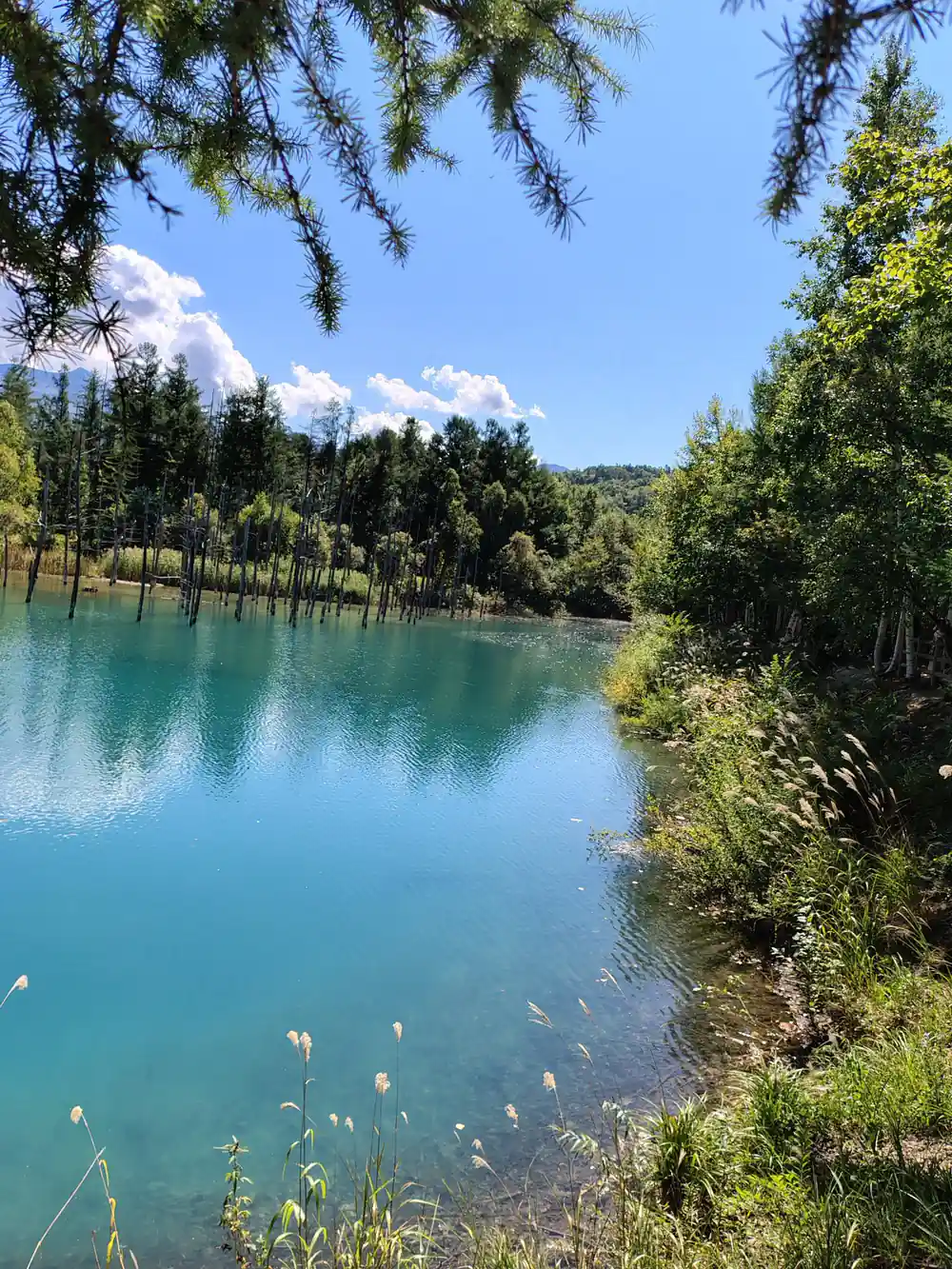
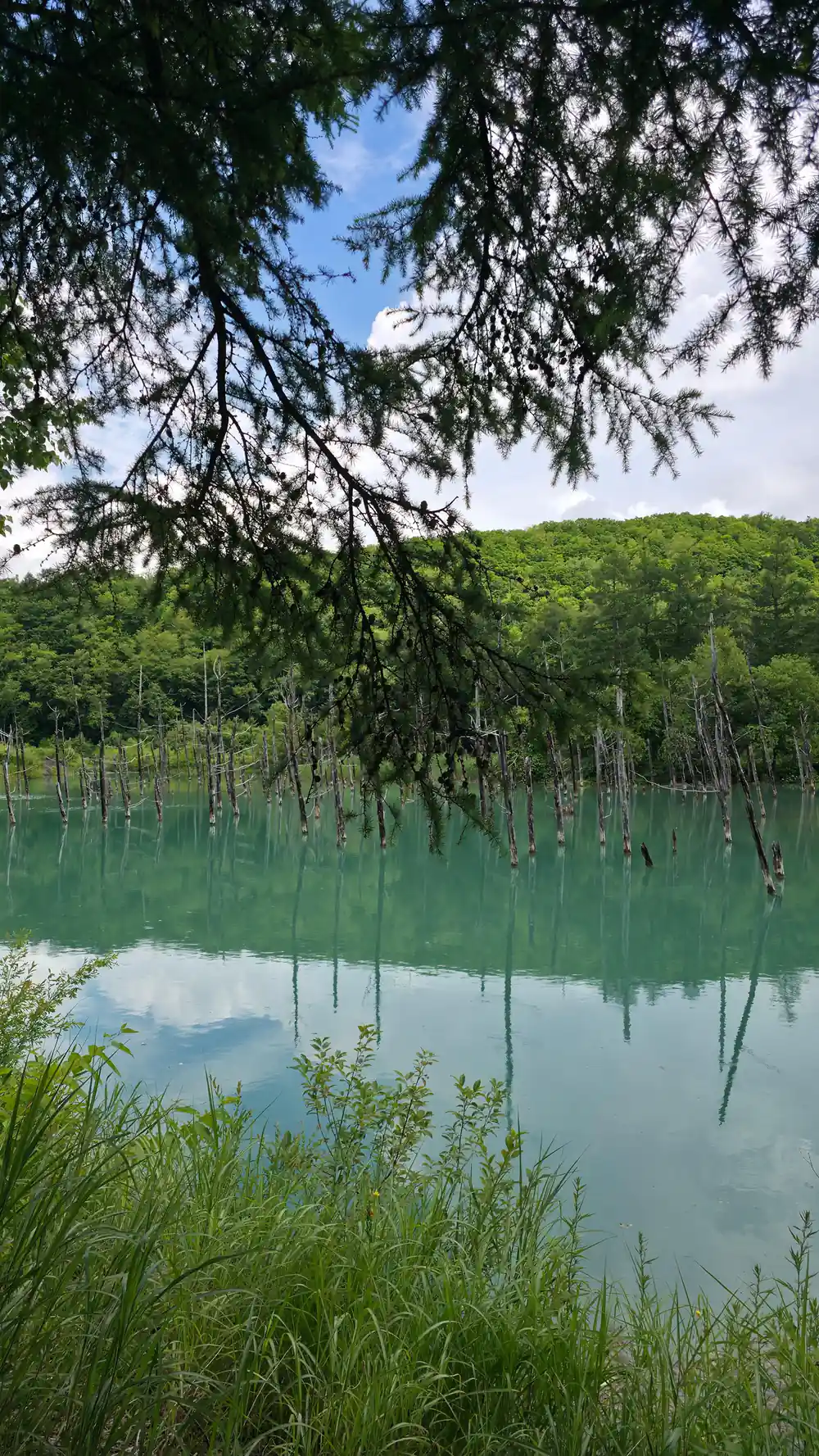
By day the Shirogane Blue Pond is a sheet of milky turquoise ringed with snow and dark spikes of dead trees. After dark the lights come on, the water holds a deep blue glow, the snow around it goes grey and the trunks turn black against it. The dead Japanese larch and white birch standing in the pond are what was once a dry patch of forest, now standing in the water like a sculpture garden.[11] The walk along the bank is short, so people often find themselves walking it again and again as their eyes adjust and the colours shift with every few steps.
The pond reached a global audience when it appeared in Apple's WWDC 2012 MacBook Pro with Retina Display introduction.[12] It is a small, quiet place rather than a big show, and on a snowy night you may share the railings with only a handful of photographers. Expect fogged lenses, cold fingers and the sound of water moving under ice. Bring a head torch for the path, keep your gloves on, and give yourself longer than you think you need simply to stand and look.
Winter changes the shape of everything here. Snow fills the banks until they disappear, the railings gain white caps, and the pond keeps its colour while the rest of the world turns monochrome. Bare larch plantations climb the slopes behind it, and the road up from Biei winds through farmland that is silent under snow.
Illumination dates and lighting times
The Blue Pond winter illumination runs from October 24, 2025 to April 22, 2026, and the lights stay on until 9:00 PM. The switch-on time changes through the season: 5:00 PM in October, November and January, 4:30 PM in December, 5:30 PM in February, 6:00 PM in March and 6:30 PM in April.[1] December has the earliest start of the season and April the latest.[1]
Come for the switch-on rather than hours later, while there is still some blue in the sky behind the trees. The viewing area is compact: a short path, a few viewpoints and a bridge, so there is no need to build a whole evening around it. If you are using public transport, check the last departure back towards Biei or Asahikawa before you travel. If you are driving, park where you are told and leave the engine warm. Plenty of travellers stay overnight locally rather than facing a long drive back to Sapporo in the dark.
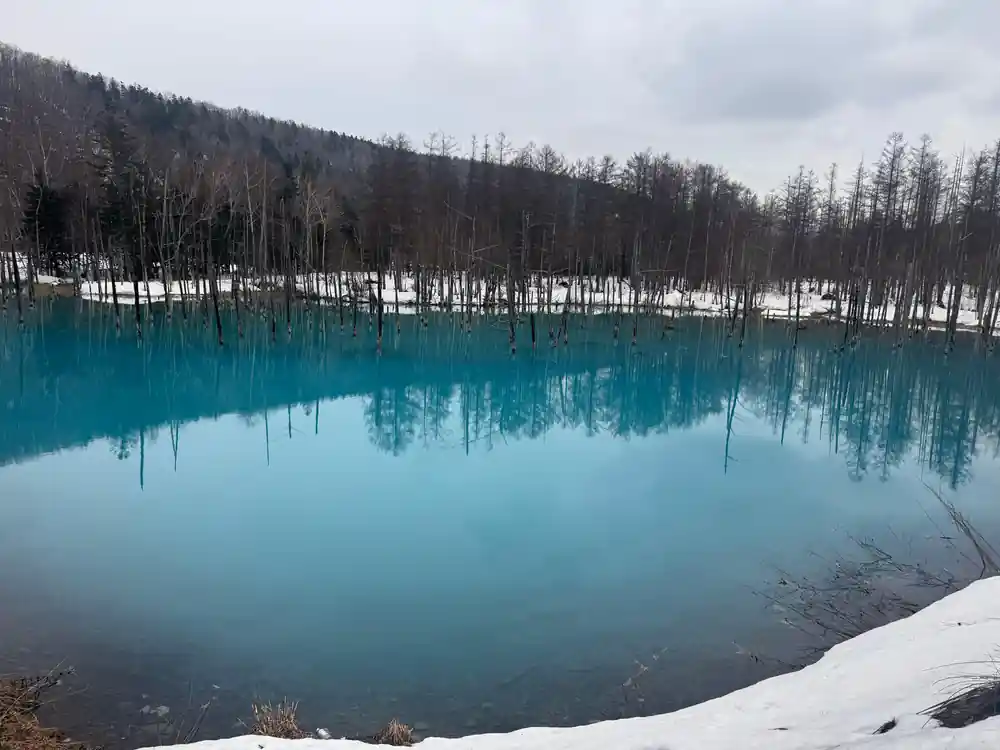
Snow, bare larch and lamps on the bank at Shirogane Blue Pond
Why the water is blue
The colour is not a trick of the surface. Suspended aluminium hydroxide colloids in the water scatter blue light in a process called Rayleigh scattering.[2] The same scattering is what makes the sky look blue. On a bright afternoon the pond reads electric; under heavy snow cloud it turns grey-blue, and full darkness changes it again.
The pond is not a natural lake. It was created accidentally in 1988 when erosion control dams were built along the Biei River to protect against mudflows from the active volcano Tokachidake.[3] Tokachidake rises to 2,077 m (6,814 ft) and last erupted in 2004.[13] The trees standing in the water are the remains of a forest that the rising water swallowed. In winter, snow settles on their bare branches above a blue-black surface, and the whole scene looks arranged rather than accidental.
Getting to Shirogane without a car
Biei Station is the closest railhead to the pond, and from there the Blue Pond is about 20 minutes by Dohoku Bus route 39. From Sapporo the journey is about 1 hour 25 minutes by JR Limited Express to Asahikawa plus 60 to 70 minutes by bus.[4] Biei Station is boarded mid-route on that line. The town is small: Biei had a population of 9,775 as of 31 December 2020.[9]
Check the timetable carefully before you rely on the bus, because a missed last service means a taxi or an overnight stay. If you drive, treat the climb into the hills with respect. Snow tyres, a scraper, a warm blanket and a full tank are sensible basics, and the road can be slow after fresh snowfall. Keep an eye on the clock as well as the weather, since the light fades early here in the middle of winter.
However you arrive, allow slack in the plan. A snow shower can add real time to the climb, and the daylight window around the pond is short in the depth of winter. If the illumination is the main reason for your trip, staying in Biei or Shirogane turns a rushed dash into an easy evening walk.
from US$48
A full day from Sapporo to Biei's Patchwork Road, the Blue Pond, Shikisai No Oka and Farm Tomita, with a live guide.[5]
Biei and Furano beyond the pond
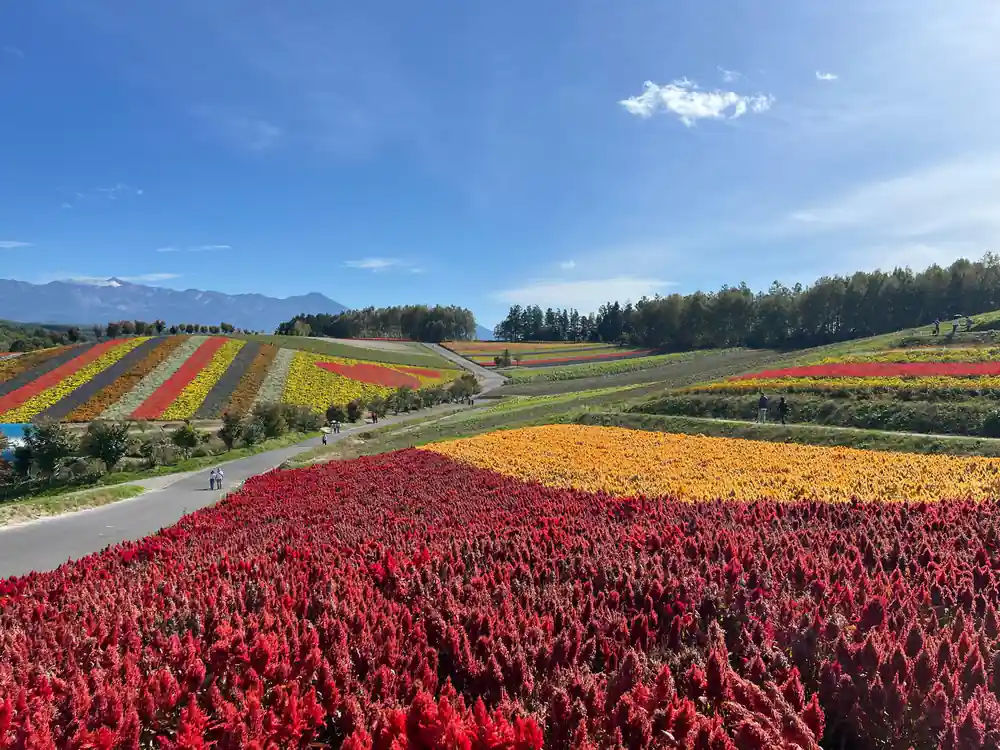
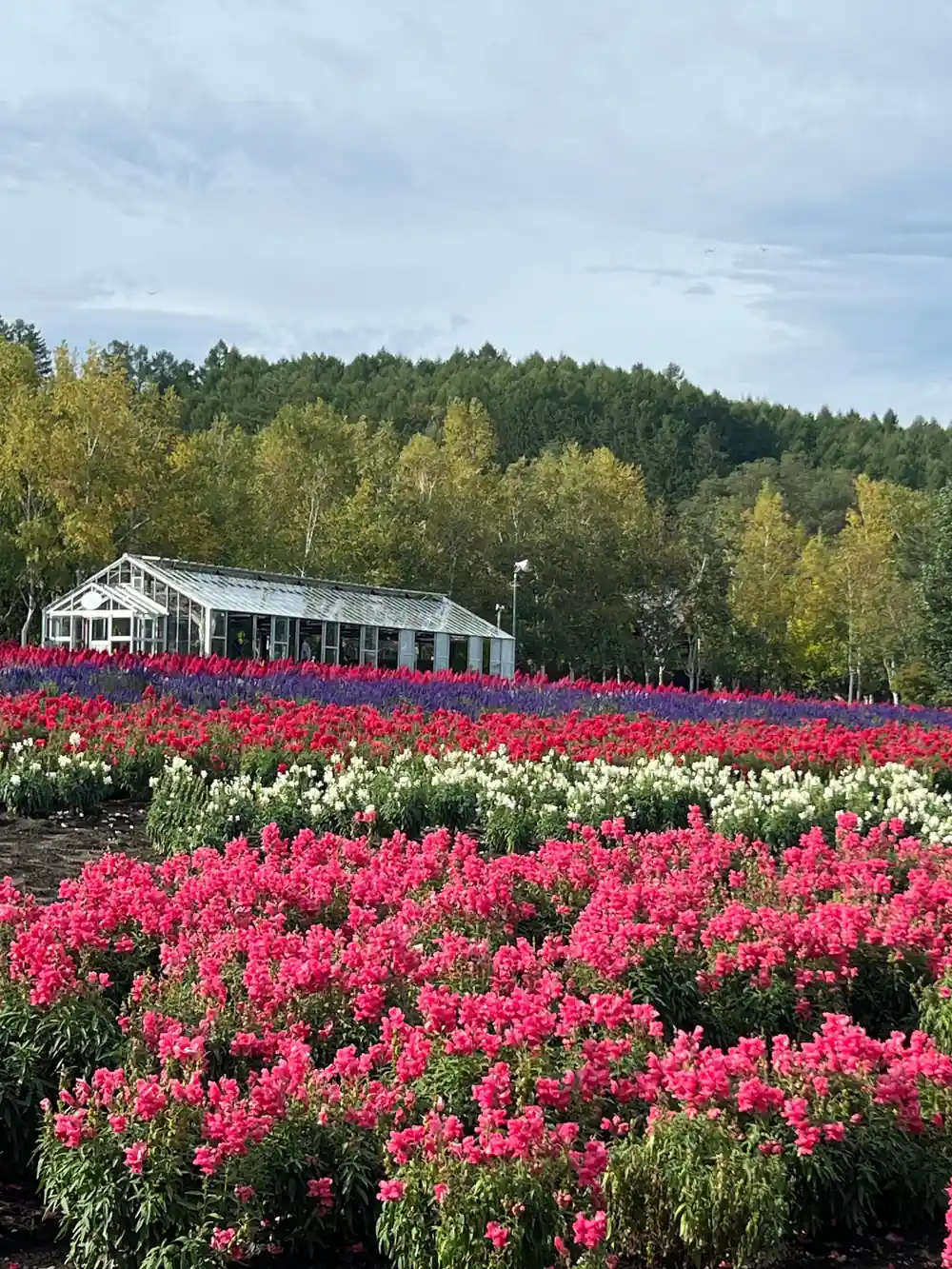
In daylight the surrounding farmland is the other reason to come. Wheat is one of the four main crops in Biei's crop rotation cycle, alongside potatoes, beans and sugar beet, and together they form the patchwork landscape on the hills.[14] Shikisai-no-oka is a set of panoramic flower gardens spread across fifteen hectares of land in Biei.[15] In winter the fields lie under snow and the same hills read as long white curves broken by hedgerows and lone trees.
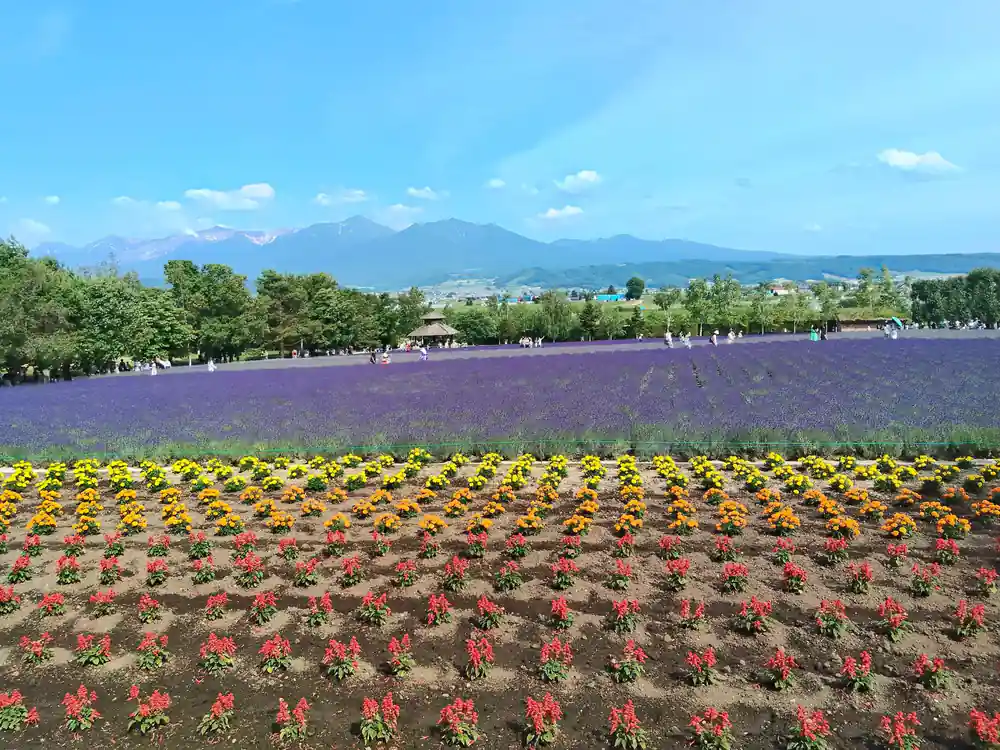
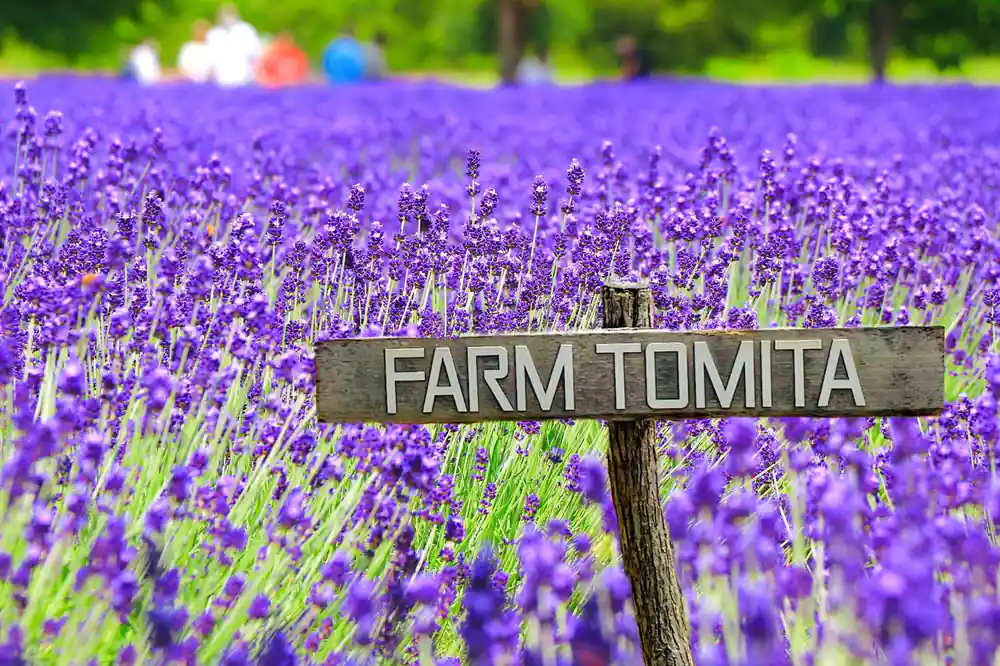
Farm Tomita is the other famous stop on the flower circuit. At its Traditional Lavender Field, lavender blooms from late June to late July, with the best viewing season from early to mid-July.[16] Shirahige Falls, up the road from the pond, drops approximately 30 meters into the Biei River and is a rare subterranean stream waterfall whose water flows directly from cracks in the rock face.[10] In winter the falls run among snow-covered rocks and the spray freezes on the banks.
Day tours from Sapporo that reach the Blue Pond
The Colored Hokkaido: Furano Flower and Biei Blue Pond tour from Sapporo is the one booked through this site. It runs for 1 day from US$48, with a live guide who speaks English, Chinese, Japanese and Korean.[5] The route takes in Patchwork Road in Biei, Shirogane Blue Pond, Shikisai No Oka, a local restaurant and Farm Tomita, with two starting location options and two drop-off locations.[5] It is rated 4.56 from 122 reviews, and free cancellation is available up to 24 hours in advance.[5]
Other Sapporo departures cover similar ground. The Asahiyama Zoo, Shirahige Waterfall and Blue Pond day trip runs 9 hours from US$48 and is rated 4.25 from 113 reviews.[6] The Asahiyama Zoo, Waterfall and Blue Pond tour starts from US$48, runs 9 hours to 1 day, and is rated 4.49 from 47 reviews.[17] The Biei Best 5 Must-Visit Day Tour from US$60 takes 10 to 10.5 hours and is rated 4.72 from 77 reviews.[7] All of them offer reserve now and pay later and free cancellation up to 24 hours in advance.[6][7][17] The illumination itself is an evening event at the pond, so check timings carefully if you want to pair a day tour with a night visit.
Look at the departure and drop-off points before you book, and decide whether an overnight stay in Biei or Asahikawa makes the evening visit possible as well as the day tour.
Cold nights, cameras and what to pack
Biei has a cold continental climate with warm summers and freezing winters.[8] In the illumination season that means real winter kit: insulated boots with grip, thick socks, thermal layers, a windproof shell, a hat, gloves and something warm to drink in a flask. Hand warmers help more than you expect, because you will be standing still more than walking. Dress as though you will be outside far longer than you plan.
Photography here is mostly about patience. A tripod saves you from shaky handheld shots, while a microfibre cloth for the lens and a spare battery kept inside your jacket head off the usual problems. Condensation is the enemy when you get back on a warm bus, so let the camera warm up slowly in its bag. Keep your expectations flexible: snow, wind and cloud change the pond hour by hour, and a grey night with falling snow can be better than a clear one.
Finally, remember the small things: a phone that dies in the cold, wet gloves you cannot swap, a camera bag that will not close because you opened it in a snowstorm. A dry bag inside your rucksack and a warm room waiting at the end of the night matter more than any single piece of gear.
How many travellers reviewed each Sapporo tour
Review counts for four Sapporo day tour listings.[5][6][7][17]
Compare from-prices in US dollars
Per-person from-prices in US dollars from the tour listings.[5][7][17][18]
When to plan your night at the pond
How to plan the night
Check the season dates
The illumination runs from October 24, 2025 to April 22, 2026, and the lights go off at 9:00 PM.[1]
Pick your start time
Start times run from 4:30 PM in December to 6:30 PM in April, with 5:00 PM in October, November and January.[1]
Decide how to get there
From Biei Station the pond is about 20 minutes by Dohoku Bus route 39.[4]
Book a day tour if you prefer
The Colored Hokkaido tour from Sapporo runs for 1 day from US$48 with free cancellation up to 24 hours in advance.[5]
Pack for real cold
Biei has a cold continental climate with freezing winters. Boots, layers and hand warmers belong in your bag.[8]
Plan a warm stop
The Sapporo tour route includes a local restaurant stop between viewpoints.[5]
Plan your night at the Blue Pond and book the Sapporo tour
from US$48Reserve now & pay later