At a glance
- Suspended aluminium hydroxide colloids scatter blue light through Rayleigh scattering, the same process that colours the sky.[1]
- The pond was created accidentally in 1988, when erosion control dams were built along the Biei River against mudflows from Tokachidake.[2]
- Dead Japanese larch and white birch: a once dry patch of forest, now standing in the water like a sculpture garden.[3]
- The pond appeared in Apple's WWDC 2012 MacBook Pro with Retina Display introduction.[4]
- Winter lighting runs from October 24, 2025 to April 22, 2026, with the lights on until 9:00 PM.[5]
- Top choice Furano and Biei Blue Pond from US$48 Duration1 day[6]Rating4.56 from 122 reviews[6]Live guideEnglish, Chinese, Japanese, Korean[6]CancellationFree cancellation up to 24 hours in advance[6] Check availability
- Biei Best 5 photo spots from US$60 Duration10 - 10.5 hours[7]Rating4.72 from 77 reviews[7]Live guideEnglish, Korean, Chinese[7]CancellationFree cancellation up to 24 hours in advance[7] See this tour
- Asahiyama Zoo and Blue Pond from US$48 Duration9 hours - 1 day[8]Rating4.49 from 47 reviews[8]Live guideChinese, English[8]CancellationFree cancellation up to 24 hours in advance[8] See this tour
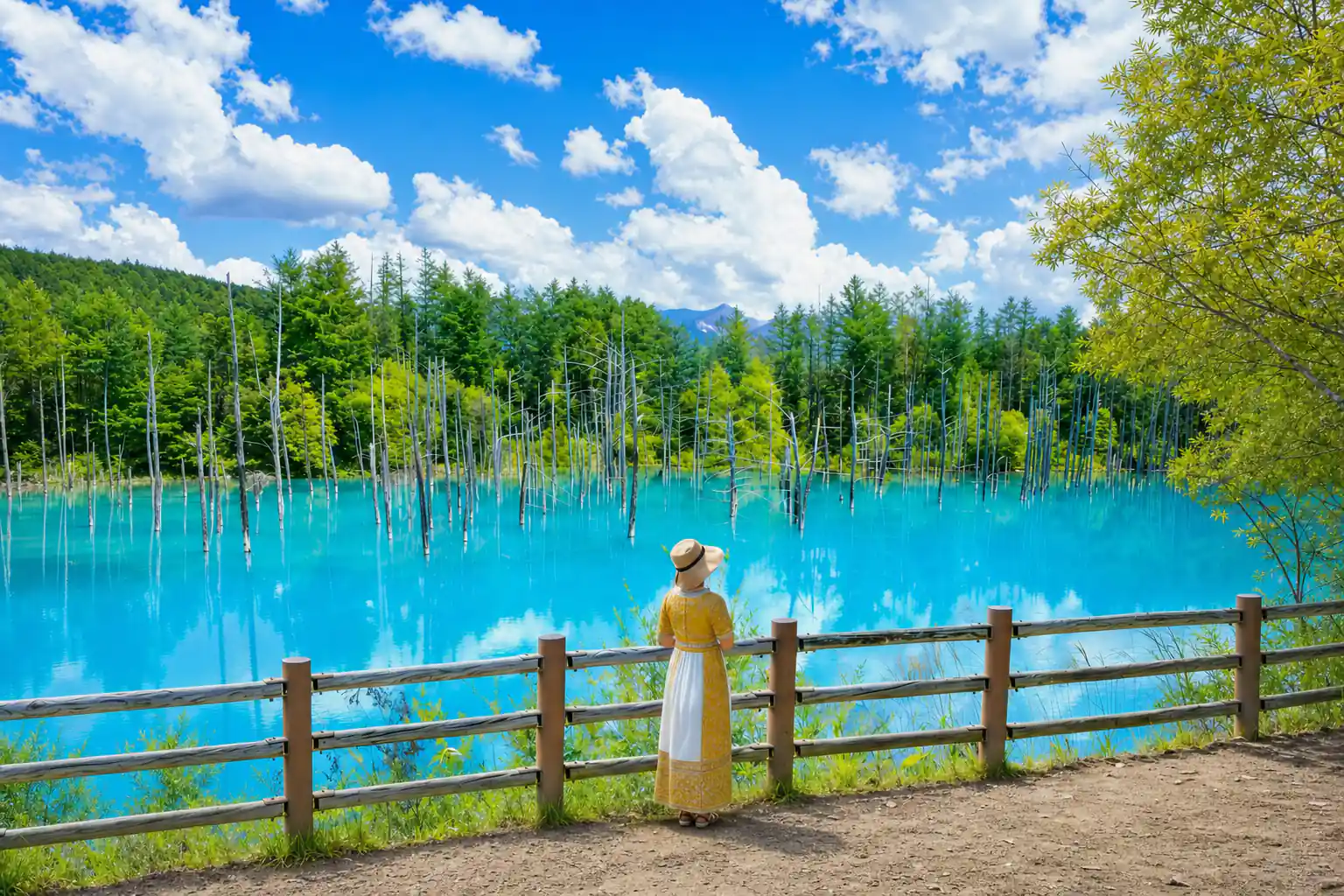
The brilliant blue of Shirogane Blue Pond in Hokkaido results from a phenomenon called Rayleigh scattering, the same process that makes the sky appear blue. When sunlight enters the water, it encounters suspended aluminium hydroxide colloids, microscopic particles left behind by volcanic minerals.
Is the Blue Pond worth a day from Sapporo?
Pre-booking checklist
On the day
- Runs by bus or coach with two starting location options and two drop-off locations[6]
- Stops include Patchwork Road, Shirogane Blue Pond, Shikisai No Oka and Farm Tomita[6]
- Biei has a cold continental climate with warm summers and freezing winters[9]
- Wear shoes with grip for the pond path and the flower farm walkways
Why the Blue Pond Turns Blue
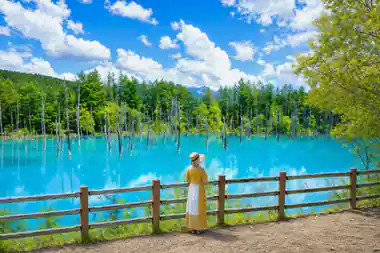
The colour is not paint, dye or a trick of the camera, and the water is not filtered or lit from below. The brilliant blue of Shirogane Blue Pond in Hokkaido results from a phenomenon called Rayleigh scattering, the same process that makes the sky appear blue. When sunlight enters the water, it encounters suspended aluminium hydroxide colloids, microscopic particles left behind by volcanic minerals.[1] Those particles scatter blue light back towards the surface, so anyone standing at the rail sees blue water rather than clear water. You do not need a filter or a special lens to see it; the colour is in the water itself.
The colloids are suspended throughout the water rather than settled on the bottom, and the blue belongs to the whole body of water rather than to a thin skin on its surface. Light through the day changes how strong it looks. In low, clear light the water can read deep and saturated; under flat grey cloud it turns pale and milky, and a breeze ruffles the surface until the trunks blur into the background. If the pond looks disappointing when you arrive, wait a few minutes. Conditions change quickly here, and a break in the cloud can shift the whole surface.
The Pond Was Born by Accident in 1988
The pond was created accidentally. In 1988, erosion control dams were built along the Biei River to protect against mudflows from the active volcano Tokachidake.[2] Water backed up behind the new structures and flooded a low, wooded patch of ground at the bottom of the valley. The drowned ground was already there; the dam simply raised the water level over it. What had been dry land became a pool, and that pool is what people now travel out from Sapporo to see. There is no grand design in the story, just erosion control that did its job and left something remarkable behind.
The volcano the dams were built to hold back is Tokachidake, which has an elevation of 2,077 m (6,814 ft) and last erupted in 2004.[10] From the pond you are looking at the downstream end of a working volcanic landscape, even on a still and quiet morning. Soft green ridges, a fast river and farmland that runs right up to the forest edge are all part of the same picture. That is part of what makes the place strange and memorable: a pool of impossible blue set in farm country, ringed by trees, with a live mountain somewhere behind them.
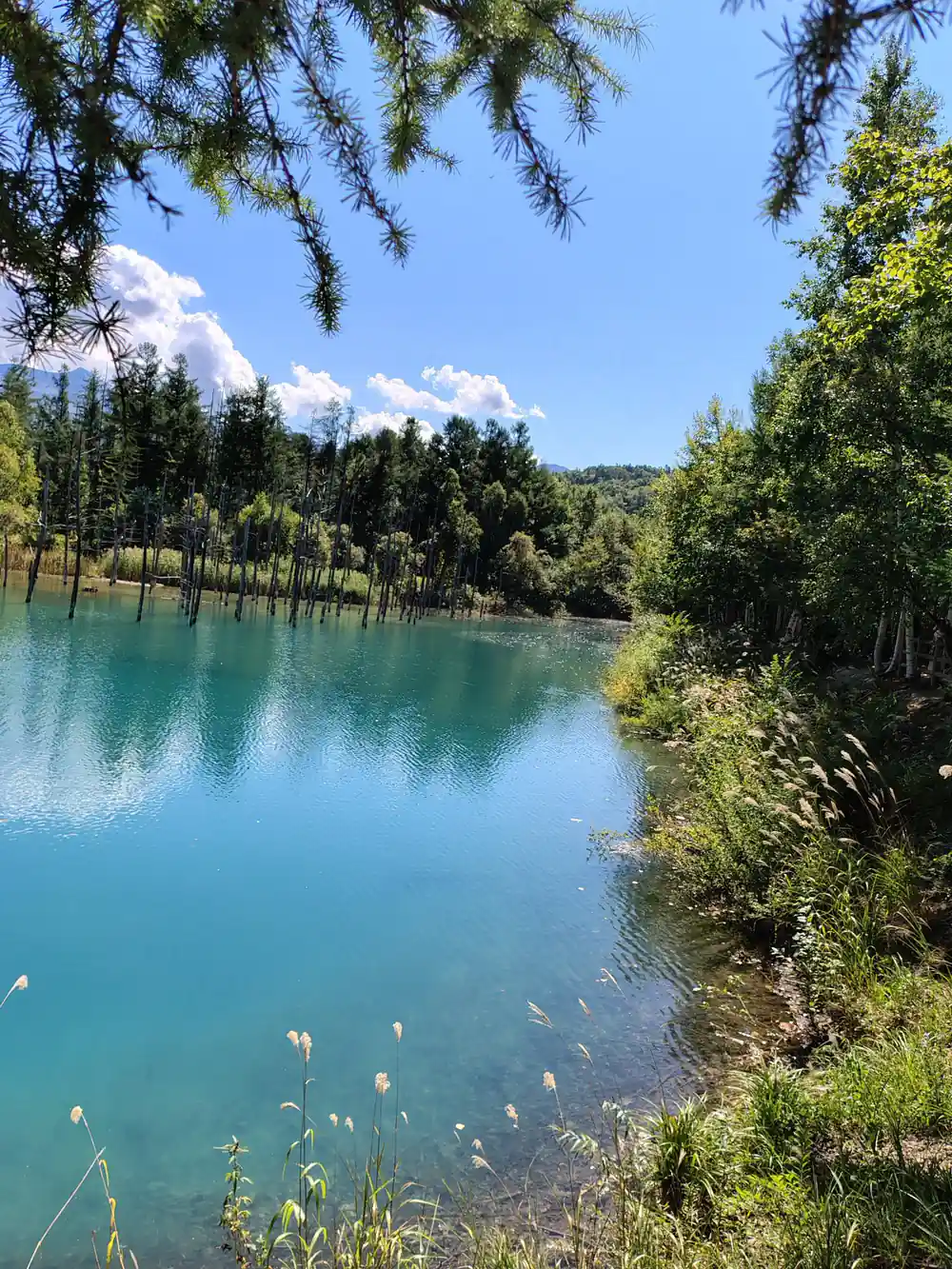
Bare larch and birch trunks stand in the Blue Pond, the remains of a forest the water flooded.
The Dead Trees Standing in the Water
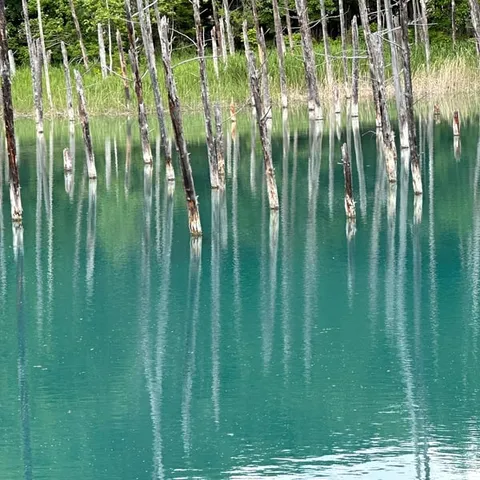
What was once a dry patch of forest now stands in the water like a sculpture garden.[3] The pale, branchless trunks are dead Japanese larch and white birch, still rooted where they grew before the water arrived.[3] They give the view its vertical lines and its sense of scale, standing between the blue surface and the hillside behind, and their reflection fills the middle of the frame. Without them the pond would be a flat sheet of colour; with them it has depth, shadows and a slightly haunting shape.
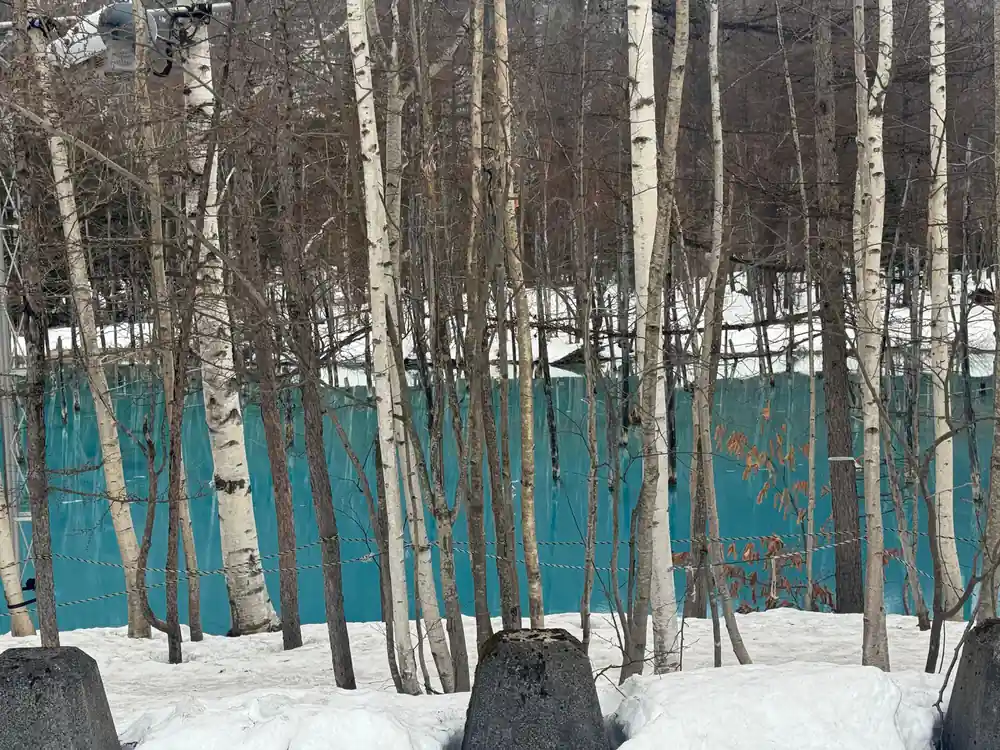
Up close the trunks look older than they are, weathered to a silver grey and furred with frost in the cold months. Walk along the bank rather than stopping at the first rail you reach. The trees line up differently from every angle, and where the water is unbroken the reflections double them. In spring and autumn the light comes in lower and the trunks cast long shadows across the surface. Keep to the paths and viewing areas, since the banks are soft ground and in winter the surface underfoot can be slick.
Shirogane, Biei and the Land Around the Pond
The pond lies in Shirogane, a small onsen area in the hills above Biei in central Hokkaido. Biei's population was 9,775 as of 31 December 2020.[11] The town has a cold continental climate, with warm summers and freezing winters.[9] Summer and winter feel like two different places here. In the warm months the fields are loud with colour and the pond is one stop on a loop of gardens and viewpoints; in the cold months the same roads run quiet and the water takes the light on its own. The roads between the fields and the forest are the kind you take slowly.
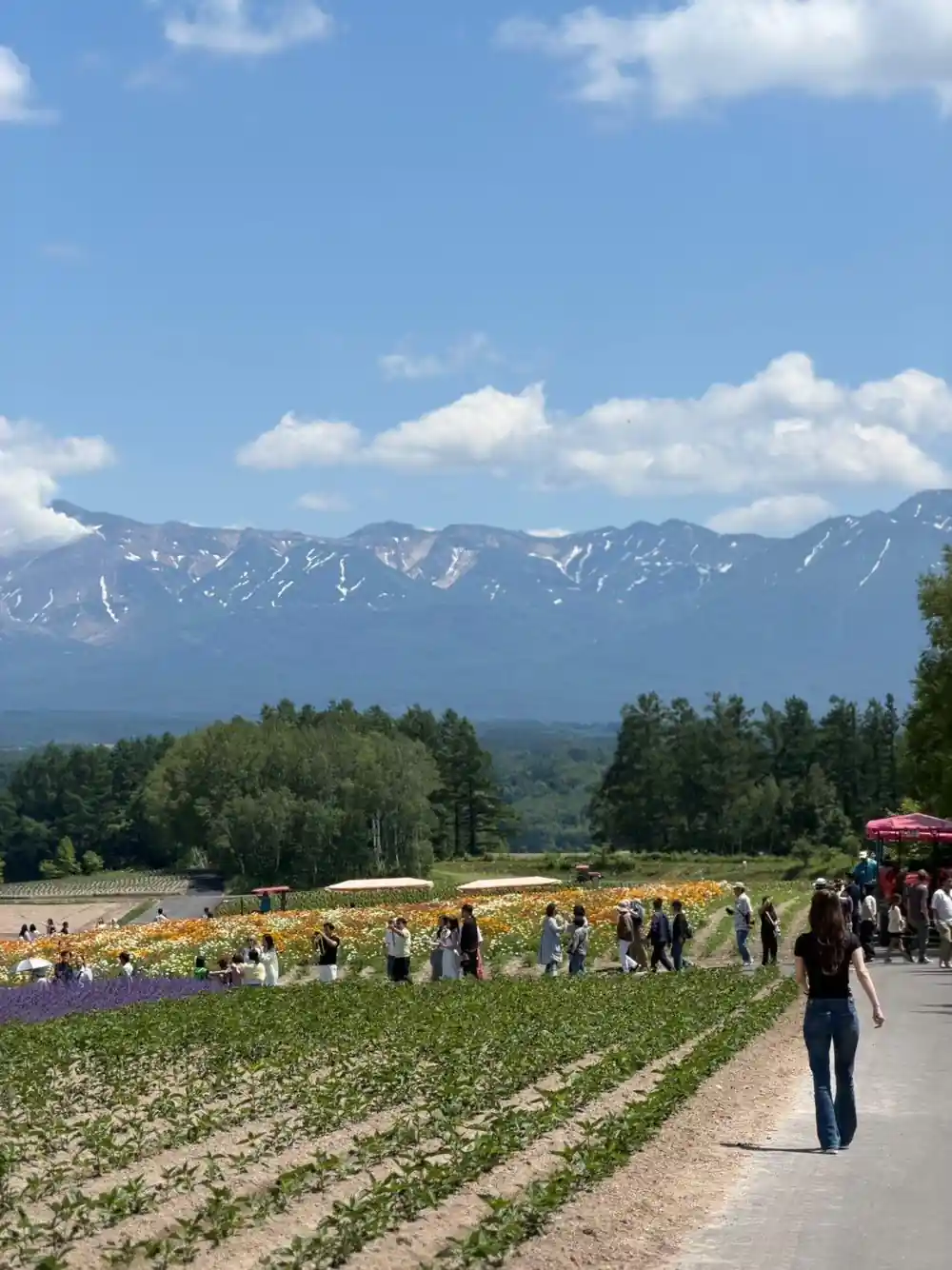
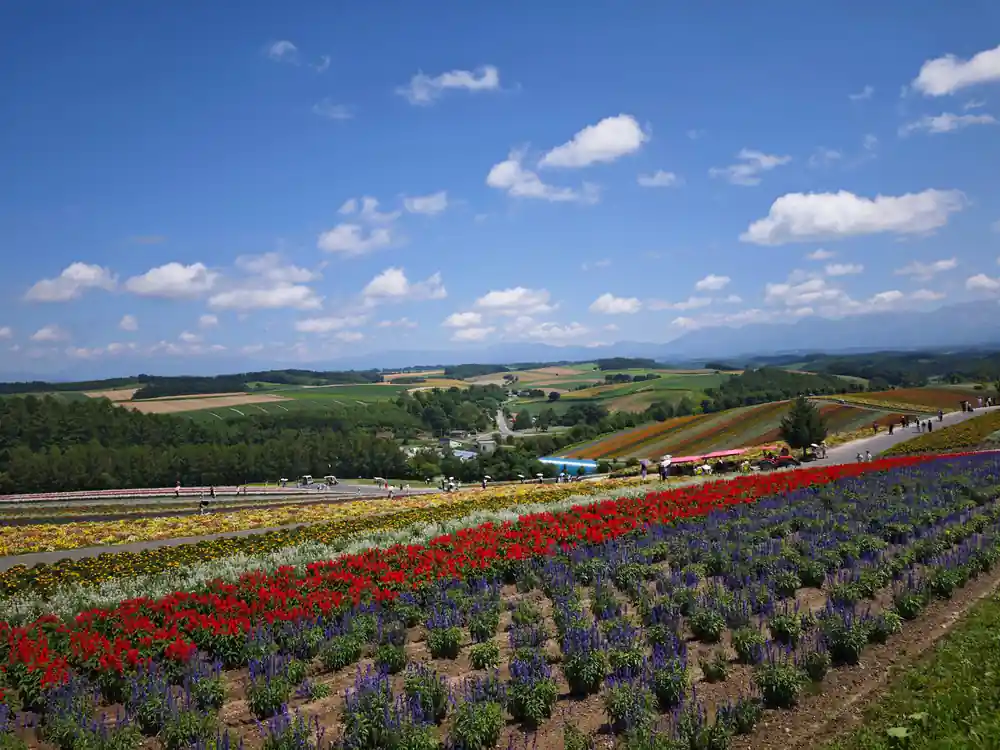
The farmland around Biei is worked in strips, and the strips change colour as the season turns. Wheat is one of the four main crops in Biei's crop rotation cycle, the others being potatoes, beans and sugar beet, and these form part of the patchwork landscape on Biei's hills.[12] Sugar beet and potatoes sit low in the rows while wheat stands taller, and from a car window the fields look like a quilt pinned to the slopes. Driving up from the station, that patchwork is the show before you reach the water. Look for the long, low barns and the windbreaks between fields, which give the hills their ruled lines and their blocks of colour.
from US$48
A one day coach tour from Sapporo stopping at Patchwork Road, Shirogane Blue Pond, Shikisai No Oka, a local restaurant and Farm Tomita.[6]
From a Local Pool to Apple's Laptop Screen
The Blue Pond in Biei, Hokkaido was featured in Apple's WWDC 2012 MacBook Pro with Retina Display introduction.[4] An appearance like that carries an image a long way, and it took a small pool in the hills to screens in places that had never heard of Biei. It may look familiar before your first visit. What the picture cannot give you is the cold air, the sound of water and the way the trunks shift as you move along the rail. That familiarity does not spoil the moment, but it does change how people photograph the water, looking for the frame they already know.
The pond had a local life long before that. It sits on the Biei River in Shirogane, a short drive from the onsen area, and it is a natural stop between the flower farms and the waterfall on a day out from Sapporo. What has changed is the company at the rail: coach groups, cyclists, photographers with tripods and drivers pulled in from the road for a look. The viewing area is compact, so timing your visit outside the busiest hours is the simplest way to enjoy it. Come early or stay late and you may get a quieter few minutes with the water.
Getting There and What to See Nearby
By public transport the Blue Pond takes some planning. From Biei Station it is about 20 minutes by Dohoku Bus route 39, and from Sapporo it is about 1 hour 25 minutes by JR Limited Express to Asahikawa plus 60 to 70 minutes by bus.[13] That means a train, a change of station and a bus, with a timetable to watch. A coach day from Sapporo takes the logistics out of your hands and puts the stops in a sensible order, which matters when light and weather are the things you came for. Whichever way you travel, bring a drink and something to eat between the stops.
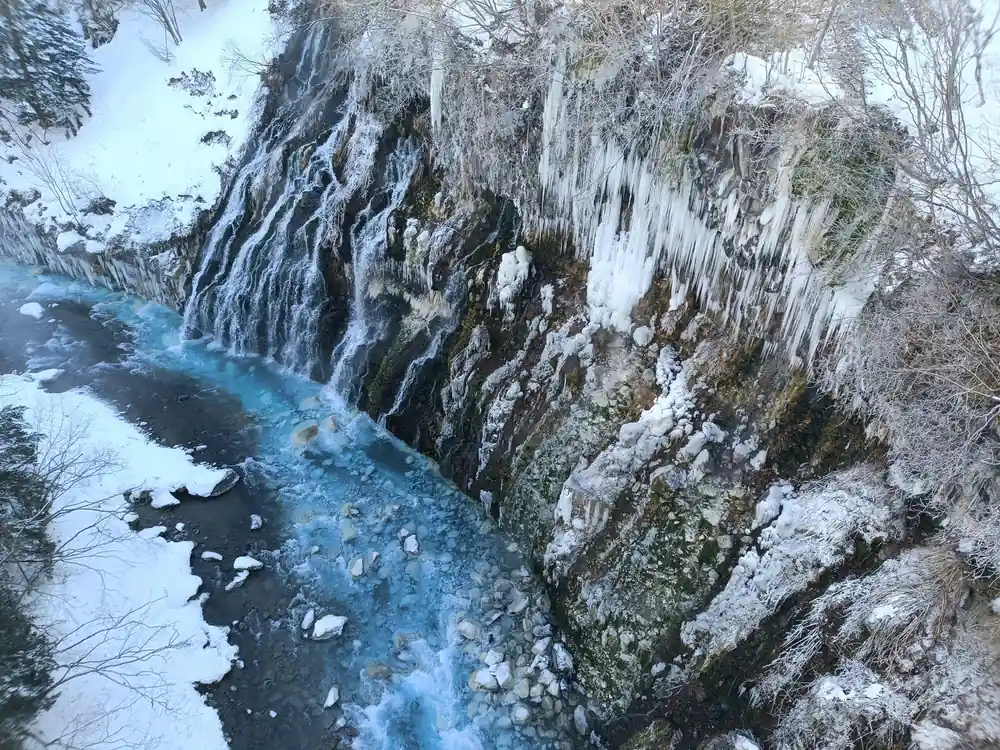
The pond is rarely the only stop on a day out. Shikisai-no-oka is a set of panoramic flower gardens in Biei spread across fifteen hectares of land.[14] Shirahige Falls drops approximately 30 meters into the Biei River and is a rare subterranean stream waterfall whose water flows directly from cracks in the rock face.[15] At Farm Tomita, lavender in the Traditional Lavender Field blooms from late June to late July, with the best viewing season from early to mid-July.[16] Build a day around those and the pond becomes one panel in a much bigger picture. Allow time at each stop rather than rushing between them; the driving eats more of the day than a map suggests.
When the Blue Looks Its Best
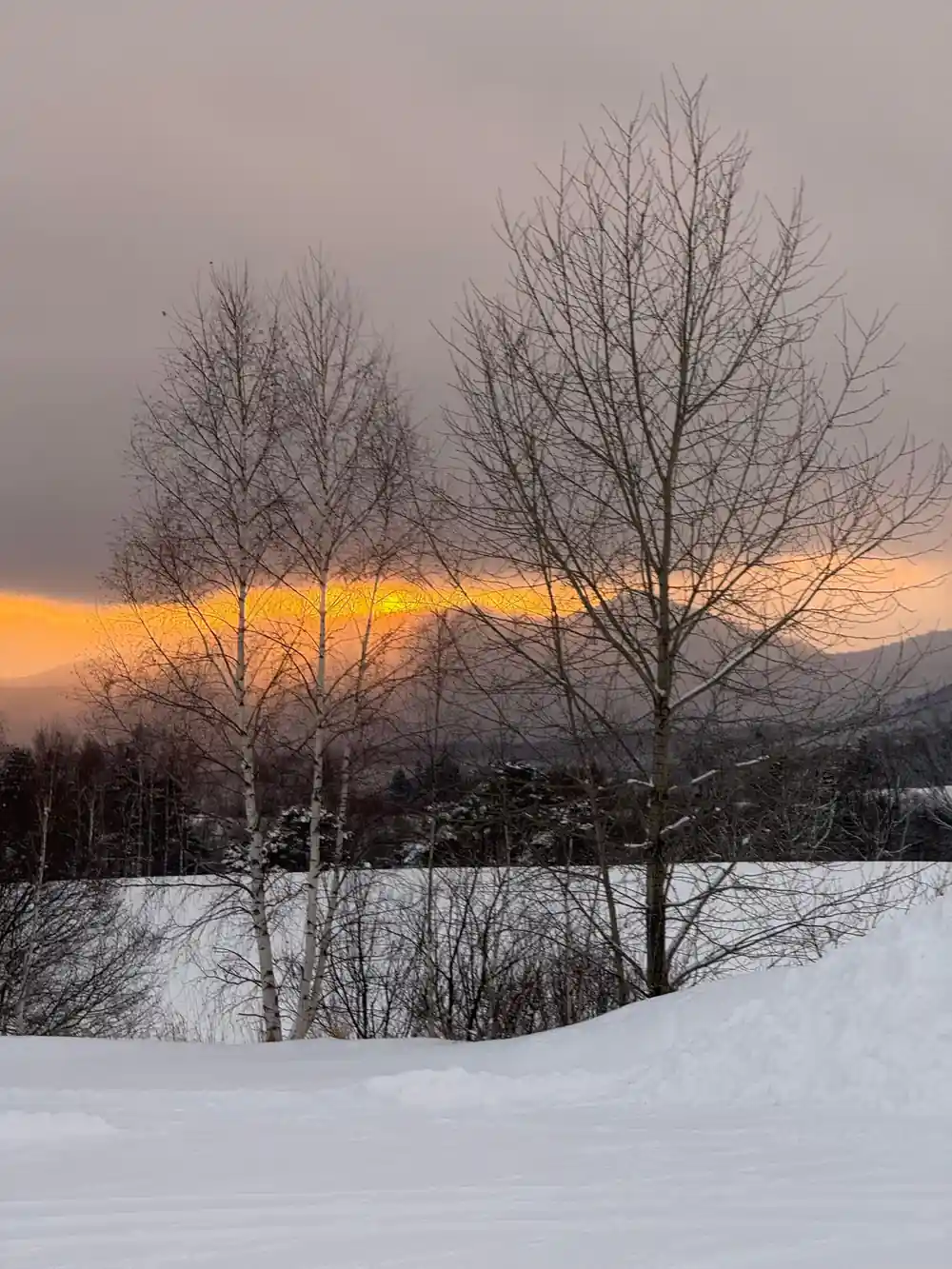
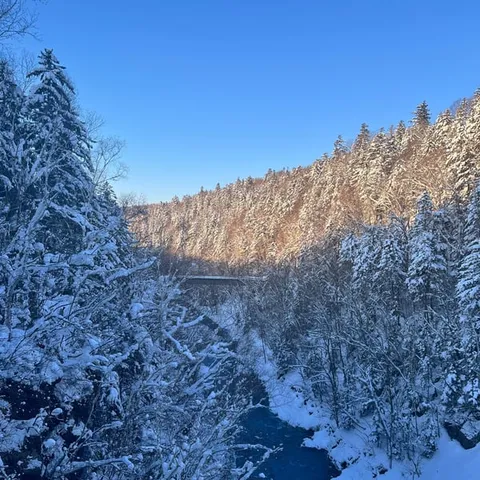
From October 24, 2025 to April 22, 2026, the Blue Pond is illuminated in the evening, with lighting until 9:00 PM.[5] Start times shift through the season: 5:00 PM in October, November and January, 4:30 PM in December, 5:30 PM in February, 6:00 PM in March and 6:30 PM in April.[5] In the depths of winter the lights come on in the middle of the afternoon, and the lit water sits against snow and darkness. Evening visits mean cold hands, so gloves and a warm hat earn their place in your bag.
In summer the pond is one stop among flower fields, and the light is high and bright when the coaches pull in. In winter the water and the bare trunks become the whole picture, with snow along the banks and a hard blue in the water. Either way, the pond rewards a slow look at the rail rather than a quick photograph from the path. Take the layers you would take for any day in the hills, keep half an eye on the clock, and let the weather decide the rest.
How many travellers have reviewed each Sapporo Biei day tour
Every figure is the review count on the GetYourGuide listing for that tour.[6][7][8][17][18]
What a Blue Pond day out costs from Sapporo
From-prices are the GetYourGuide listing prices for these Sapporo day tours.[6][7][8][19]
When to book for what you want to see
Planning your Blue Pond day
Choose a season
At Farm Tomita's Traditional Lavender Field, lavender blooms from late June to late July, best viewed from early to mid-July.[16]
Book from Sapporo
The Colored Hokkaido day tour leaves from Sapporo from US$48, with free cancellation up to 24 hours in advance.[6]
Ride to Biei
The coach stops at Patchwork Road in Biei before it reaches Shirogane Blue Pond.[6]
Walk down to the water
The viewing area looks straight over the blue water and the dead larch trunks, and the path can be icy in winter.
Finish at the flower farms
Later stops include Shikisai No Oka, a local restaurant and Farm Tomita, with two drop-off locations at the end.[6]
Ride from Sapporo to the Blue Pond and the Furano flower fields
from US$48Reserve now & pay later