At a glance
- Tokachidake above the Furano and Biei basin stands at 2,077 m (6,814 ft) and last erupted in 2004.[1]
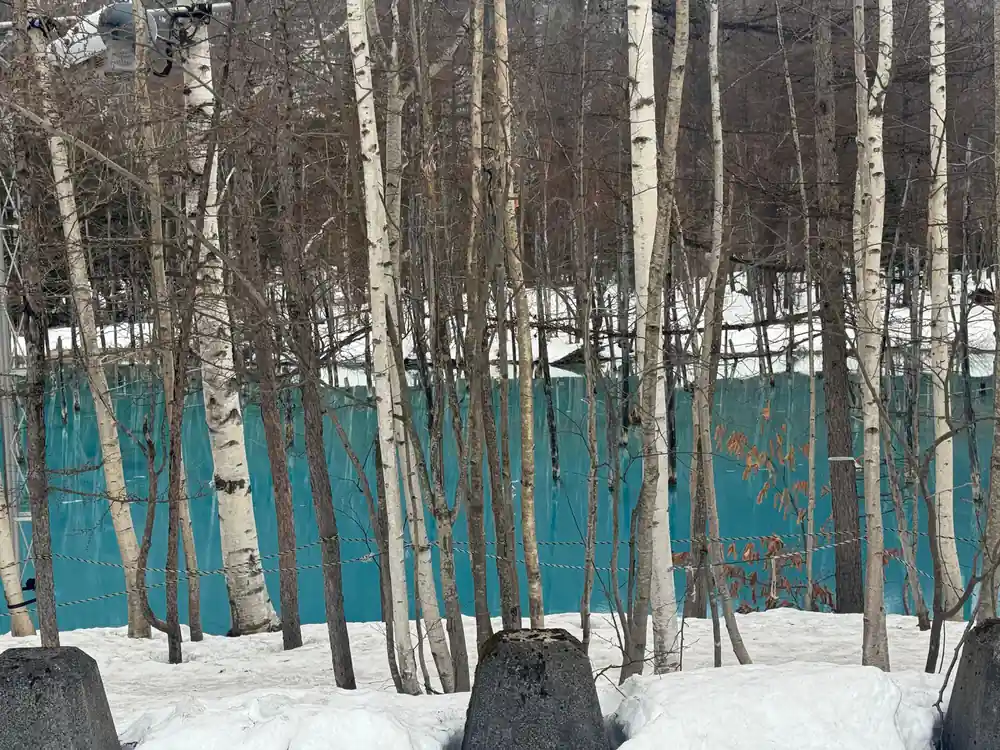
- The Blue Pond was created accidentally in 1988 when erosion control dams were built along the Biei River to protect against mudflows from Tokachidake.[2]
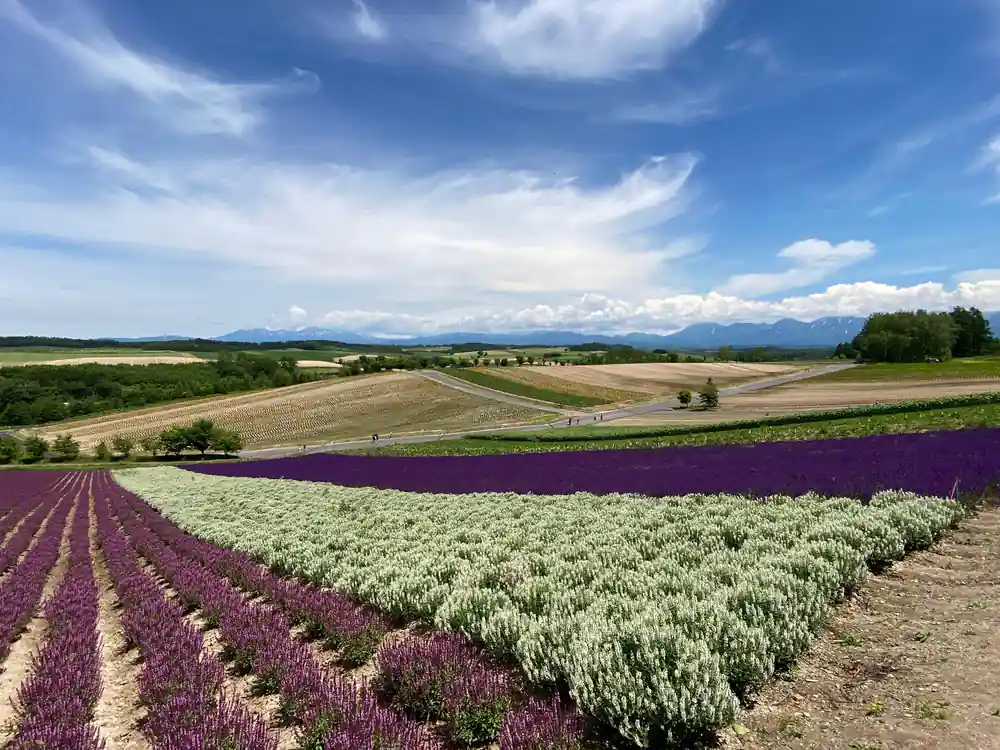
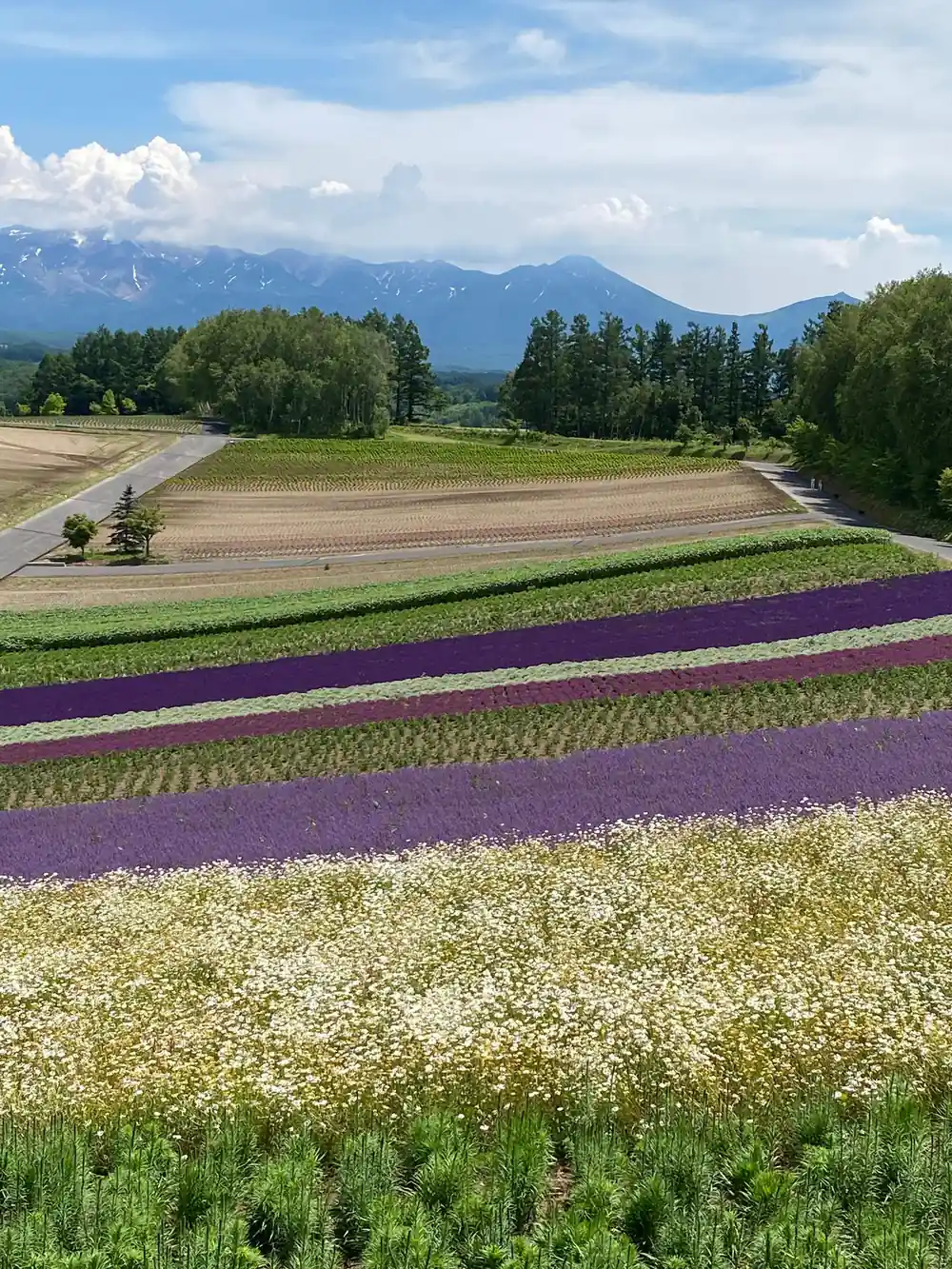
- At Farm Tomita's Traditional Lavender Field, lavender blooms from late June to late July, with the best viewing season from early to mid-July.[3]
- From Biei Station the Blue Pond is about 20 minutes by Dohoku Bus route 39, and from Sapporo 1 hour 25 minutes to Asahikawa plus 60 to 70 minutes by bus.[4]
- The Colored Hokkaido tour from Sapporo runs for 1 day, stops at Patchwork Road, Shirogane Blue Pond, Shikisai No Oka and Farm Tomita, and starts from US$48.[5]
- Top choice Furano & Blue Pond day tour from US$48 Duration1 day[5]Rating4.56 from 122 reviews[5]Guide languagesEnglish, Chinese, Japanese, Korean[5]CancellationFull refund up to 24 hours ahead[5] Check availability
- Zoo, waterfall & Blue Pond from US$48 Duration9 hours - 1 day[6]Rating4.49 from 47 reviews[6]Guide languagesChinese, English[6]CancellationFull refund up to 24 hours ahead[6] See this tour
- Biei Best 5 photo spots from US$60 Duration10 - 10.5 hours[7]Rating4.72 from 77 reviews[7]Guide languagesEnglish, Korean, Chinese[7]CancellationFull refund up to 24 hours ahead[7] See this tour
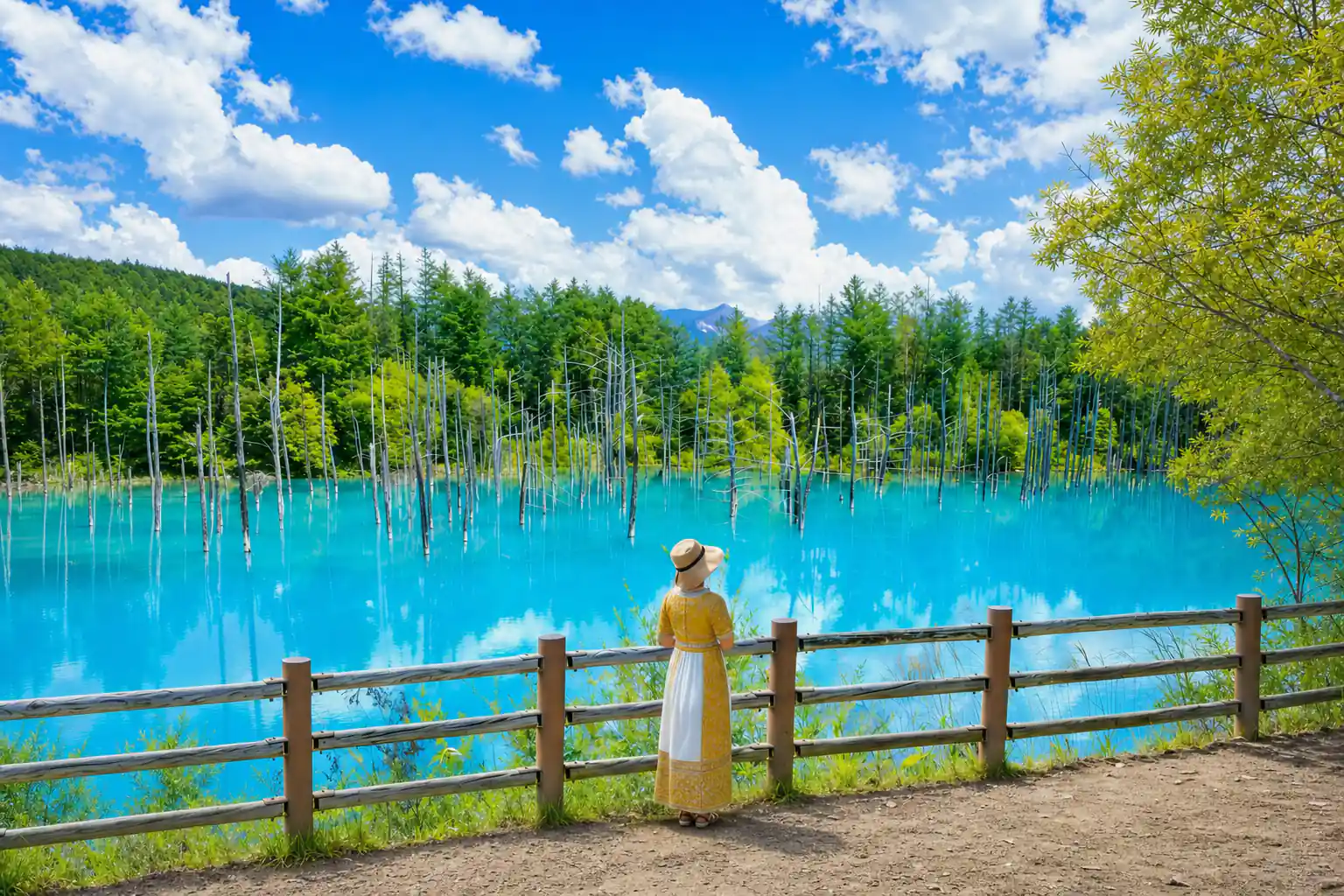
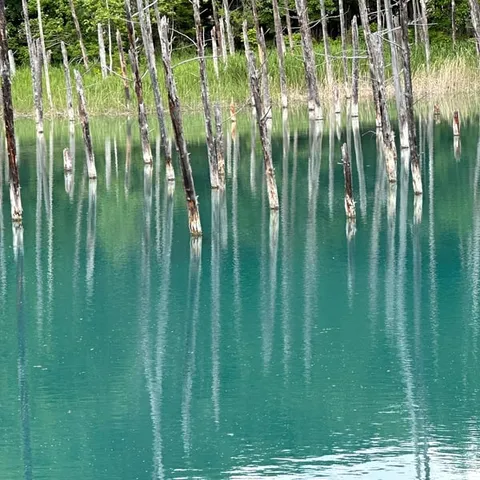
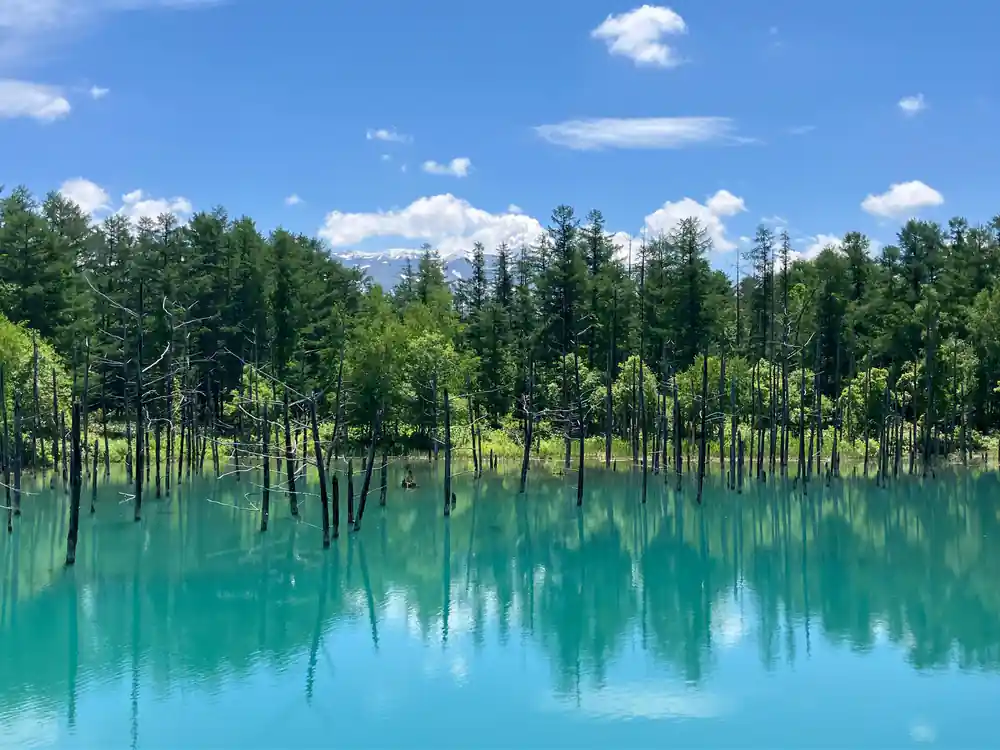
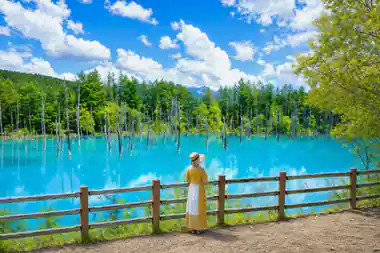
One of the most haunting elements of the scene is the ghost-like silhouettes of dead Japanese larch and white birch trees rising from the water. What was once a dry patch of forest now stands like nature’s own sculpture garden, fragile and quiet against the gentle lap of blue water.
Is a Furano day tour worth it?
Getting there and booking
- From Sapporo, JR Limited Express to Asahikawa takes about 1 hour 25 minutes[4]
- From Biei Station, Dohoku Bus route 39 reaches the Blue Pond in about 20 minutes[4]
- Sapporo day tours to Furano and the Blue Pond start from US$43[8]
- The Colored Hokkaido tour offers free cancellation up to 24 hours in advance[5]
What to wear and what to expect
- Farm Tomita's Traditional Lavender Field blooms from late June to late July[3]
- Biei and the Furano basin have a cold continental climate with freezing winters[9]
- Guides on the booked tour speak English, Chinese, Japanese and Korean[5]
- Take a waterproof layer and shoes with grip for misty mornings and frosty paths
The Ainu Heart of the Furano Valley
Long before lavender rows and ski lifts, this valley was Ainu country. The Ainu are the indigenous people of Hokkaido, and their knowledge of the land runs from the salmon rivers to the volcanic slopes above the basin. Place names across the island still carry Ainu words, and Furano's name sits in that older layer of the map. Walking the valley with that in mind changes what you notice: the springs, the sheltered forest edges, the ground that stays warm under the snow, the way the fields follow the shape of the land rather than a grid. None of it is on a signpost, but it is all around you.
The valley's Ainu heritage is bound up with the river and the seasons. Fish and game, wild plants in spring, the first salmon runs, the hard winters: the calendar here was set by when the land gave food rather than by a planting schedule. Museums and cultural centres around the basin keep that story going, and some reading before you arrive makes the landscape read differently. If the Hokkaido Ainu people interest you, look for local collections rather than expecting the story to be spelled out at the flower farms.
Volcanic Soil and the Basin's Foundation
The valley sits in the shadow of the mountains that shaped it. Tokachidake, the volcano on the skyline above the Furano and Biei basin, has an elevation of 2,077 m (6,814 ft) and last erupted in 2004.[1] The fields you drive past are grown on volcanic ground, and volcanic minerals reach the water as well. The Blue Pond is blue because suspended aluminium hydroxide colloids in the water scatter blue light in a process called Rayleigh scattering.[10] It is the same trick that makes the sky look blue, played out in a small reservoir between the trees.
The pond itself was never planned. The Blue Pond was created accidentally in 1988 when erosion control dams were built along the Biei River to protect against mudflows from the active volcano Tokachidake.[2] Standing in the water are dead Japanese larch and white birch trees, once a dry patch of forest, now standing in the water like a sculpture garden.[11] A short drive away, Shirahige Falls drops approximately 30 meters into the Biei River and is a rare subterranean stream waterfall whose water flows directly from cracks in the rock face.[12] Both are quick stops, and both look completely different in rain, snow and full sun.
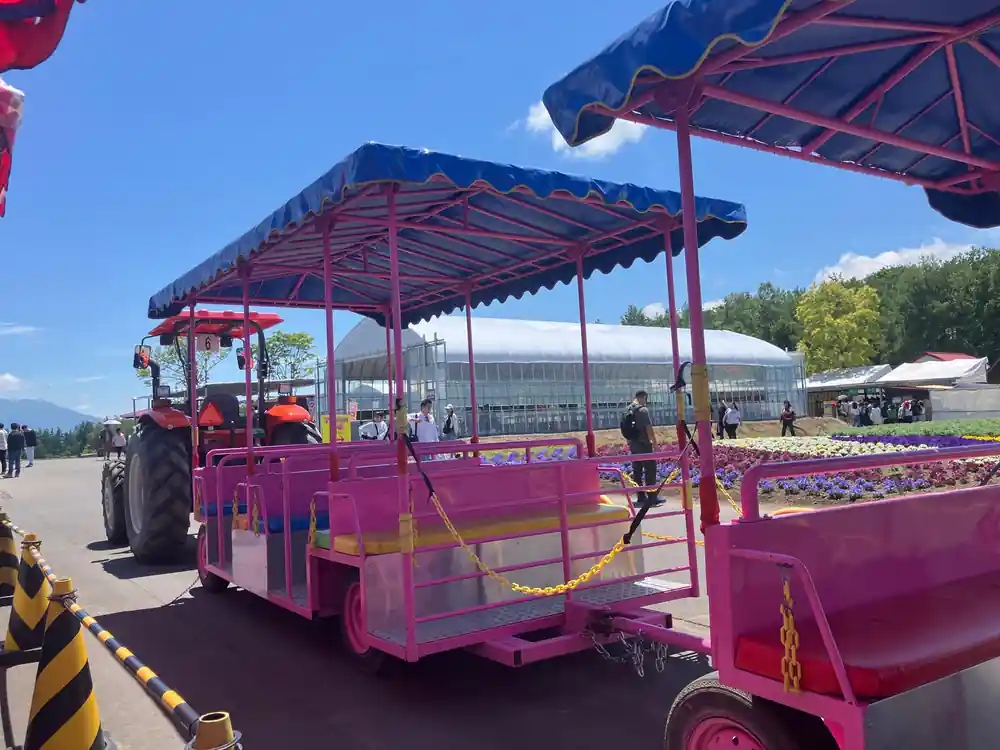
Morning mist on the fields below the volcano, before the day warms up.
Temperature Extremes and Morning Fog
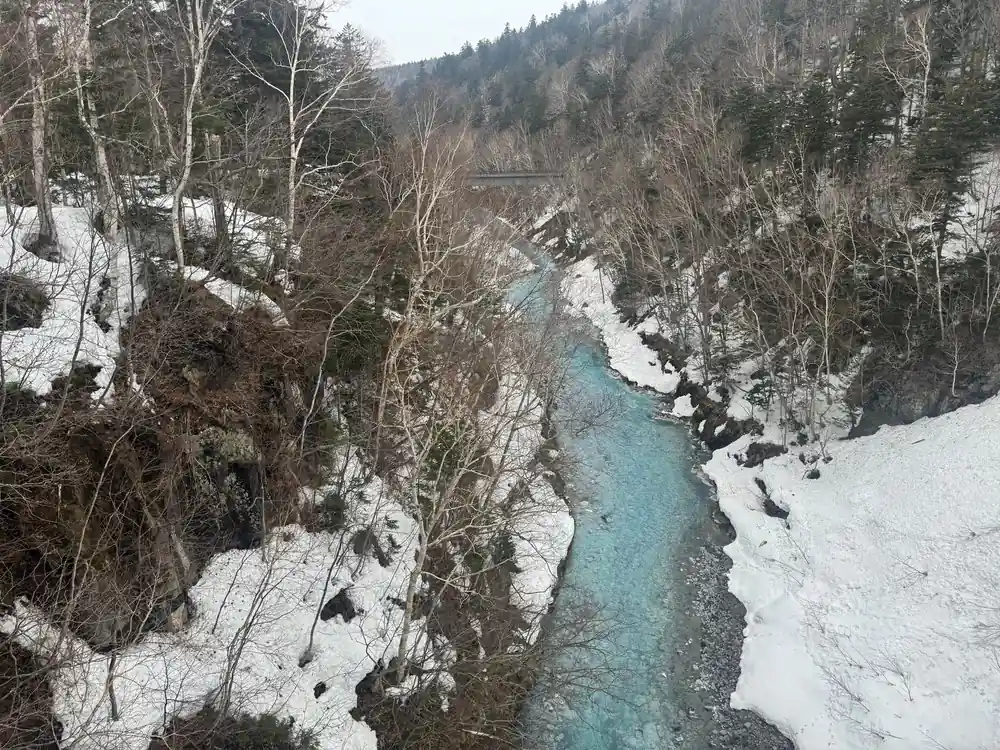
The basin is a bowl, and bowls collect cold air. Biei has a cold continental climate with warm summers and freezing winters.[9] Early in the morning, mist settles over the fields and the river, and the hills come and go behind it. Farmers work around that rhythm, and visitors get it as scenery. If you are out before breakfast, take a layer you can shed by mid-morning, and keep a cloth for your camera lens, because the damp gets into everything. The fog lifts as the sun climbs, and the valley opens up in stages: the near fields, then the tree line, then the volcano.
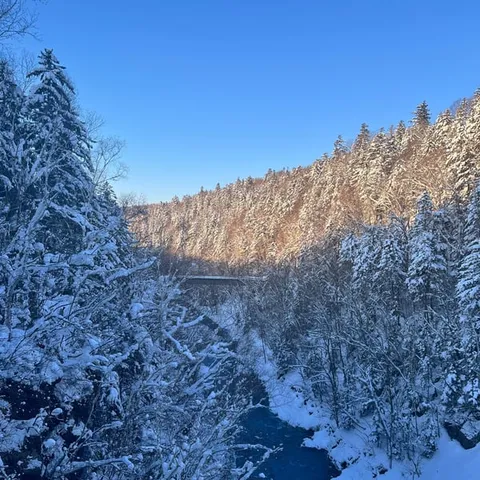
Summer days can be genuinely warm, and the flower fields depend on that heat. Winter is a different valley: snow lies on the fields and the light turns flat and blue well before dinner. For a winter look at the water, the Blue Pond illumination runs from October 24, 2025 to April 22, 2026, with lighting until 9:00 PM.[13] Start times shift with the month, from 5:00 PM in October, November and January to 6:30 PM in April.[13] Dress for standing still in the cold, and bring a tripod if you care about photographs.
Timing your day around the fog is worth the effort. Early starts give you mist over the fields and quiet roads, and late afternoons give you warm light on the hills. If you are driving yourself, the quieter hours are early and late, with the middle of the day best used for a long lunch and the smaller viewpoints. A short walk along the river in the morning is one of the simplest pleasures in the valley.
The Television Drama That Changed Everything
For many Japanese travellers, Furano is not a flower destination first. It is a place they know from television. A drama set in the town and its farms made the valley familiar to viewers across the country, and the town leaned into what it already had: the fields, the light and the seasons. You can still see the idea at work in how Furano presents itself, somewhere between a working farm town and a place people come to look at.
The Blue Pond had its own turn on a global stage. It was featured in Apple's WWDC 2012 MacBook Pro with Retina Display introduction.[14] That is strange fame for a piece of erosion control work, and the pond is better seen in person than on a screen. Furano and Biei together make an easy pairing: one valley, two towns and a set of viewpoints that change completely with the season. Give yourself time at the pond rather than treating it as a photo stop, because the colour shifts as the light moves.
from US$48
The Colored Hokkaido tour from Sapporo runs for 1 day, from US$48, and stops at the Blue Pond, Shikisai No Oka and Farm Tomita.[5]
Powder Snow and Winter in Furano
Yes, you can ski in Furano. The town sits below slopes that collect the dry, light snow Hokkaido is known for, and winter runs through the coldest months, when the valley floor is under snow and the roads are white. It is a working town with a ski hill rather than a purpose-built resort, and you can sleep in a guesthouse in town and still be on the slopes the same morning. You can spend the morning on the hill and be back among the shopfronts by lunch, which suits travellers who want the mountains without a long transfer.
As for how much snow Furano gets, the honest answer is that it varies by elevation and by winter, so check a forecast close to your dates rather than planning around a single number. What is dependable is the cold: Biei has a cold continental climate with warm summers and freezing winters.[9] Pack layers you can move in, gloves that stay dry, and boots with grip, because ice is the thing that catches visitors out. If you are travelling in the middle of winter, leave slack in your plans for snow days.
The Belly Button Festival at the Valley's Centre
Furano calls itself the navel of Hokkaido, and once a summer the joke turns into a street party. Townspeople paint faces on their bare bellies, hide behind a cloth so only the painted belly is on show, and parade through the middle of town. The whole thing takes its name from the claim that the valley sits at the island's centre, and it is staged with a straight face and a lot of laughter. Arrive early and find a spot on the pavement.
It happens in the warm middle of the year, when the lavender rows are in colour and the evenings are long. For travellers it is the clearest expression of how the town sees itself: agricultural, unhurried and entirely willing to be a little ridiculous about its own geography. Pair the festival with the flower fields, or with a trip out to the Blue Pond and the Biei hills, and you have the valley covered. The centre is small enough to walk, so you can drift between the parade route and the food stalls without a plan.
If your trip lines up with the festival, build the rest of the day around it rather than trying to see everything at once. The flower fields and the Blue Pond sit out in the hills, so a morning out there and an afternoon in the streets works well. If you are coming from Sapporo, the organised day tours take care of the driving.
Seeing the Valley in a Single Day
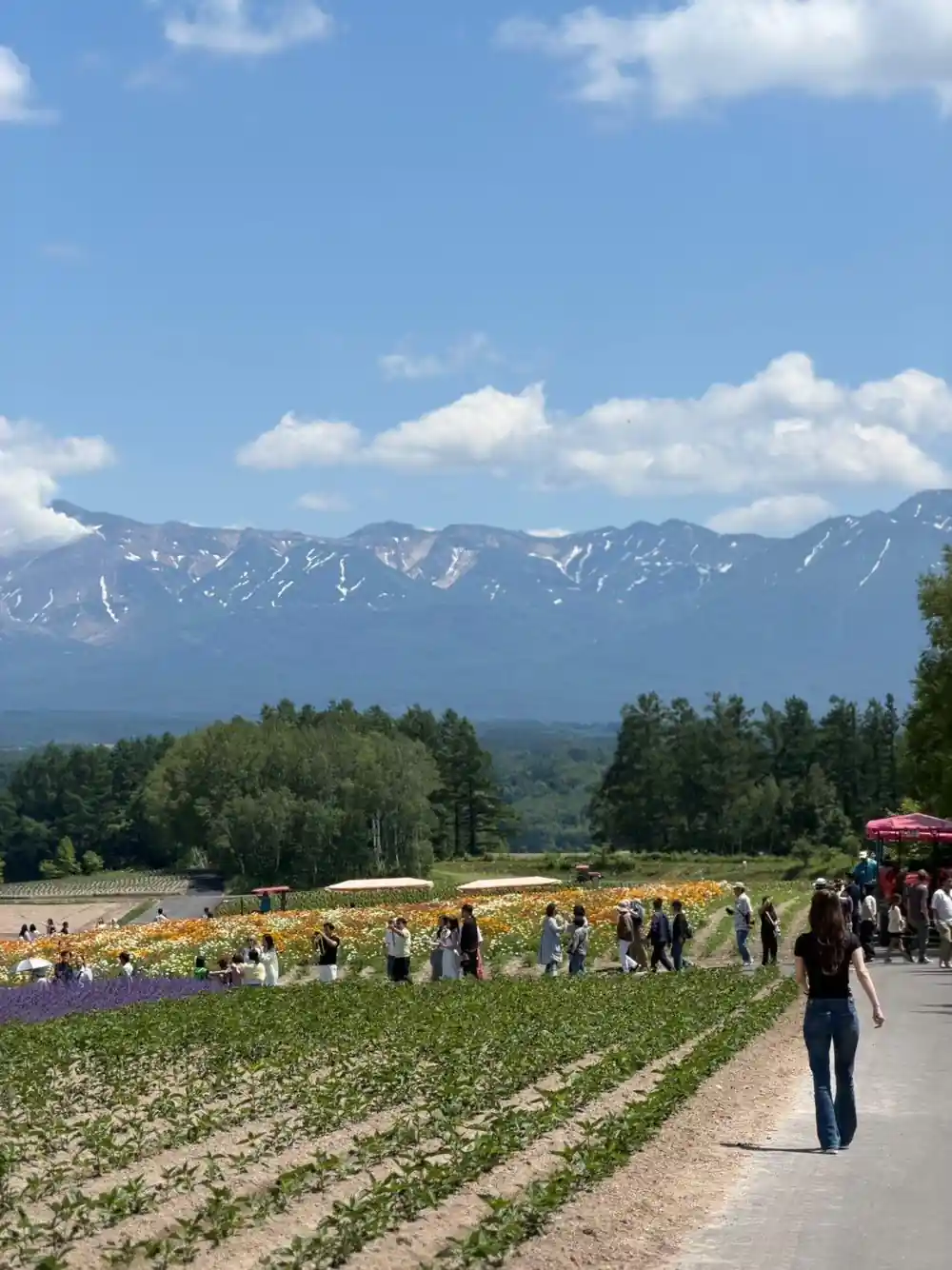
If you would rather not drive, the Colored Hokkaido tour from Sapporo covers the route. The listing gives the duration as 1 day, with stops at Patchwork Road (Biei), Shirogane Blue Pond, Shikisai No Oka, a local restaurant and Farm Tomita, plus 2 starting location options and 2 drop-off locations.[5] Prices start from US$48, and the tour holds a rating of 4.56 from 122 reviews.[5] A live guide works in English, Chinese, Japanese and Korean.[5]
A pair of the places on the schedule earn their slot twice over. Shikisai-no-oka is a set of panoramic flower gardens in Biei spread across fifteen hectares,[15] and Farm Tomita's Traditional Lavender Field blooms from late June to late July, with the best viewing season from early to mid-July.[3] Independent travellers can manage the same ground: from Biei Station, the Blue Pond is about 20 minutes by Dohoku Bus route 39.[4] From Sapporo it is about 1 hour 25 minutes by JR Limited Express to Asahikawa plus 60 to 70 minutes by bus.[4]
Whichever way you travel, the same advice applies. Start early, carry some cash for small farm stalls, and leave room in the day for a stop you did not plan. The valley is not a checklist: half the pleasure is in the drive between the fields, with the volcano somewhere behind the trees and the smell of cut grass coming through the window.
Day tour prices from Sapporo
From prices in US dollars for Sapporo day tours that take in the Furano and Biei countryside:[5][7][8][16][17]
Compare tour prices from Sapporo
From prices in US dollars:[5][6][7][8]
When to go in the Furano valley
Plan your Furano day
Choose your season
Lavender at Farm Tomita's Traditional Lavender Field blooms from late June to late July, with the best viewing season from early to mid-July.[3]
Book the tour
The Colored Hokkaido tour from Sapporo runs for 1 day, starts from US$48 and offers free cancellation.[5]
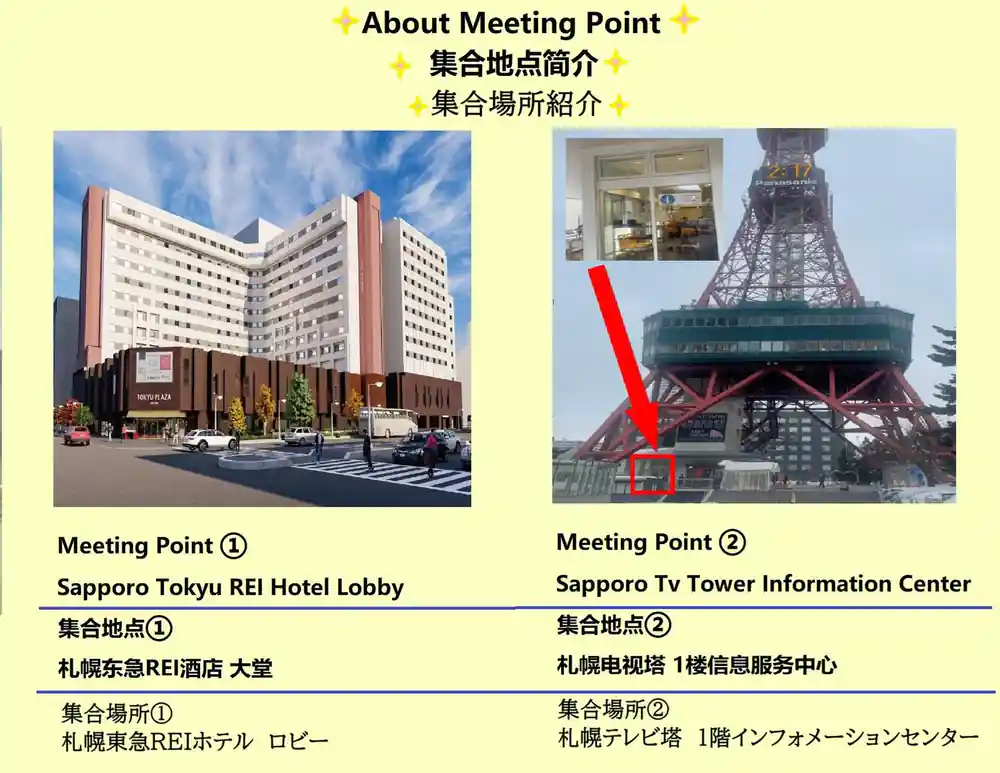
Meet in Sapporo
The listing gives 2 starting location options and 2 drop-off locations in Sapporo, so check your meeting point before you go.[5]
Pack for the valley
Biei has a cold continental climate with warm summers and freezing winters, so bring layers you can add and remove through the day.[9]
Know the stops
The route takes in Patchwork Road (Biei), Shirogane Blue Pond, Shikisai No Oka, a local restaurant and Farm Tomita.[5]
See the flower fields and the Blue Pond on a day out from Sapporo
from US$48Reserve now & pay later