At a glance
- Wheat, potatoes, beans and sugar beet are the four main crops in Biei's rotation, and together they make up the patchwork on the hills.[1]
- Ken and Mary, Seven Stars and the other roadside trees stand alone in the fields, easy to spot from a car and easy to photograph in low light.
- The Blue Pond is about 20 minutes from Biei Station by Dohoku Bus route 39, and Sapporo is about 1 hour 25 minutes away by JR Limited Express to Asahikawa plus 60-70 minutes by bus.[2]
- Farm Tomita's Traditional Lavender Field blooms from late June to late July, and the best viewing season is early to mid-July.[3]
- The Colored Hokkaido tour from Sapporo covers Patchwork Road, the Blue Pond, Shikisai-no-oka and Farm Tomita, and is from US$48.[4]
- Top choice Furano & Biei Blue Pond from US$48 Duration1 day[4]Rating4.56 from 122 reviews[4]Guide languagesEnglish, Chinese, Japanese, Korean[4]CancellationCancel up to 24 hours in advance[4] Check availability
- Asahiyama Zoo & Blue Pond from US$48 Duration9 hours[5]Rating4.25 from 113 reviews[5]Guide languagesEnglish, Chinese[5]CancellationCancel up to 24 hours in advance[5] See this tour
- Biei Best 5 Day Tour from US$60 Duration10 - 10.5 hours[6]Rating4.72 from 77 reviews[6]Guide languagesEnglish, Korean, Chinese[6]CancellationCancel up to 24 hours in advance[6] See this tour

Wheat is an important part of Biei’s agriculture. It is one of the four main crops that make up Biei’s crop rotation cycle, the others being potatoes, beans and sugar beet.
Is the Patchwork Road worth the detour?
Good to know
How volcanoes and glaciers shaped Biei's striped hills
Biei sits in a shallow bowl of farmland between the Daisetsuzan range and the hills west of town, and the shape of the land is a story told by ice and fire. Glaciers ground through these valleys long before anyone planted a field, leaving the smooth, rounded slopes that catch the sun in long bands. Volcanic material from Tokachidake settled over the same ground. The peak rises to 2,077 m (6,814 ft) and last erupted in 2004.[10]
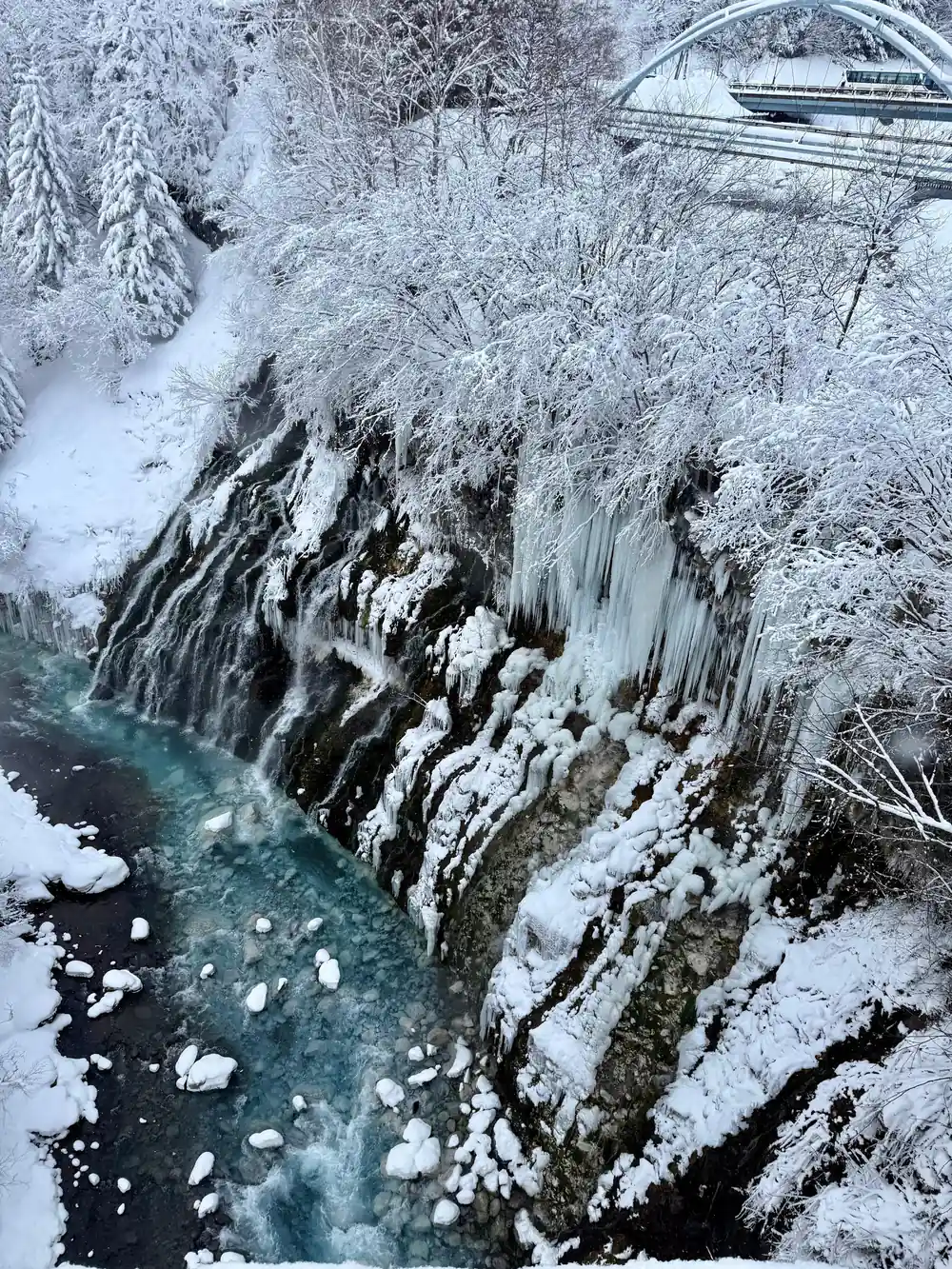
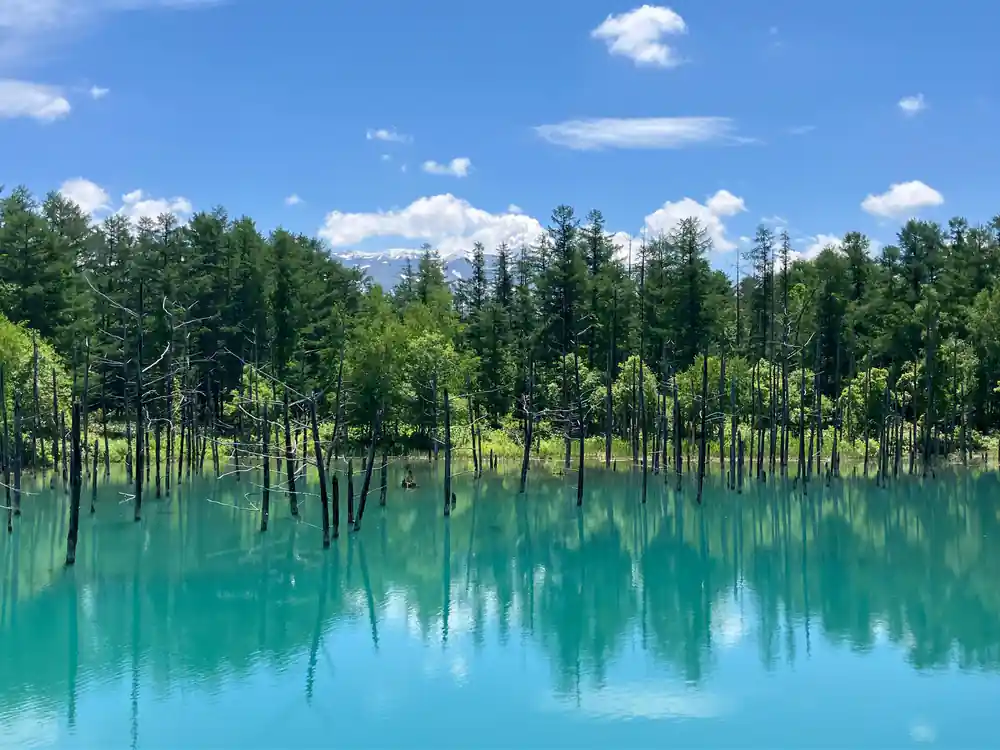
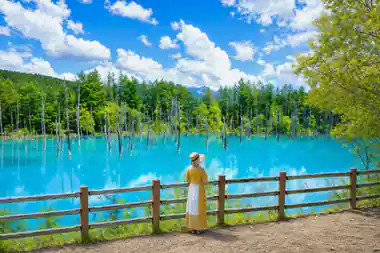
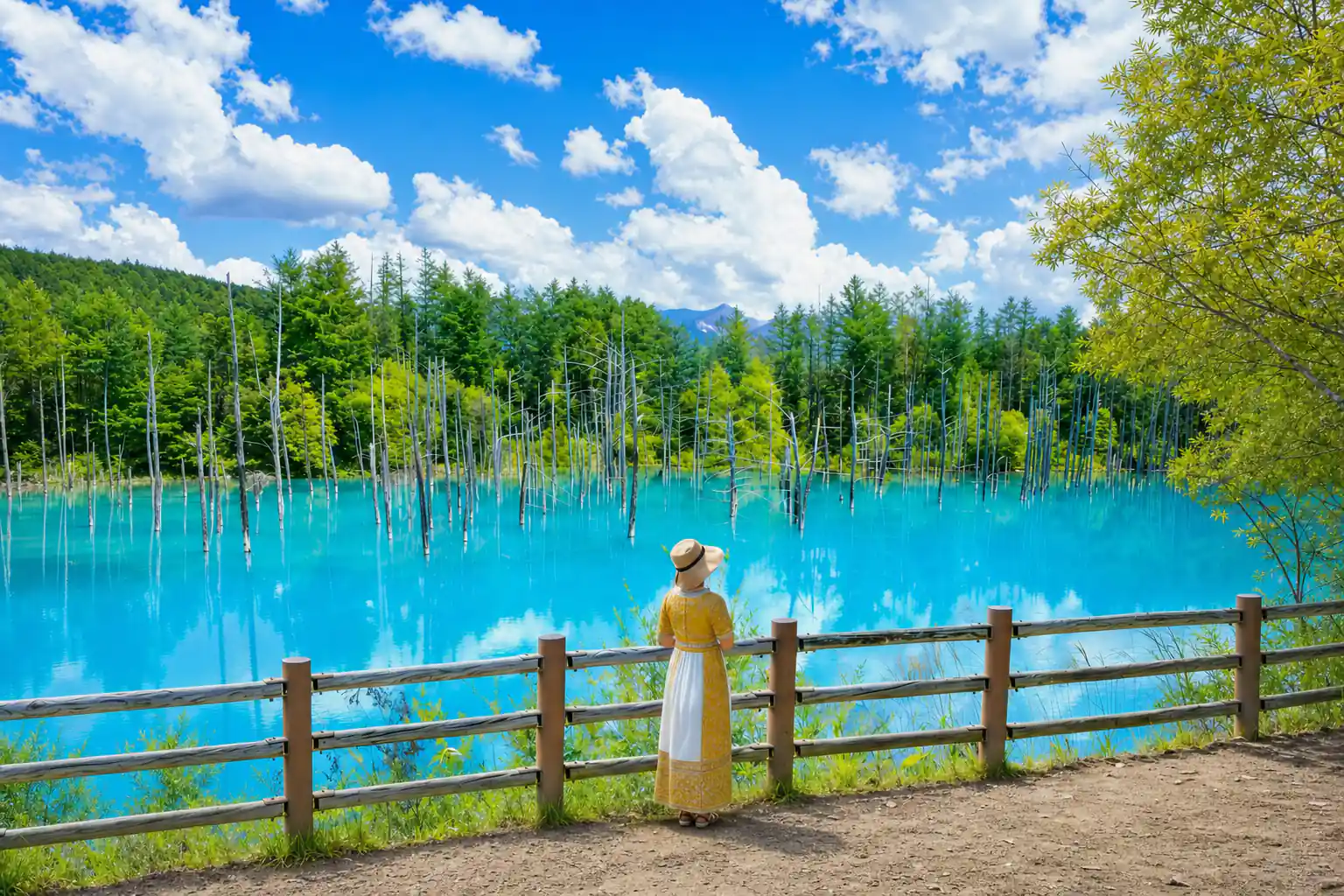
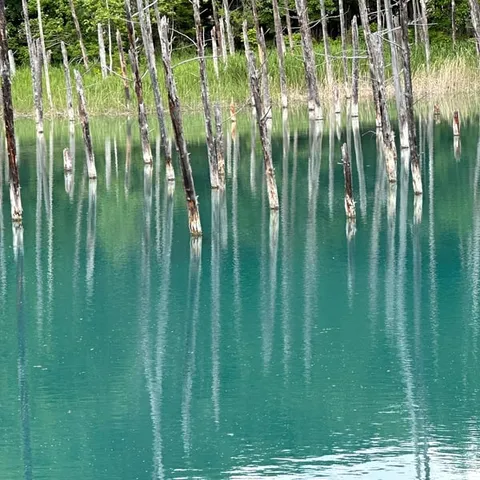
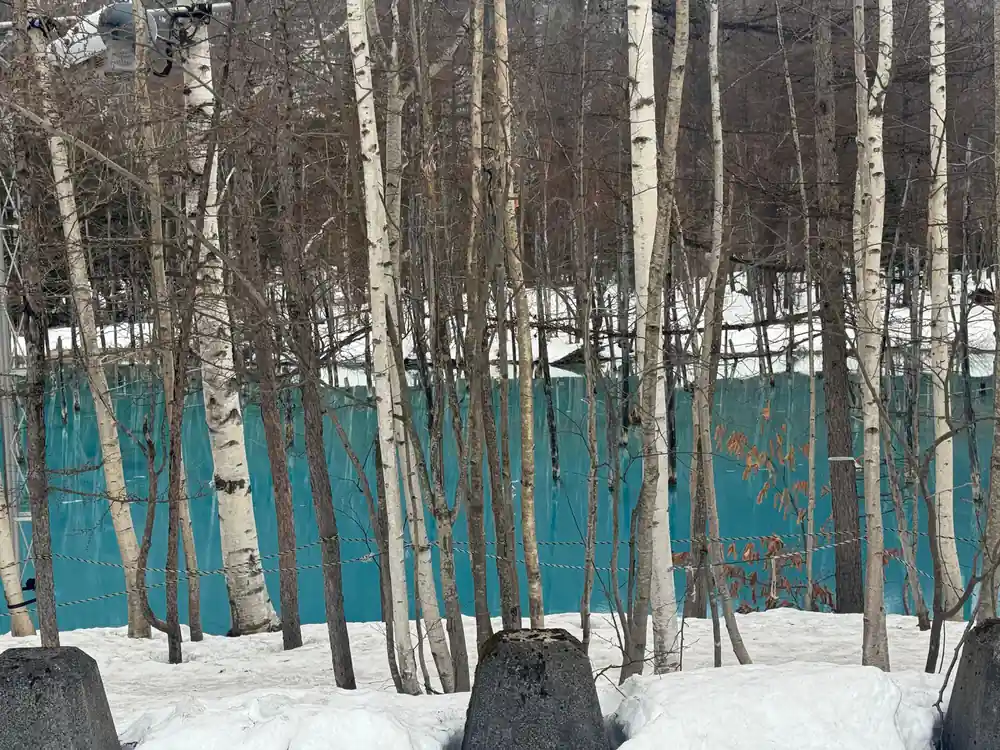
The nearby volcano still shapes the valley. The Blue Pond was created accidentally in 1988, when erosion control dams were built along the Biei River to protect against mudflows from the active volcano Tokachidake.[11] Standing at the water today, it is hard to square that engineering history with the stillness of the place, the flat blue surface and the pale dead trees.
What you see from the road is farmland laid over that older geology. The hills are gentle, the fields are small, and the horizon reads as a patchwork of angled shapes rather than one flat plain. Photography here is mostly about patience: waiting for a cloud shadow to cross a slope, or for the light to slide along a ridge. The best views are often a few steps up a lane from where you parked.
The crop rotation behind the rainbow stripes
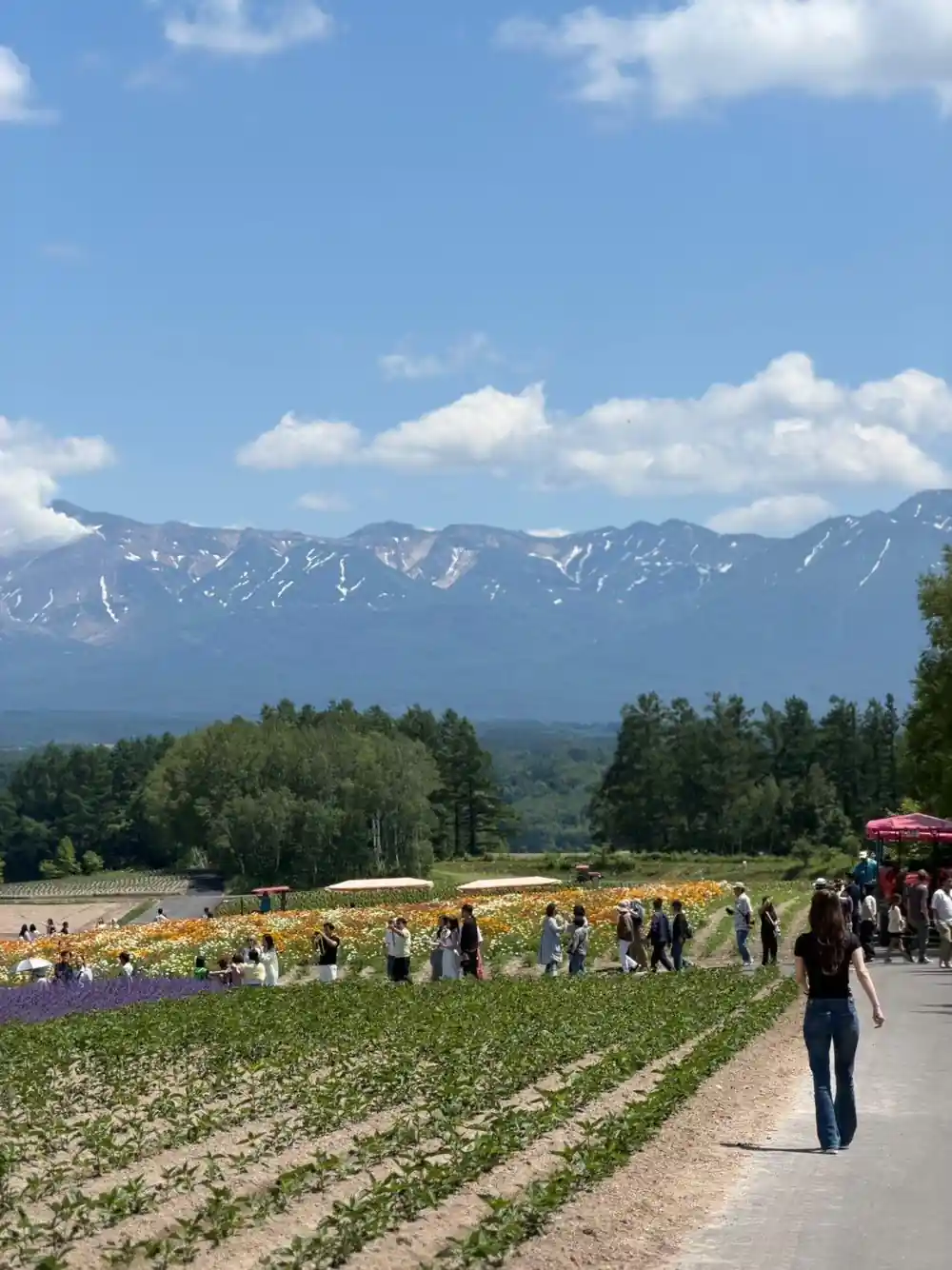
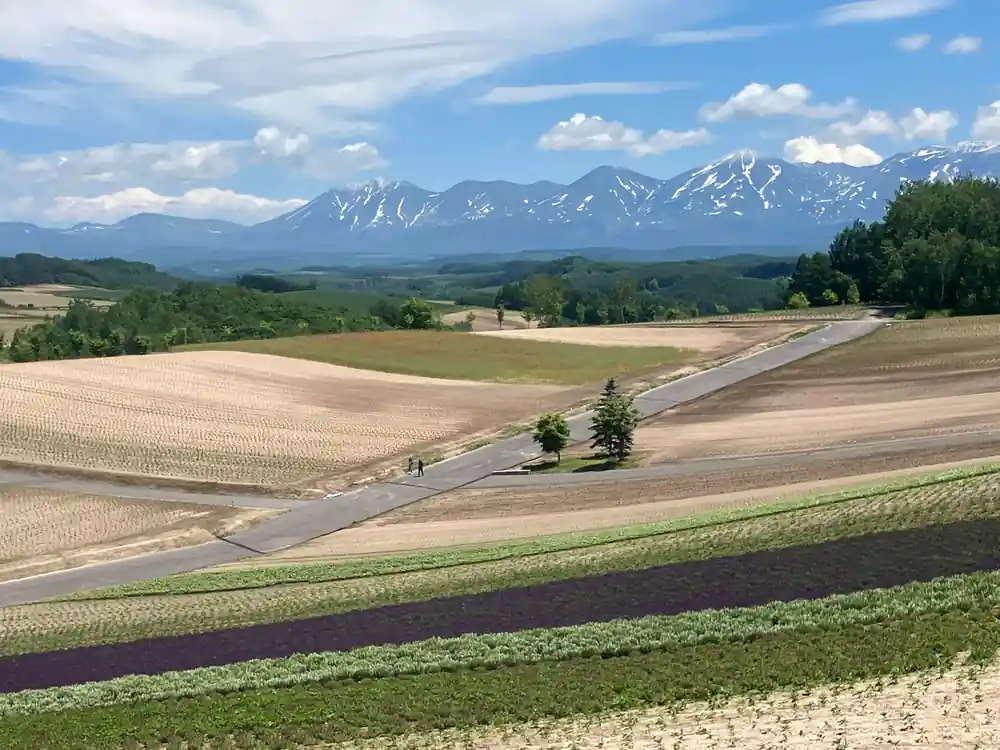
Wheat is one of the four main crops in Biei's crop rotation cycle, the others being potatoes, beans and sugar beet, and together they form part of the patchwork landscape on the hills.[1] Each field runs on its own clock, and a single slope can carry pale green, deep green, gold and bare brown at the same time. That overlap of colours is what gives the district its name.
Shelterbelts of trees and narrow farm lanes cut the pattern into strips and blocks. Farmers plant in long bands that follow the curve of the land, and the stripes bend and fan across the hillsides instead of running straight. From a high point the effect is closer to a woven textile than to open countryside, especially in the low, raking light of early morning.
Timing matters more than any single viewpoint. Grain turns from green to gold over a few weeks, sugar beet stays low and leafy, and potato rows flower briefly before the tops die back. Come in the growing season for full colour, or after harvest for the bare, graphic version of the patchwork, when the stripes are cut into the soil itself.
Striped fields climb toward the volcano range above Biei, with windbreaks drawing lines across the hillsides.
Ken and Mary: the tree that became a legend
The Ken and Mary Tree stands alone in a field with the Daisetsuzan range behind it. It takes its nickname from a television advertisement that used the tree as a backdrop, and the name stuck long after the campaign ended. There is nothing dramatic about it up close: one broad-crowned tree, a fence, and a field of whatever is growing that year.
The drama is in the setting, and in the way the tree holds the middle of the frame with mountains stacked up behind it. Photographers tend to arrive in the last hour of daylight, when the low sun side-lights the crown and the ridges soften into layers of blue. Midday works too, but the light is flatter and the fields look washed out.
This is a working farm, not a park. Cars pull into a small layby at the field edge, people walk to the verge, take their picture and leave. Stay on the road, keep out of the crop and do not climb the fence. Early morning tends to be quieter, and the light is better then.
Seven Stars Tree and the commercial that made it famous
The Seven Stars Tree is a tall, slim tree standing by itself on a low ridge. It became one of the best-known trees in Japan after appearing in an advertising campaign, and people have been photographing it ever since, looking for one particular shape against one particular sky.
The tree stands on private farmland, and the routine is the same as at Ken and Mary: park in the designated space, walk a short distance, look, and move on. In winter the branches are bare and the field is white, which makes the silhouette cleaner still. In summer the crop comes up around it and the tree seems to float above a green sea.
Tree-spotting works best as a slow loop rather than a checklist. The famous specimens sit close to the road, and each one takes only minutes. What fills the rest of the day is the land between them: hedgerows, farm sheds, a line of windbreak trees throwing long shadows, and the volcano range appearing and disappearing as the road turns.
from US$48
A day tour from Sapporo covering Patchwork Road, the Blue Pond, Shikisai-no-oka and Farm Tomita, with free cancellation 24 hours in advance.[4]
Why photographers return through every season
The light and the crops change the same handful of viewpoints completely. Spring is bare soil and lingering snow on the peaks, summer is full colour and long, soft evenings, autumn strips the trees and brings low golden light across the stubble, and winter turns the whole area monochrome. Biei has a cold continental climate with warm summers and freezing winters.[8]
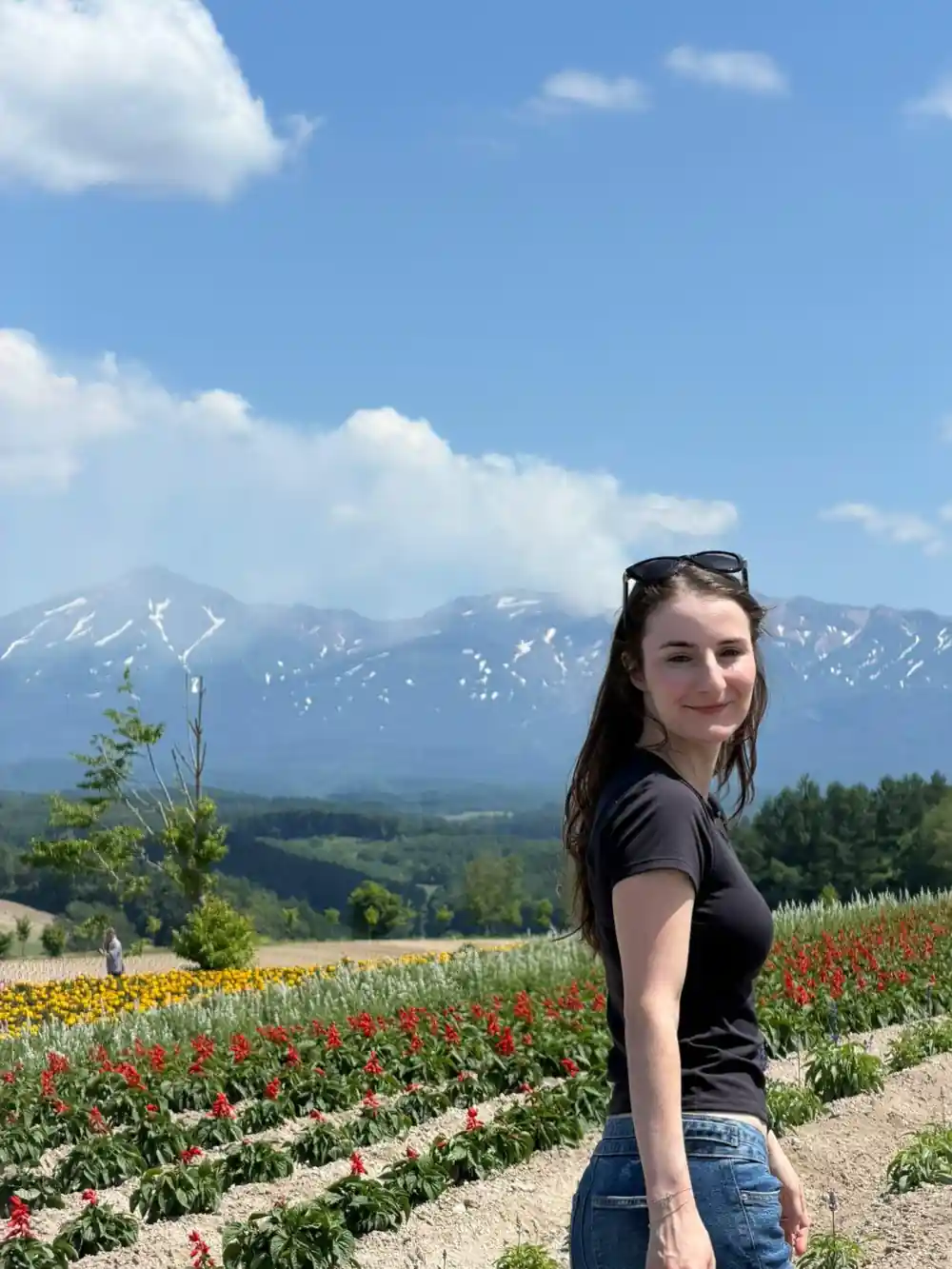
Decide first what picture you want. Farm Tomita's Traditional Lavender Field blooms from late June to late July, with the best viewing season from early to mid-July.[3] Shikisai-no-oka spreads across fifteen hectares of flower gardens, planted in wide bands that read well from the upper paths.[9]
Outside those weeks the district is quieter and the trees still stand where they always have. Autumn brings clear air and strong side light, and winter brings its own subject: the Blue Pond illumination runs from October 24, 2025 to April 22, 2026, with lighting until 9:00 PM.[7] The pond reached a worldwide audience when it appeared in Apple's WWDC 2012 MacBook Pro with Retina Display introduction.[12]
The journey from Furano to Biei by car
Furano and Biei sit in neighbouring basins, and driving between them is half the pleasure of the trip. The road rolls through farmland, past barns and shelterbelts, with the volcano range on one side and the patchwork hills on the other. Allow more time than the map suggests: every second bend seems to offer a view worth stopping for.
The Blue Pond is about 20 minutes from Biei Station by Dohoku Bus route 39, and from Sapporo the trip is about 1 hour 25 minutes by JR Limited Express to Asahikawa plus 60-70 minutes by bus.[2] The dead larch and birch trees standing in that water are the remains of a once-dry patch of forest, now rising out of the blue like a sculpture garden.[13]
Day tours from Sapporo visit Patchwork Road, the Blue Pond, Shikisai-no-oka and Farm Tomita in a single day, and are from US$48.[4] They suit anyone who would rather watch the landscape than the road markings, and they take the guesswork out of parking at the busiest stopping points.
A Furano lookout and an onsen to finish the day
Furano has its own viewpoints, and the classic plan is to climb to one of them in the late afternoon, when the light rakes across the town and the fields below. From a Furano lookout you can see the whole basin laid out, and on a clear day the volcano range behind it. Bring a layer: the air cools quickly once the sun drops behind the ridge.
Furano is also onsen country, and soaking after a day behind the wheel is one of the simplest pleasures of the region. Many travellers build the trip around a Furano onsen stop, with a soak before dinner and a short drive back to the hotel. That quiet half hour also gives you time to plan tomorrow's route.
If you are based in Sapporo instead, the Colored Hokkaido day tour takes in Patchwork Road, the Blue Pond, Shikisai-no-oka and Farm Tomita, runs for 1 day and finishes at 2 drop-off locations in the city.[4] Some travellers pair a Sapporo stay with one night in Furano, which keeps the driving short and the mornings early.
How travellers rate the Sapporo day tours
GetYourGuide traveller ratings out of 5 for these Sapporo day tours.[4][5][6][14]
Day tour prices from Sapporo
US dollar from-prices for these Sapporo departures as listed on GetYourGuide:[4][6][14][15]
When to book and when to go
Plan your Biei day
Pick your base
Sapporo has the widest choice of tours. A Furano or Biei base puts you beside the fields at dawn. Biei's population was 9,775 as of 31 December 2020.[16]
Time the seasons
Lavender at Farm Tomita's Traditional Lavender Field runs from late June to late July, with the best viewing season from early to mid-July.[3]
See the trees early
Ken and Mary and Seven Stars are roadside stops on working farms. Go before the coaches arrive, stay on the verge and keep out of the crops.
Join a day tour
Guided day tours from Sapporo cover Patchwork Road, the Blue Pond, Shikisai-no-oka and Farm Tomita, and are from US$48.[4]
Plan for the cold
Biei has a cold continental climate with warm summers and freezing winters. Pack layers and a windproof shell even in midsummer.[8]
See Patchwork Road on a day trip from Sapporo
from US$48Reserve now & pay later