At a glance
- The Shirogane Blue Pond sits in Biei, in the hills above town at the edge of the Shirogane Onsen area, with the Tokachidake volcano group rising behind it.
- From Biei Station the Blue Pond is about 20 minutes by Dohoku Bus route 39, and from Sapporo about 1 hour 25 minutes by JR Limited Express to Asahikawa plus 60-70 minutes by bus.[1]
- The Blue Pond winter illumination runs from October 24, 2025 to April 22, 2026 and stays lit until 9:00 PM.[2]
- The colour comes from Rayleigh scattering by suspended aluminium hydroxide colloids in the water, the same process that makes the sky look blue.[3]
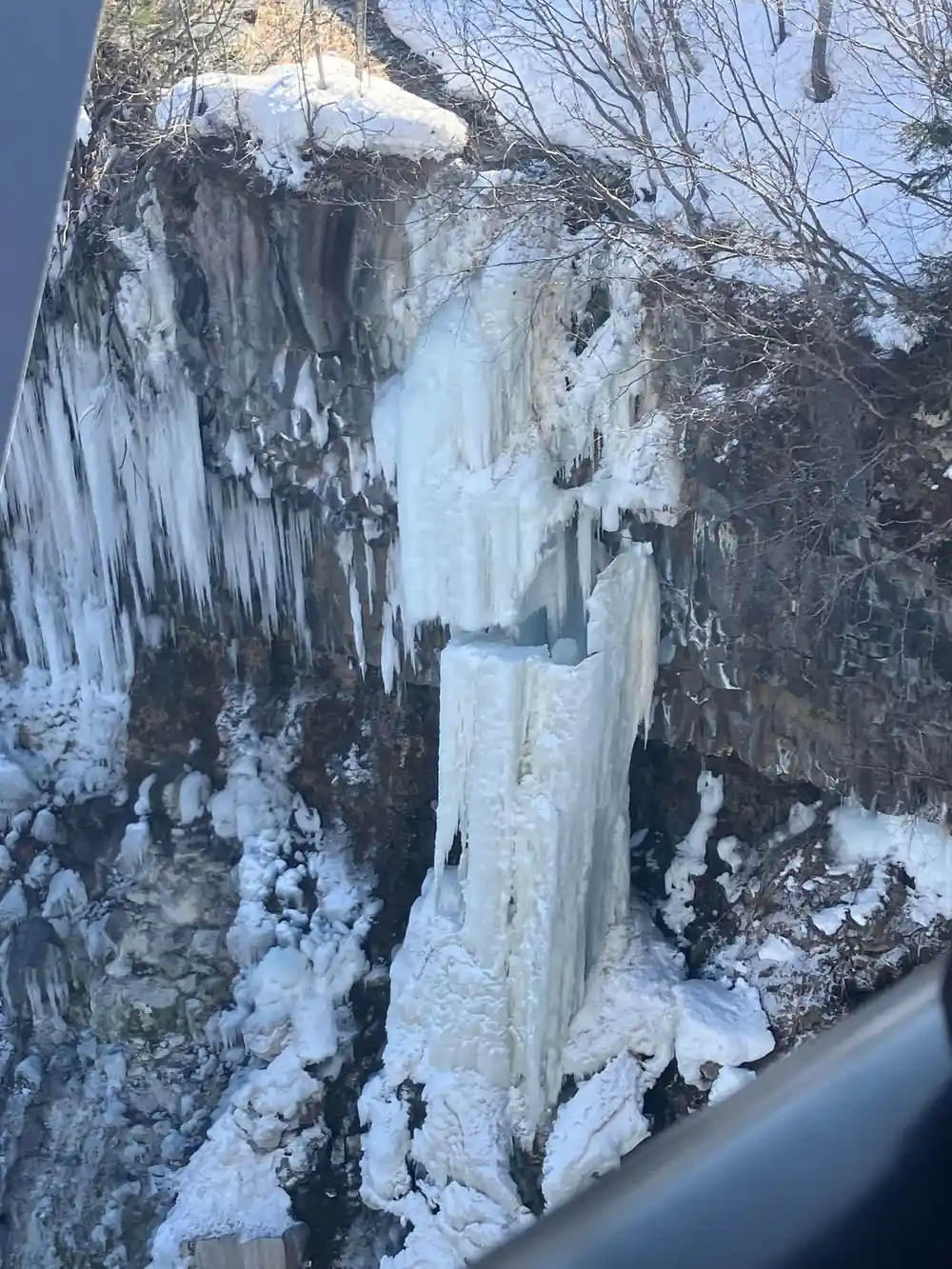
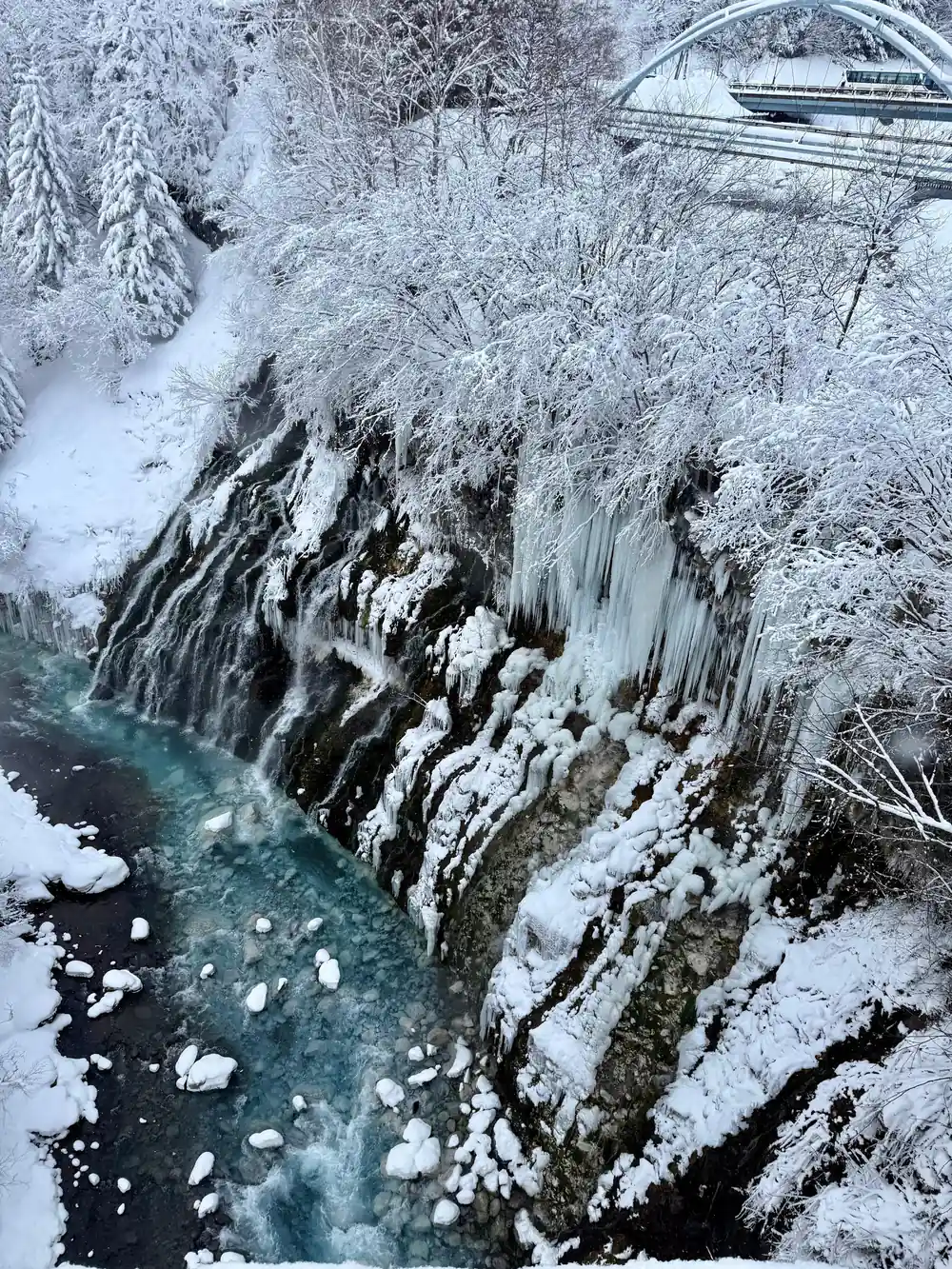
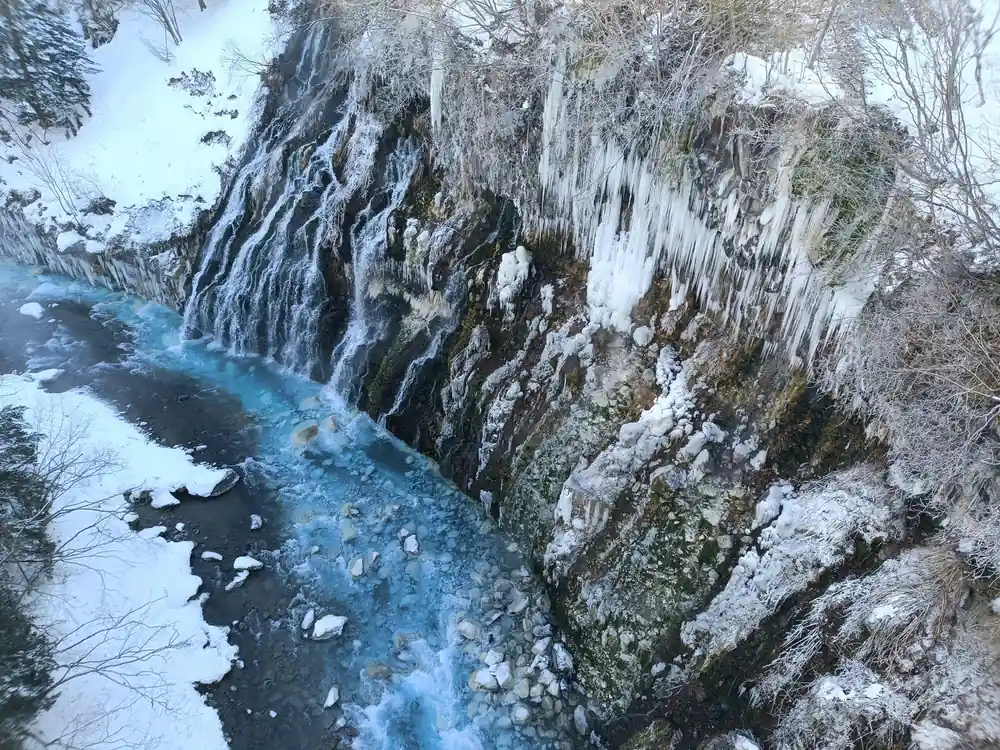
- Shirahige Falls drops approximately 30 meters into the Biei River and flows directly from cracks in the rock face, a short step from the pond.[4]
- Top choice Furano & Blue Pond Day from US$48 Duration1 day[5]Guide languagesEnglish, Chinese, Japanese, Korean[5]Ratingrated 4.56 from 122 reviews[5]CancellationFree cancellation, 24 hours ahead[5] Check availability
- Asahiyama Zoo & Blue Pond from US$48 Duration9 hours - 1 day[6]Guide languagesChinese, English[6]Ratingrated 4.49 from 47 reviews[6]CancellationFree cancellation, 24 hours ahead[6] See this tour
- Biei Best 5 Photo Spots from US$60 Duration10 - 10.5 hours[7]Guide languagesEnglish, Korean, Chinese[7]Ratingrated 4.72 from 77 reviews[7]CancellationFull refund offered[7] See this tour
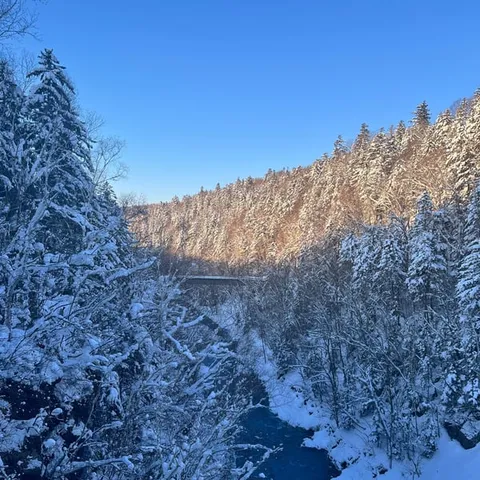
The pond was created accidentally. In 1988, erosion control dams were built along the Biei River to protect against mudflows from the active volcano Tokachidake.
Is the Shirogane Blue Pond worth the trip?
Before setting off
- Check the Dohoku Bus times before you leave Biei Station
- Note the Blue Pond illumination dates if you want the winter lights
- Carry some yen in cash for buses and small roadside stops
- Pack for a cold continental climate with freezing winters
On the day
- Walk the gravel path slowly and let your eyes adjust to the blue
- Keep your booking reference handy if you are on a guided day tour
- Wear shoes with grip; the path can be slick after rain or ice
- Bring a lens cloth and a spare battery that stays warm in a pocket
Where the Shirogane Blue Pond sits in Biei
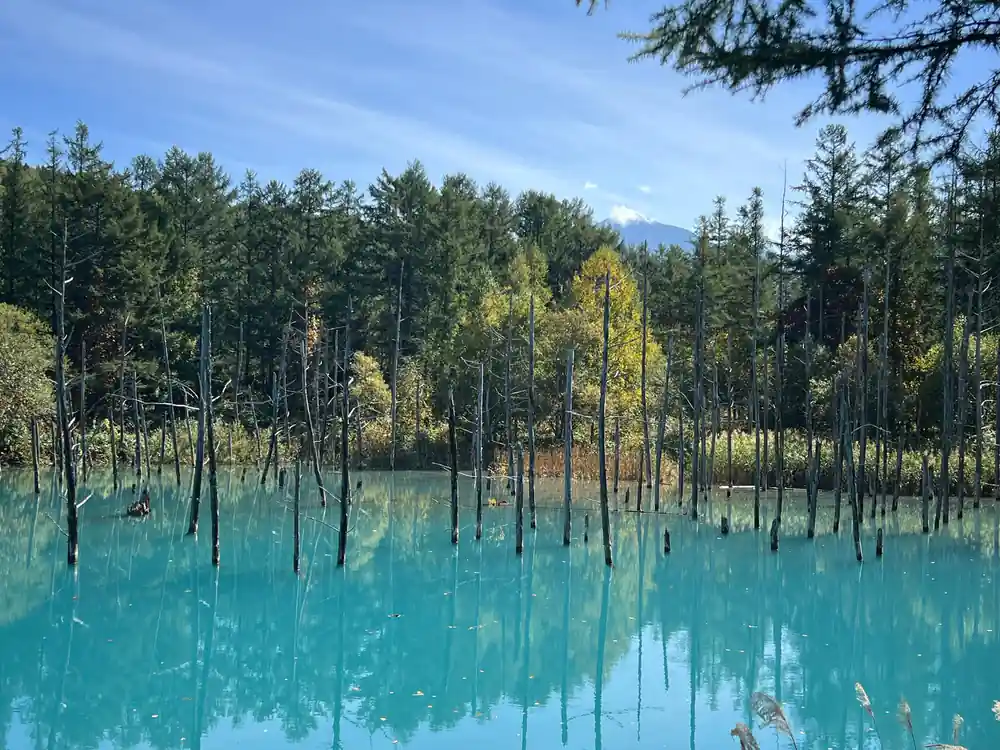
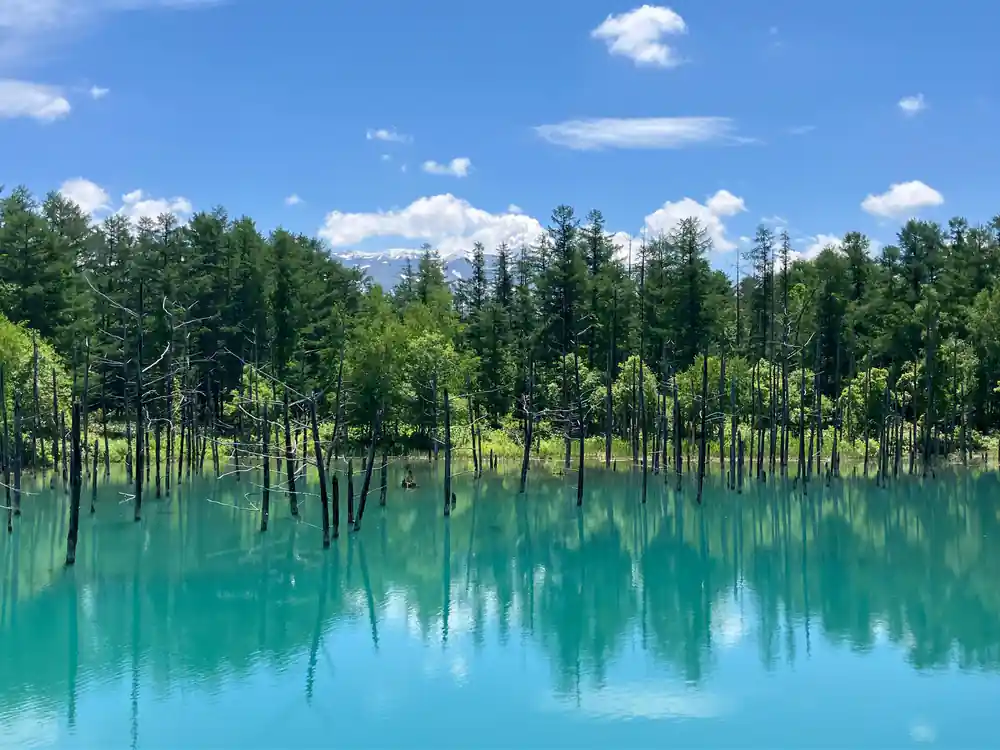
The Blue Pond, Biei's most photographed stretch of water, sits in the hills above the town at the edge of the Shirogane Onsen area, on Japan's northern island of Hokkaido. The road climbs out of the farmland and into forest, with the Tokachidake volcano group filling the skyline ahead, and the water appears suddenly beside the road. It is a pond rather than a lake, and the visit is built around a short walk and a long look.
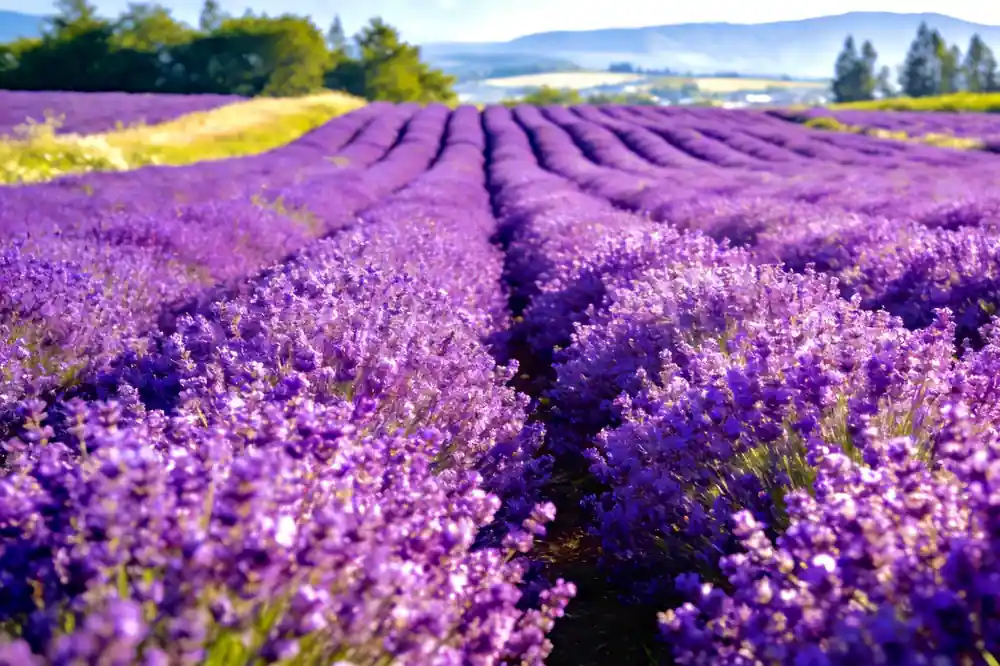
The town you pass through explains a lot about the view. Wheat, potatoes, beans and sugar beet are the four main crops in Biei's crop rotation cycle, and together they paint the patchwork bands of colour that run across the hills.[8] The bands shift through the growing season as fields are planted, cut and turned over. Biei is small, with a population of 9,775 as of 31 December 2020, so shops and services thin out quickly once you leave the centre.[9]
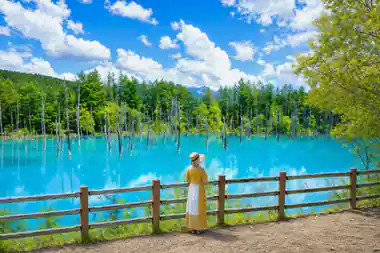
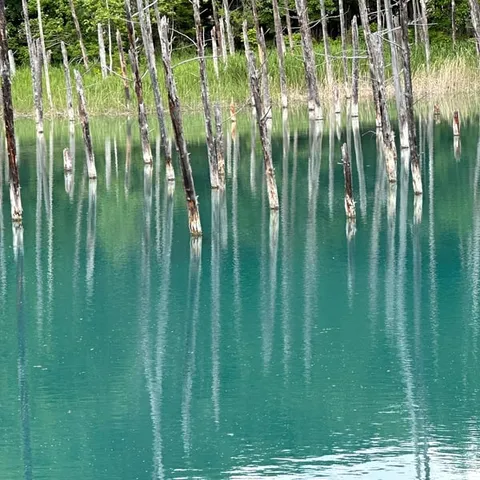
The pond is younger than most visitors expect, and it was never designed as a beauty spot. It was created accidentally in 1988, when erosion control dams were built along the Biei River to protect against mudflows from the active volcano Tokachidake.[10] As the water rose it drowned a stand of Japanese larch and white birch, and those pale dead trunks still stand in the water like a sculpture garden.[11]
Exact location, parking and finding the pond
Save the Shirogane Blue Pond map to your phone before you leave, because this is a roadside stop in the hills rather than a town-centre attraction, and signal can be patchy on the way up. In Japanese the pond is called Aoiike, and that is the name on signs, bus fronts and timetables, so it helps to have it written down or on a screen to show a driver. A screenshot beats a search when you are out of range.
The pond sits beside the road that runs from Biei town up towards Shirogane Onsen, and most visitors arrive by road, by bus or as part of a guided day. If you come by public transport, confirm the return departure when you step off the bus rather than when you are ready to leave, so you are not working it out in the cold with the light going. Drivers should expect a mountain road with curves and slower going once snow settles in.
If the winter lights are the reason for your trip, the Blue Pond illumination runs from October 24, 2025 to April 22, 2026, and the lighting stays on until 9:00 PM.[2] The switch-on time moves with the season: 5:00 PM in October, November and January, 4:30 PM in December, 5:30 PM in February, 6:00 PM in March and 6:30 PM in April.[2] Being in place before the lights come on is the easiest way to enjoy them without rushing.
Dead larch and white birch trunks stand in the blue water like a sculpture garden.
How to get to Shirogane Blue Pond from Biei Station
From Biei Station the Blue Pond is about 20 minutes by Dohoku Bus route 39.[1] The bus leaves the flat farmland behind and climbs into the hills, and the pond is one of its stops. Buy a ticket or have the exact fare ready, and read the timetable on the way out rather than on the way back, so you know what your realistic last option is. Buses fill up in the flower season, so arriving at the stop early is never wasted time.
From Sapporo, the public transport version of the trip is about 1 hour 25 minutes by JR Limited Express to Asahikawa, then 60-70 minutes by bus.[1] That makes for a long day, and it works best if you are comfortable changing between train and bus in both directions, with some slack for delays. If the connections look tight, a guided day takes the guesswork out of it.
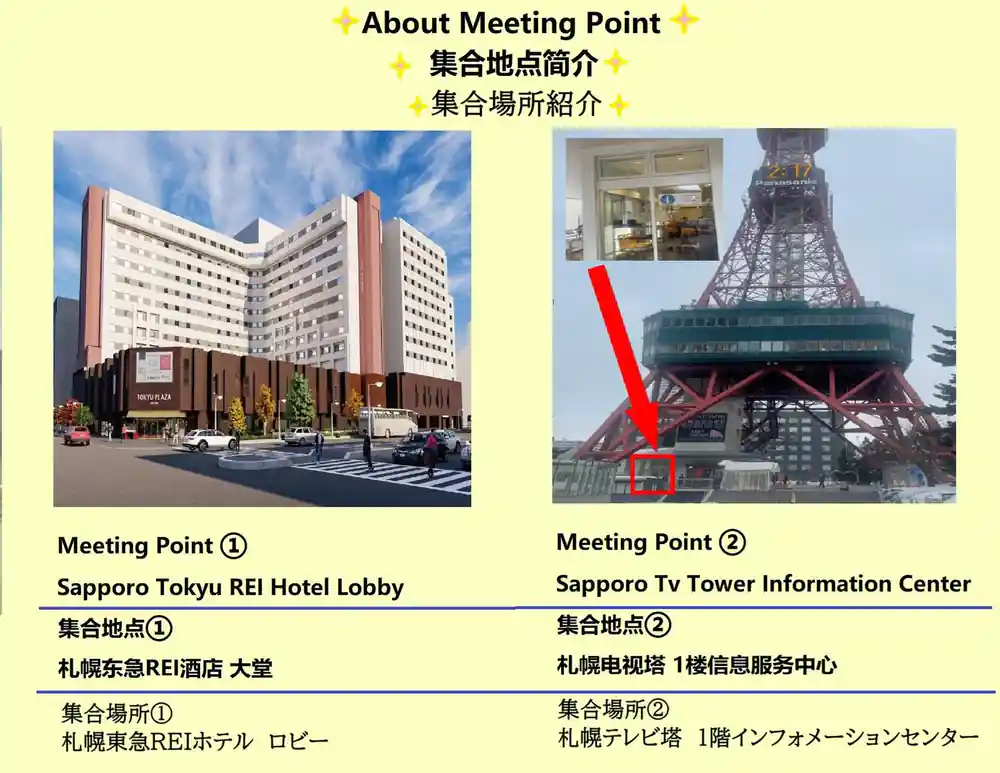
Many visitors skip the logistics entirely and join a tour instead. The Colored Hokkaido: Furano Flower and Biei Blue Pond tour runs for 1 day from Sapporo and stops at Patchwork Road, the Blue Pond, Shikisai-no-oka, a local restaurant and Farm Tomita, with a live guide who speaks English, Chinese, Japanese and Korean.[5] Places can be held with reserve now, pay later, and cancellation is free up to 24 hours in advance.[5]
Hokkaido: do you need a car for the Blue Pond?
Hokkaido: do you need a car for the Blue Pond? Not strictly, but it changes the shape of your day. With your own wheels you can time the pond for soft light, add the falls and the flower fields without checking a timetable, and stop when a view catches your eye. You also carry your own weather plan: if the hills are fogged in, you can come back later.
Without a car, the bus remains the backbone of the trip, and guided tours fill the gap for anyone who would rather not drive. The Asahiyama Zoo, Waterfall and Blue Pond tour runs 9 hours to 1 day and is rated 4.49 from 47 reviews, while the Biei Best 5 photo tour is rated 4.72 from 77 reviews.[6][7] Both cover the ground you would otherwise drive yourself, with a guide handling the stops and the timing.
Driving in Hokkaido is calm and unhurried outside the cities, but winter rewrites the rules. Snow, ice and short daylight hours all slow you down, and the mountain road up to Shirogane is a different proposition in the cold months than in high summer. Build slack into any winter itinerary, check conditions before you commit to a long loop, and accept that the pond can be at its most photogenic when the weather is at its least pleasant.
from US$48
A single day from Sapporo takes in Patchwork Road, the Blue Pond, Shikisai-no-oka, a restaurant stop and Farm Tomita.[5]
The gravel path and viewing path around the water
The visit itself is short and simple. A path and gravel path follow the shoreline, with viewpoints set slightly back from the water where the whole pond opens up in front of you. Nobody comes here to hike; people come to stand still and watch the surface change colour. Allow plenty of time if you like to take photographs, and less if you are simply looking.
The colour is a trick of light rather than a dye or a mineral stain. The Blue Pond looks blue because suspended aluminium hydroxide colloids in the water scatter blue light in a process called Rayleigh scattering, the same effect that makes the sky look blue.[3] Depending on the hour, the season and the weather, the water can read as milky turquoise, deep sapphire or almost grey. The pale dead trees give it a strange, graphic outline that photographs beautifully in flat winter light.[11]
Early morning and late afternoon give the most interesting light, and winter adds a second reason to come when the illumination is running.[2] Bring a tripod for low light, keep spare batteries warm in an inside pocket, and expect the boards to be slick after rain or a hard freeze. A polarising filter helps in bright weather, and a lens cloth earns its place in snow.
Facilities, food options and what to bring
This is a natural site rather than a visitor complex, so treat the towns as your base for food and supplies. Eat properly before you leave Biei or Sapporo, carry water and a snack, and keep some yen in cash for buses and small roadside purchases. If you are travelling with children, plan the stops into the day rather than hoping something appears when you need it.
A guided day takes care of the practical side for you. The Colored Hokkaido tour from Sapporo builds in a stop at a local restaurant between the Blue Pond and the flower fields, and it finishes at two drop-off locations.[5] It also comes with reserve now, pay later and free cancellation up to 24 hours in advance, which makes it easy to hold a place while you sort out the rest of your trip.[5]
For clothing, think in layers rather than one heavy coat. Biei has a cold continental climate with warm summers and freezing winters, so a windproof shell, gloves and shoes with grip cover most of the year, and high summer still rewards a hat and sunscreen.[12] Add insect repellent for the green months and hand warmers for the white ones, plus a small towel for wet benches and snowy camera bags.
Water access, safety and the walk to Shirahige Falls
The pond is for looking at, not for wading or swimming. The banks are soft, the water is cold, and the dead trees standing beneath the surface are a reminder of what is down there.[11] Stay on the paths and the gravel path, keep an eye on children near the edge, and take everything you bring away with you. In winter, watch for ice underfoot and give the water more room than you think you need.
Shirahige Falls is the natural companion stop, and it is worth leaving time for. The falls drop approximately 30 meters into the Biei River and are a rare subterranean stream waterfall, with water flowing directly from cracks in the rock face rather than over the top of a cliff.[4] They pair naturally with the pond, and the pair fits comfortably into one outing, whether you are driving yourself or riding with a guide.
Weather in the hills moves quickly and can change the mood of a whole visit. Biei has a cold continental climate with warm summers and freezing winters, so check the forecast and, in winter, the road conditions before you set out.[12] Ice on the gravel path is the most common hazard in the cold months, and mist can hide the far bank even in summer. Leave a buffer before the last bus or your tour's meeting point.
Traveller ratings for Blue Pond day tours from Sapporo
GetYourGuide ratings for these Sapporo day tours that include the Blue Pond.[5][6][7]
Blue Pond day tours from Sapporo, from-prices
US dollar from-prices for Sapporo tour listings that include the Blue Pond.[5][6][7][13]
When to plan your Blue Pond visit
Plan your Blue Pond visit
Pick your season
Summer brings the flower fields and the lavender; winter brings the illumination and a quieter, stranger pond.
Work out the transport
Choose between the bus from Biei, the train and bus route from Sapporo, or a guided day tour.
Set your start time
Aim to reach the pond in the morning or late afternoon for the best light, with a buffer for the return.
Add Shirahige Falls
The falls pair well with the pond, so build in an extra stop if you are driving or on a guided tour.
Dress for the weather
Layers, a windproof shell and shoes with grip cover almost every month, and winter needs real insulation.
See the Blue Pond on a guided day from Sapporo
from US$48Reserve now & pay later