At a glance
- Pack layers, not one outfit. Sapporo and the Biei hills can feel like two different days, and the Blue Pond sits in cool air beside the water.
- At Farm Tomita's Traditional Lavender Field, lavender blooms from late June to late July, with the best viewing season from early to mid-July.[1]
- The Blue Pond illumination runs from October 24, 2025 to April 22, 2026 and stays lit until 9:00 PM.[2]
- Shikisai-no-oka spreads across fifteen hectares of Biei hillside, so sun cover and water matter more than most people expect.[3]
- Farm paths, gravel and grass verges are the norm, so pack shoes you have already walked in and do not mind scuffing.
- Top choice Furano flowers & Blue Pond from US$48 Duration1 day[4]Guide languagesEnglish, Chinese, Japanese, Korean[4]Rating4.56 from 122 reviews[4]CancellationCancel up to 24h ahead for refund[4] Check availability
- Zoo, waterfall, Blue Pond from US$48 Duration9 hours to 1 day[5]Guide languagesChinese, English[5]Rating4.49 from 47 reviews[5]CancellationCancel up to 24h ahead for refund[5] See this tour
- Biei Best 5 photo spots from US$60 Duration10 to 10.5 hours[6]Guide languagesEnglish, Korean, Chinese[6]Rating4.72 from 77 reviews[6]CancellationCancel up to 24h ahead for refund[6] See this tour
Biei has a cold continental climate with warm summers and freezing winters.
Pack layers and book the hills day
What to pack in your day bag
- Three thin layers instead of one heavy coat
- Sunscreen, brimmed hat and sunglasses for open fields
- A thin fleece or thermal for the Blue Pond and early starts
- Insect repellent and a light long-sleeved layer
Furano weather by month: what changes, what to pack
Furano and Biei sit in a cold continental climate with warm summers and freezing winters.[7] That single line is the honest starting point for packing. The hills do not ease you in: a bright summer afternoon in the flower fields feels like a proper summer day, and the same spot in winter is a different world. A Furano temperature by month list is useful when you are choosing dates, but for packing the answer comes back to layers.
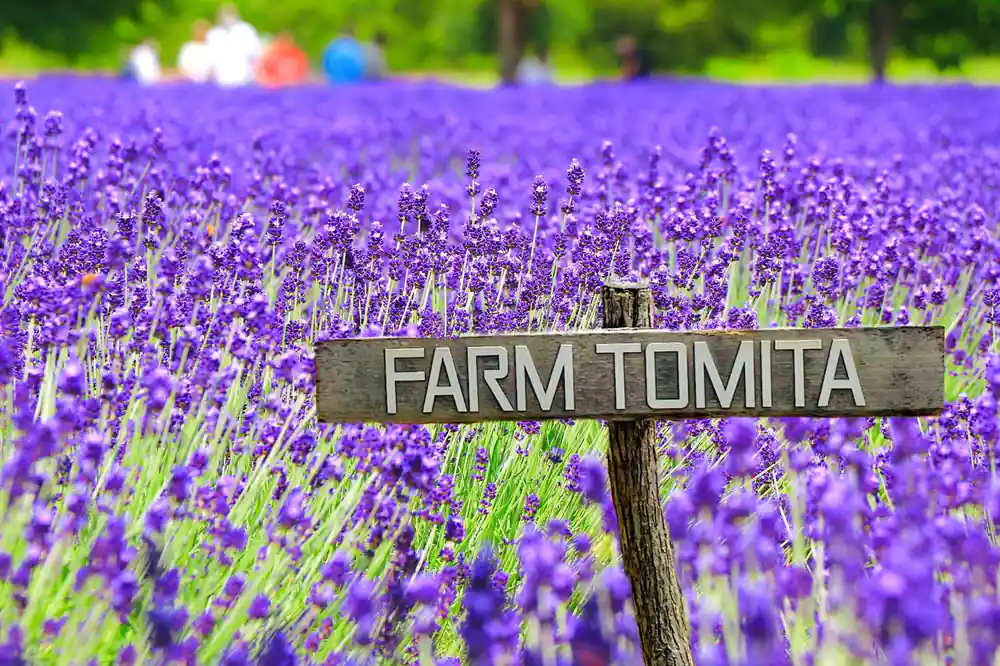
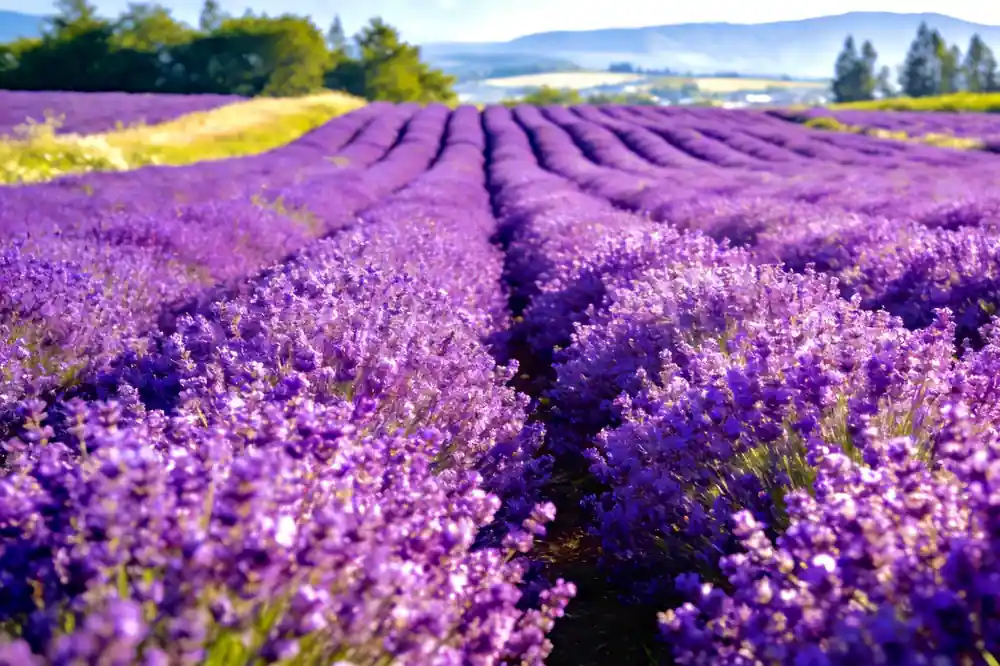
Summer is when most travellers come. At Farm Tomita's Traditional Lavender Field, lavender blooms from late June to late July, and the best viewing season is early to mid-July.[1] If lavender is the goal, those weeks shape your packing more than anything else: light, breathable clothes for the middle of the day, a hat, and a warm layer for the moment the sun goes behind a cloud.
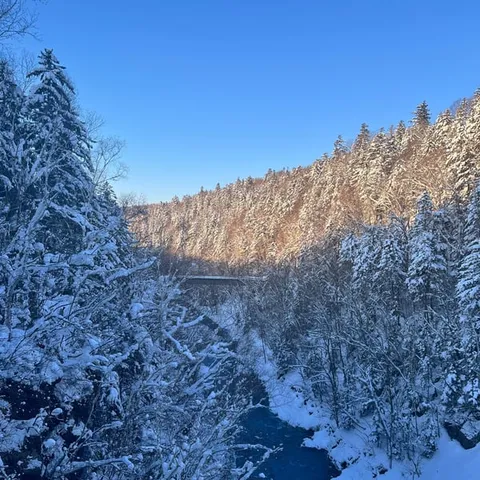
Winter has its own draw. The Blue Pond illumination runs from October 24, 2025 to April 22, 2026, with lighting starting at 5:00 PM in October, November and January, 4:30 PM in December, 5:30 PM in February, 6:00 PM in March and 6:30 PM in April, and running until 9:00 PM.[2] An evening visit means standing still in the cold for a while, so dress for that rather than for a quick photo stop.
Layering for a Sapporo to the hills day
The tour this page follows leaves Sapporo and returns the same day, with stops at Patchwork Road in Biei, Shirogane Blue Pond, Shikisai-no-oka, a local restaurant and Farm Tomita.[4] You move between a city, a coach and open countryside in one day, so three thin layers beat one heavy coat: a base layer that handles sweat, a warm middle layer you can pull off on the coach, and a windproof outer layer.
Keep the middle layer where you can reach it without unpacking your bag. A thin fleece, a light down jacket or a wool sweater all work. Add a scarf for early starts and evening returns, and thin gloves if you are travelling outside the summer months. A hat earns its place twice: sun cover on bright days and warmth for the rest of the year.
One habit makes layers work: dress for the coolest stop of the day, not the warmest. If you start in Sapporo and finish at a farm in the hills, that usually means leaving the hotel slightly underdressed for the city. It is easy to take a layer off and tuck it in a bag, and much harder to find an extra jumper at a flower farm.
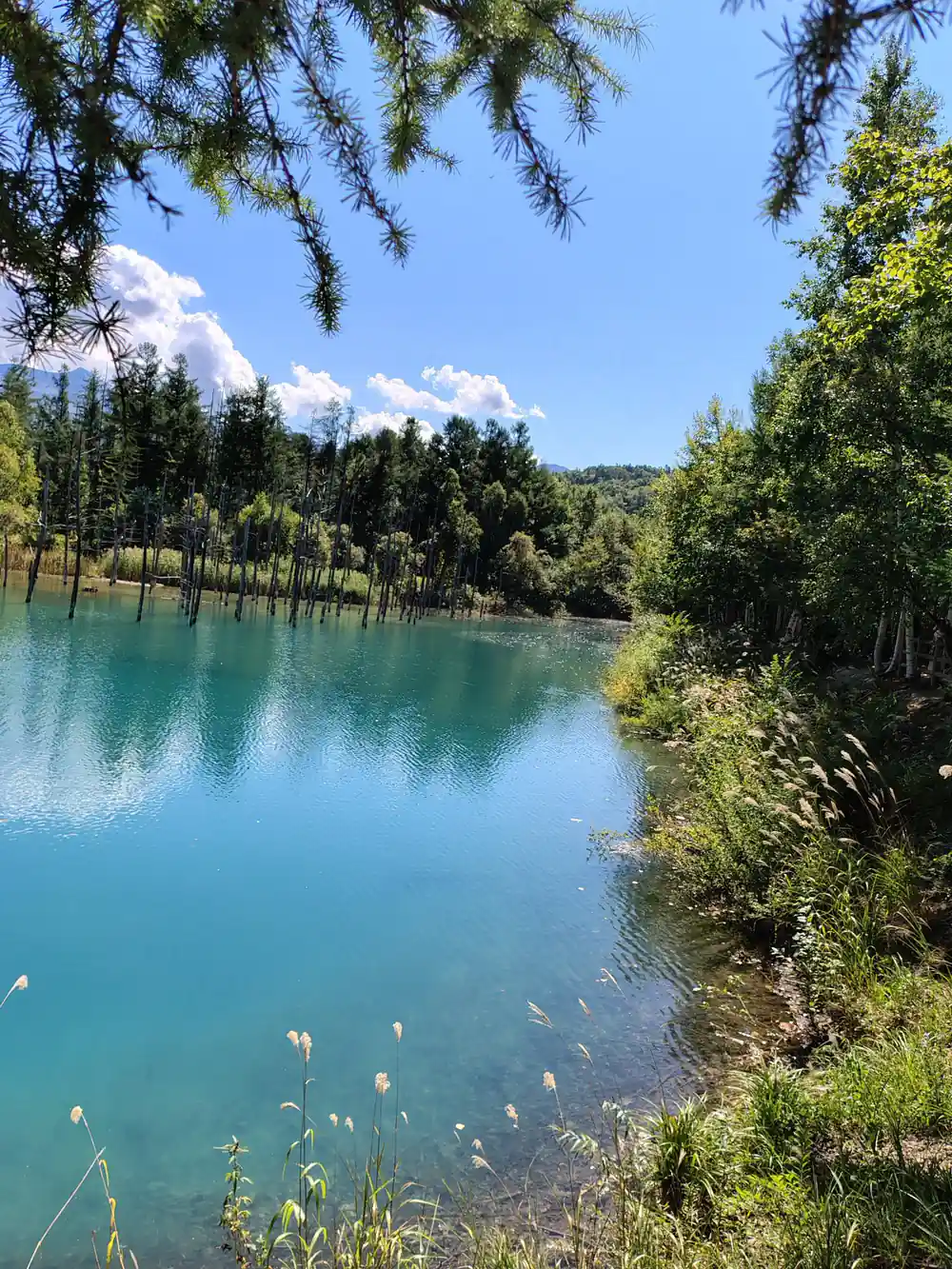
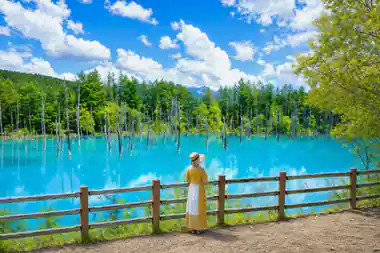
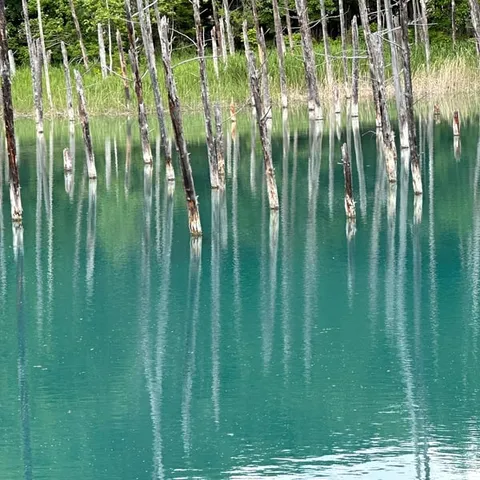
Cool air off the water at the Blue Pond, where dead larch and birch stand in the blue.
Sun protection on the open flower fields
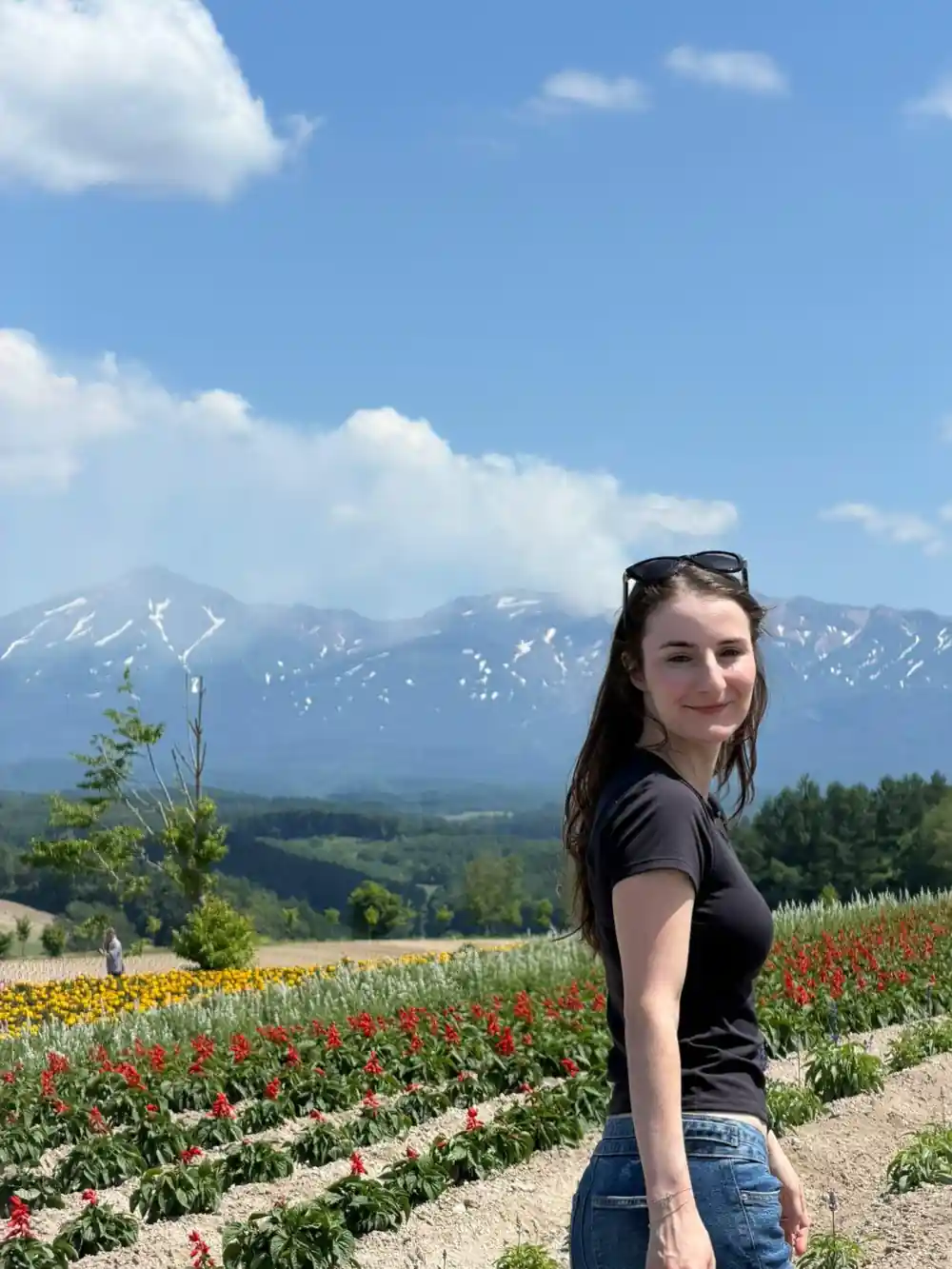
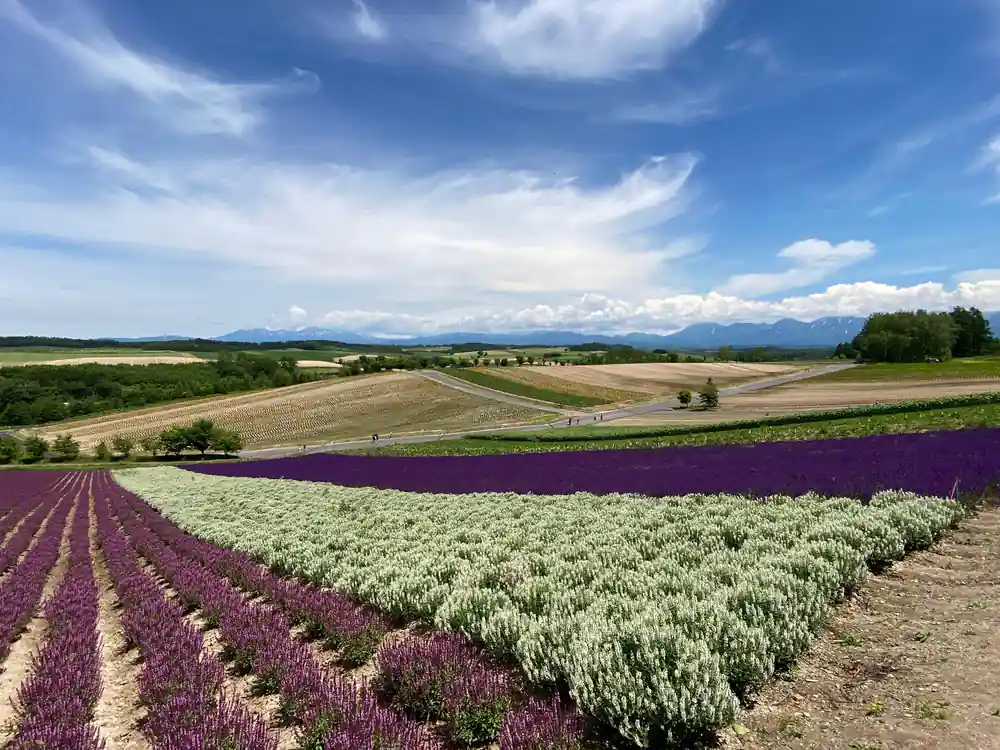
The flower fields are wide and mostly open. Shikisai-no-oka is a set of panoramic flower gardens spread across fifteen hectares of land in Biei.[3] Around them, the farmland gives the hills their patchwork look, with wheat, potatoes, beans and sugar beet as the four main crops in Biei's rotation.[8] That means a lot of walking with very little shade.
Bring sunscreen and reapply it during the day, especially on your neck, ears and the backs of your hands. A brimmed hat and sunglasses make the fields far more comfortable, and a light long-sleeved shirt over a t-shirt is often easier than chasing sunscreen on your arms. Carry water as well: the day tour includes a local restaurant stop,[4] but the fields themselves are exposed.
Insects in the fields and how to handle them
Flowers, crops and warm afternoons mean insects. They are usually a nuisance rather than a real problem, and a little planning keeps them out of your day. Pack a small bottle of insect repellent, keep a light long-sleeved layer for the end of the afternoon, and skip heavy perfume or scented lotion when you know you will be walking in the fields.
Walk on the paths rather than brushing through planted rows, which is better for the flowers and for you. Keep food and sweet drinks closed when you are not eating, and if bites tend to swell on you, bring whatever works at home and speak to your doctor before you fly. A repellent wipe or two in a pocket weighs almost nothing and is easy to use at a farm stop before you get back on the coach.
from US$48
The Colored Hokkaido tour from Sapporo takes in Patchwork Road, Shirogane Blue Pond, Shikisai-no-oka and Farm Tomita.[4]
Footwear for gravel paths and farm ground
Expect a mix of surfaces: coach steps, paved car parks, gravel paths, packed farm tracks and grass verges. Grippy shoes with closed toes are the sensible choice, and they should be shoes you have already walked a few kilometres in. New shoes on a long day out are a reliable way to finish with sore feet.
Water resistance matters more than style in the colder half of the year. Water-resistant trainers or light hiking shoes handle most summer days, and more tread with a slightly higher ankle helps on winter ground. A spare pair of socks takes almost no space and can rescue a wet afternoon.
Whatever you choose, wear them in before the trip. A day that mixes coach travel, farm tracks and the walkways at the Blue Pond asks more of your feet than a city day does, and comfort matters more than looks in photographs where your shoes barely show. Blister plasters and a spare pair of socks in a day bag are small insurance for a day built around walking.
Rain gear, wind and cold-weather battery care
A packable waterproof shell with a hood is the most useful thing in the bag. In open fields, wind makes an umbrella awkward, and a shell doubles as a windproof layer on the walk by the water at the Blue Pond. A simple dry bag or plastic sleeve for phone, camera and passport keeps everything working when the rain arrives.
Cold drains batteries. Phones and camera batteries lose charge faster in low temperatures, so keep spares in an inside pocket and charge everything at the hotel the night before. A phone kept warm in a chest pocket lasts noticeably longer than one sitting in a cold backpack, and a power bank covers the gap.
For the colder half of the year, pack gloves, a hat that covers your ears and socks that stay warm when damp. Winter days here can be bright and dry as well as snowy, so sunglasses and a shell both earn their place in the same bag. If you are out for the evening illumination, add a flask and hand warmers; standing still in the cold is the part people underestimate.
Shirogane Blue Pond and the cool air by the water
The Blue Pond is the stop people remember. It was created accidentally in 1988, when erosion control dams were built along the Biei River to protect against mudflows from the active volcano Tokachidake.[9] Tokachidake has an elevation of 2,077 m (6,814 ft) and last erupted in 2004.[10] The blue comes from suspended aluminium hydroxide colloids in the water, which scatter blue light in a process called Rayleigh scattering.[11]
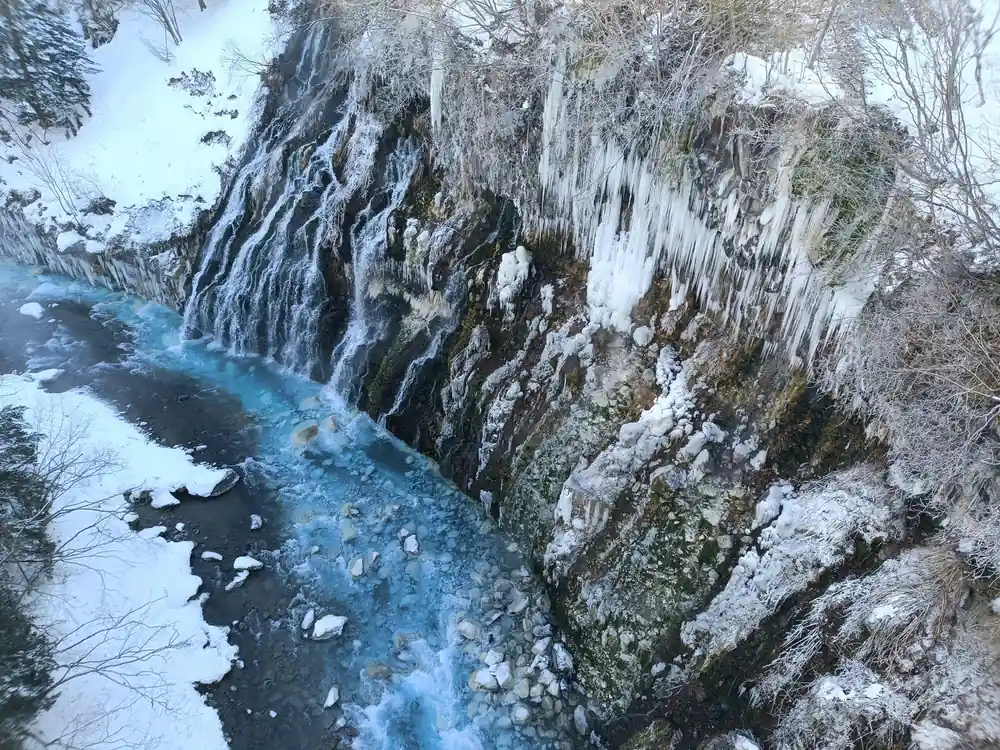
Part of the scene stands in the water: dead Japanese larch and white birch that were once a dry patch of forest, now rising from the blue like a sculpture garden.[12] Close by, Shirahige Falls drops approximately 30 meters into the Biei River and is a rare subterranean stream waterfall whose water flows directly from cracks in the rock face.[13] Cool air off the water is part of the visit, so a windproof layer and a hat make the difference between a quick look and a long, comfortable one.
The pond reached a very wide audience when it appeared in Apple's WWDC 2012 MacBook Pro with Retina Display introduction.[14] If you are making your own way there, the Blue Pond is about 20 minutes from Biei Station by Dohoku Bus route 39, and from Sapporo it is about 1 hour 25 minutes by JR Limited Express to Asahikawa plus 60 to 70 minutes by bus.[15]
Traveller ratings for three Biei day tours
GetYourGuide ratings for these listings: 4.56 from 122 reviews, 4.49 from 47 reviews and 4.72 from 77 reviews.[4][5][6]
Day tour from-prices from Sapporo
All amounts are the from-prices in US dollars on the GetYourGuide listings.[4][5][6][16][17]
When to go for the weather you want
Pack for a hills day
Start with layers
A base layer, a warm middle layer and a windproof shell cover a city morning, a coach ride and an open field in one day.
Add sun and rain cover
Sunscreen, a brimmed hat, sunglasses and a packable waterproof jacket, kept where you can reach it without stopping.
Choose worn-in shoes
Closed, grippy shoes you have already walked in, plus a spare pair of socks for wet ground or a rainy afternoon.
Pack the small things
Insect repellent, water, a power bank, a spare camera battery and a dry sleeve for your phone, all in one bag you can carry.
Dress for the coolest stop
Leave the hotel ready for the coldest part of the day, then peel off a layer when the sun comes out at the fields.
Book the Furano and Biei day tour from Sapporo
from US$48Reserve now & pay later