At a glance
- A full day from Sapporo: Patchwork Road in Biei, the Shirogane Blue Pond, Shikisai-no-oka, a local restaurant and Farm Tomita, with 2 drop-off locations.[1]
- Rail and bus work: from Sapporo about 1 hour 25 minutes by JR Limited Express to Asahikawa plus 60 to 70 minutes by bus, then about 20 minutes from Biei Station.[2]
- The Colored Hokkaido day is listed from US$48, with Reserve now & pay later and free cancellation up to 24 hours in advance.[1]
- Farm Tomita's Traditional Lavender Field blooms from late June to late July, with the best viewing from early to mid-July.[3]
- The tour has a live tour guide in English, Chinese, Japanese and Korean, and is rated 4.56 from 122 reviews.[1]
- Top choice Colored Hokkaido Coach Day from US$48 Duration1 day[1]Rating4.56 from 122 reviews[1]Guide languagesEnglish, Chinese, Japanese, Korean[1]Free cancellationCancel up to 24 hours in advance[1] Check availability
- Asahiyama Zoo and Blue Pond from US$48 Duration9 hours - 1 day[4]Rating4.49 from 47 reviews[4]Guide languagesChinese, English[4]Free cancellationCancel up to 24 hours in advance[4] See this tour
- Biei Best 5 Photo Stops from US$60 Duration10 - 10.5 hours[5]Rating4.72 from 77 reviews[5]Guide languagesEnglish, Korean, Chinese[5]Free cancellationCancel up to 24 hours in advance[5] See this tour
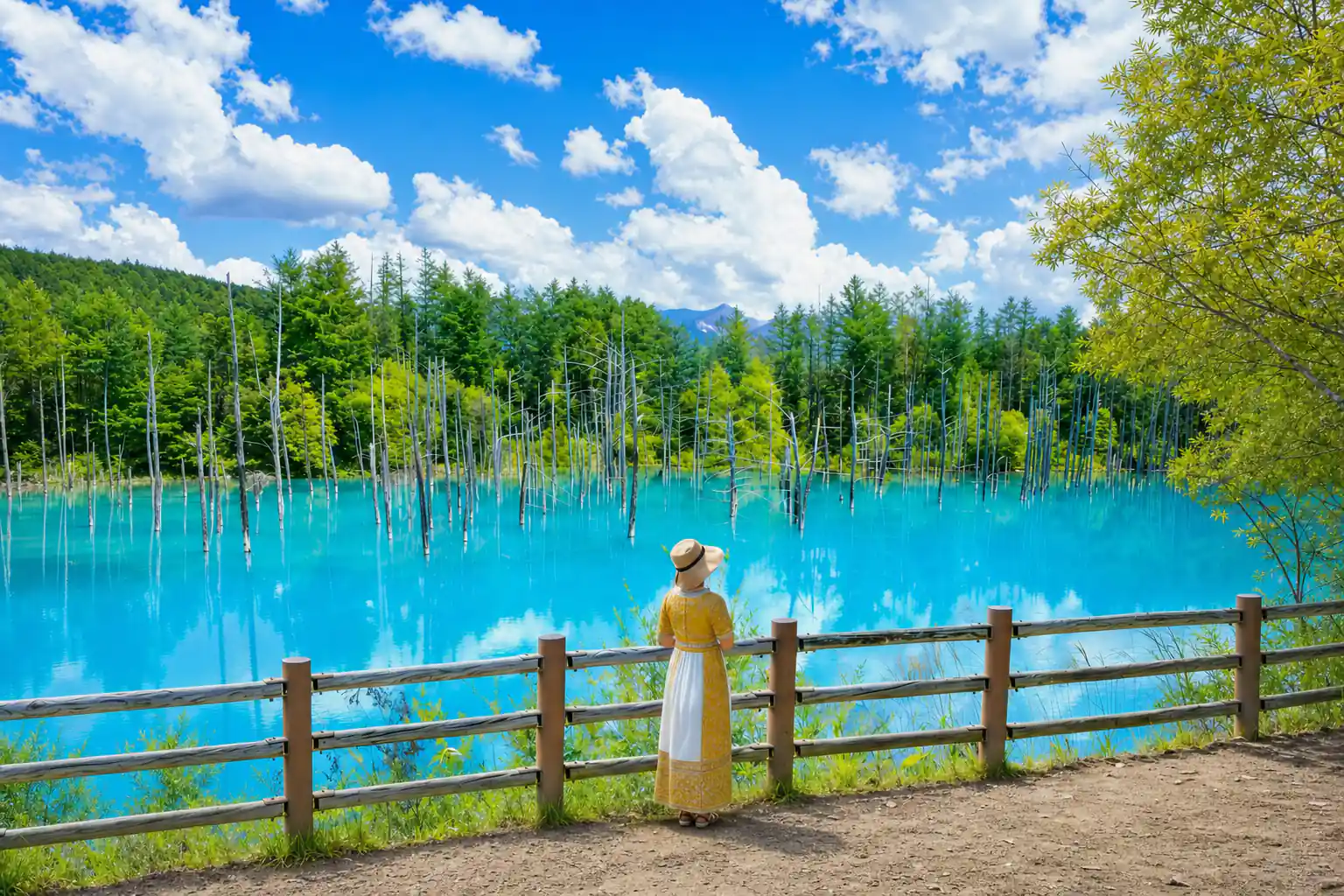
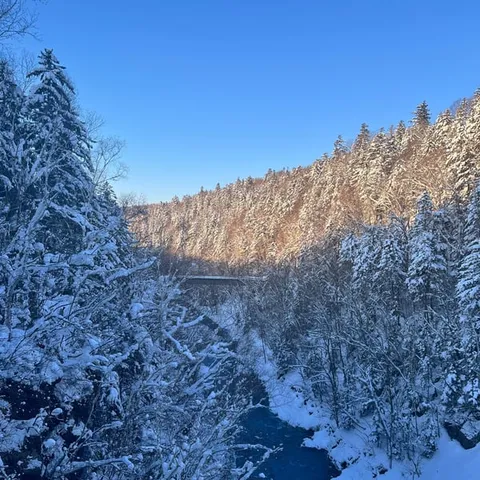
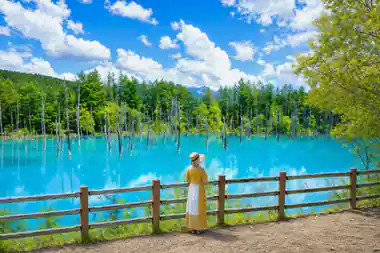
The pond was created accidentally. In 1988, erosion control dams were built along the Biei River to protect against mudflows from the active volcano Tokachidake.
Is the Coach Day Worth It?
Pre-booking checklist
Counting the Day: What One Coach Loop Can Cover
The first question people ask about this corner of Hokkaido is usually about time: Furano, how many days should it get? For a short trip, one well-planned day by coach is often enough; the big stops sit across farmland and hills, and a single loop from Sapporo gathers them in one go. The Colored Hokkaido day is listed as 1 day and runs from Sapporo to Patchwork Road in Biei, then the Shirogane Blue Pond, Shikisai-no-oka, a local restaurant and Farm Tomita, with 2 drop-off locations at the end.[1]
If you want a slower look, a Furano one day trip can still feel generous when the coach handles the driving and you keep your own minutes for the stops. A second day lets you linger in a flower field, walk a hill road, or come back in another season, and that is the real argument for splitting the visit. Otherwise, the distances across Hokkaido set the pace for you, and you will spend much of the day watching the landscape rather than standing in it.
Furano: How to Get There From Sapporo
Travellers often ask how long from Sapporo to Furano takes, and the answer depends on where you are heading. The Blue Pond side of the route is about 1 hour 25 minutes by JR Limited Express from Sapporo to Asahikawa, plus 60 to 70 minutes by Dohoku Bus route 39, and the pond itself is about 20 minutes from Biei Station on the same bus route.[2] Connections matter, so build in slack if you are stringing train and bus together on the same day.
A coach day removes that planning. The Colored Hokkaido tour lists 2 starting location options in Sapporo, Reserve now & pay later, and free cancellation up to 24 hours in advance for a full refund.[1] Live guides speak English, Chinese, Japanese and Korean, so you can follow the commentary on the landscape as it passes.[1]
For comparison, the Asahiyama Zoo, Waterfall, and Blue Pond tour is listed from US$48 with a duration of 9 hours to 1 day, and the Biei Best 5 day tour is listed from US$60 with a duration of 10 to 10.5 hours.[4][5] The loops differ more than the prices do, so read the stop lists before you choose.
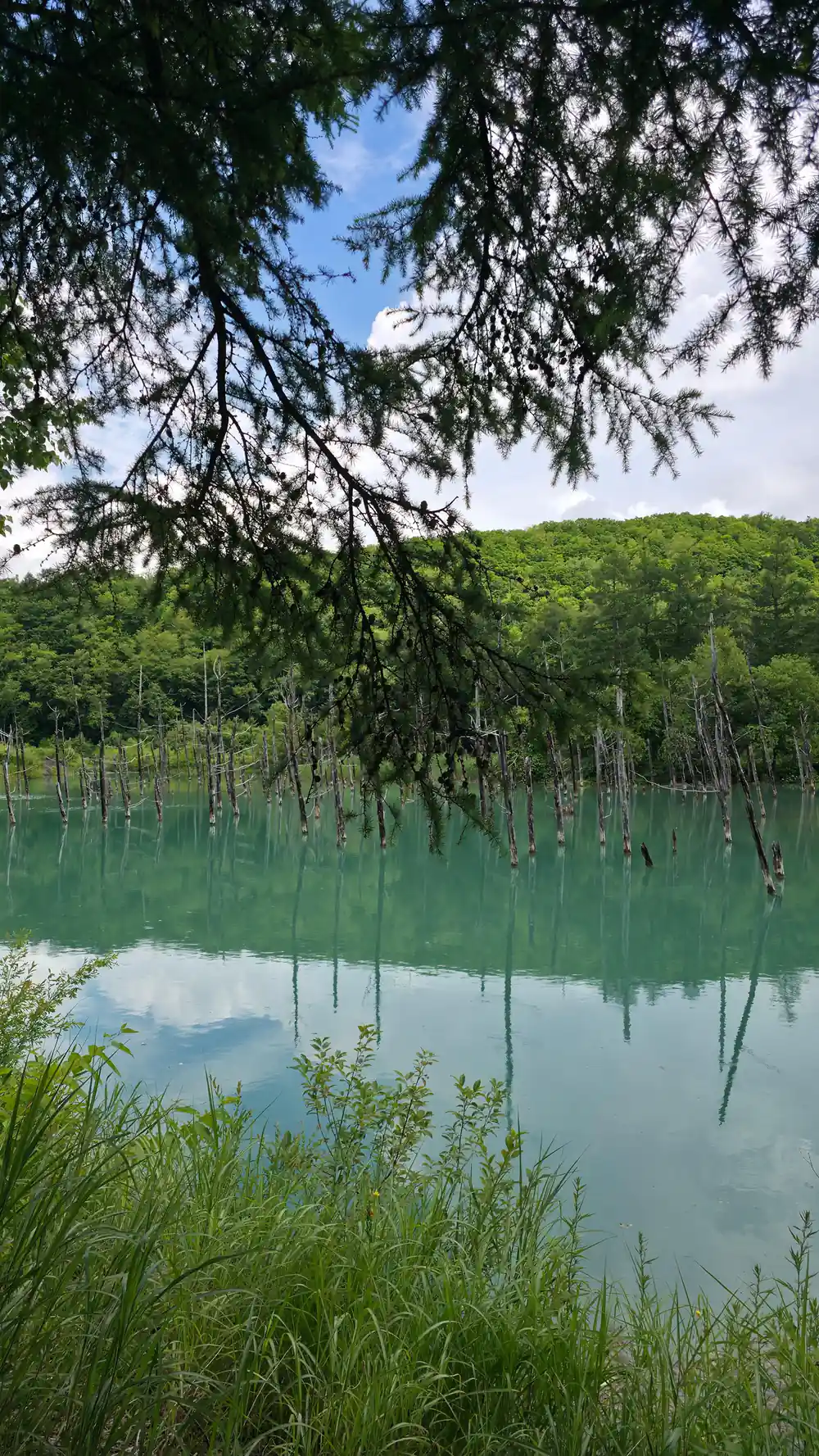
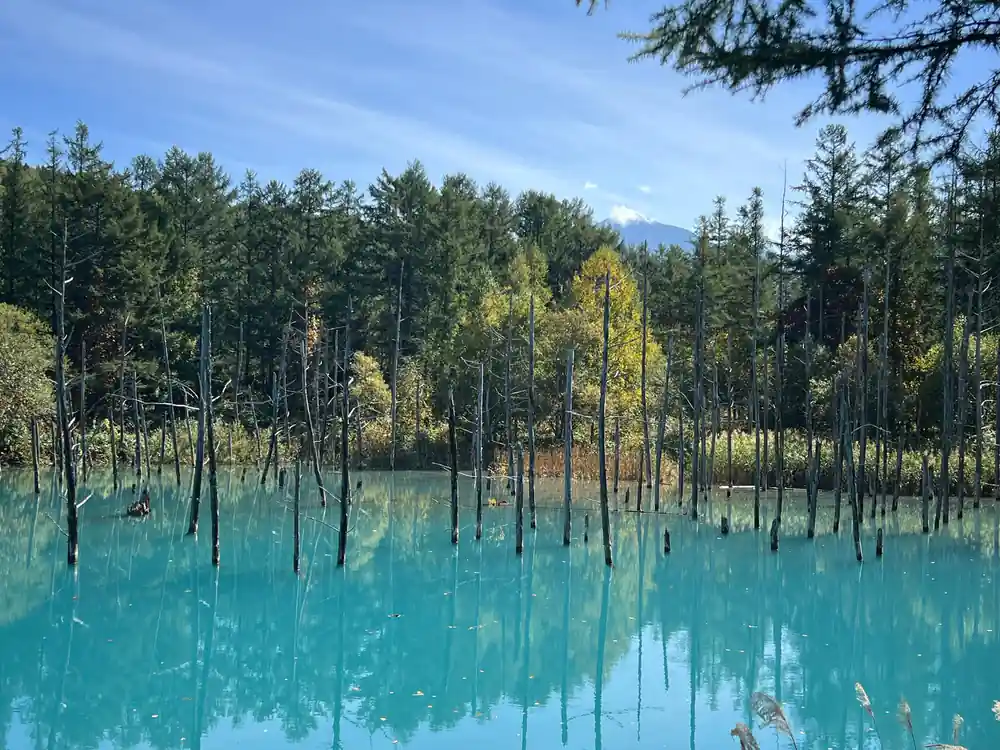
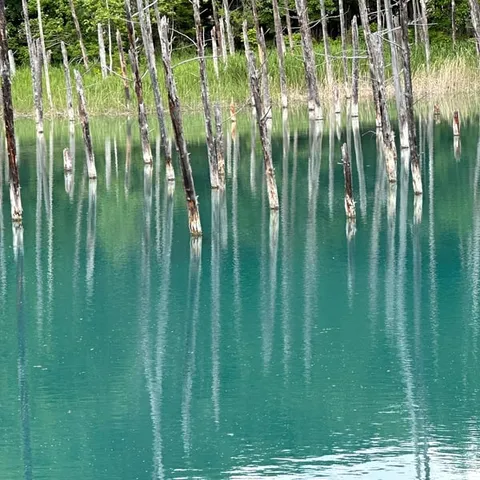
Dead larch and birch stand in the Blue Pond, remains of a forest that once grew on dry ground.
The Long Road East, and Where the Coach Stops
The drive out of Sapporo crosses suburbs, then farmland, then the wide country around Biei and Furano, where fields run in stripes and shelterbelts break the wind. It is a day of watching as much as doing: the coach covers the miles while you look out at ridge lines, crop colours and lone trees standing in the middle of nowhere. On this tour the coach goes from the Sapporo meeting points to Patchwork Road in Biei, then the Shirogane Blue Pond, Shikisai-no-oka, a local restaurant and Farm Tomita.[1]
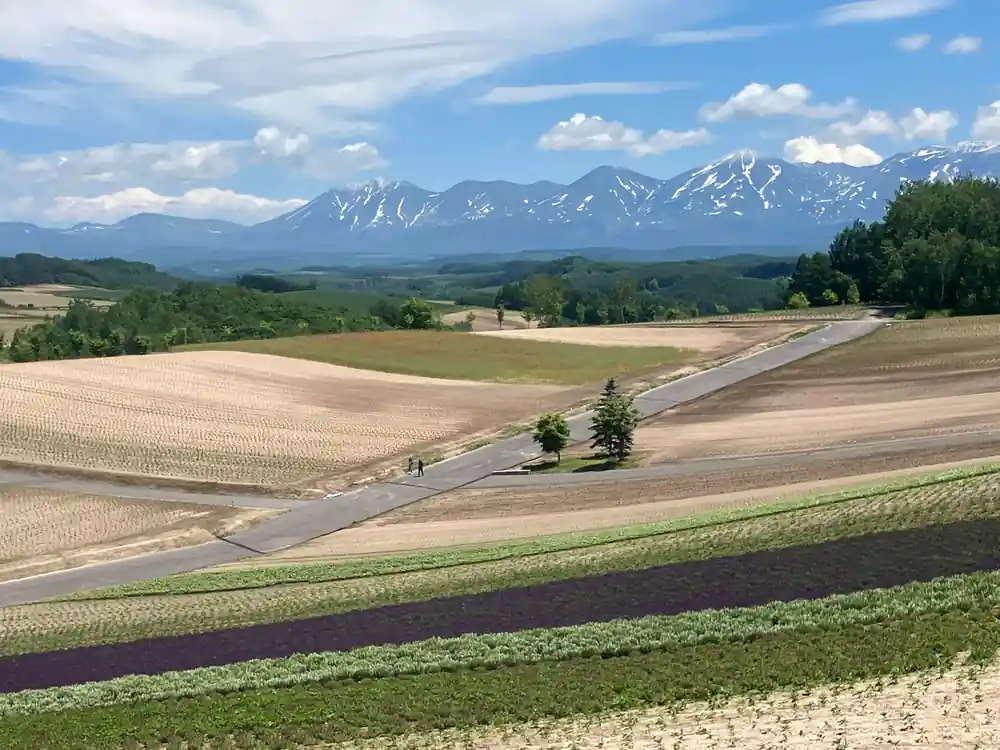
The patchwork name is about agriculture rather than decoration. Wheat is one of the four main crops in Biei's crop rotation, along with potatoes, beans and sugar beet, and these form part of the patchwork landscape on the hills.[7] The town itself is small, with a population of 9,775 as of 31 December 2020, and the farmland around it stretches well past the last streets.[8]
Rest stops split the journey into manageable pieces, and most coaches build in a service area or roadside facility where you can use a toilet, buy a drink and stretch your legs. Farm stands and small shops along the way sell soft cream, melon and vegetables in season, so keep some coins handy. Bring a refillable bottle too; the days are long and the air in the hills is dry.
How Long to Spend in Furano and Biei
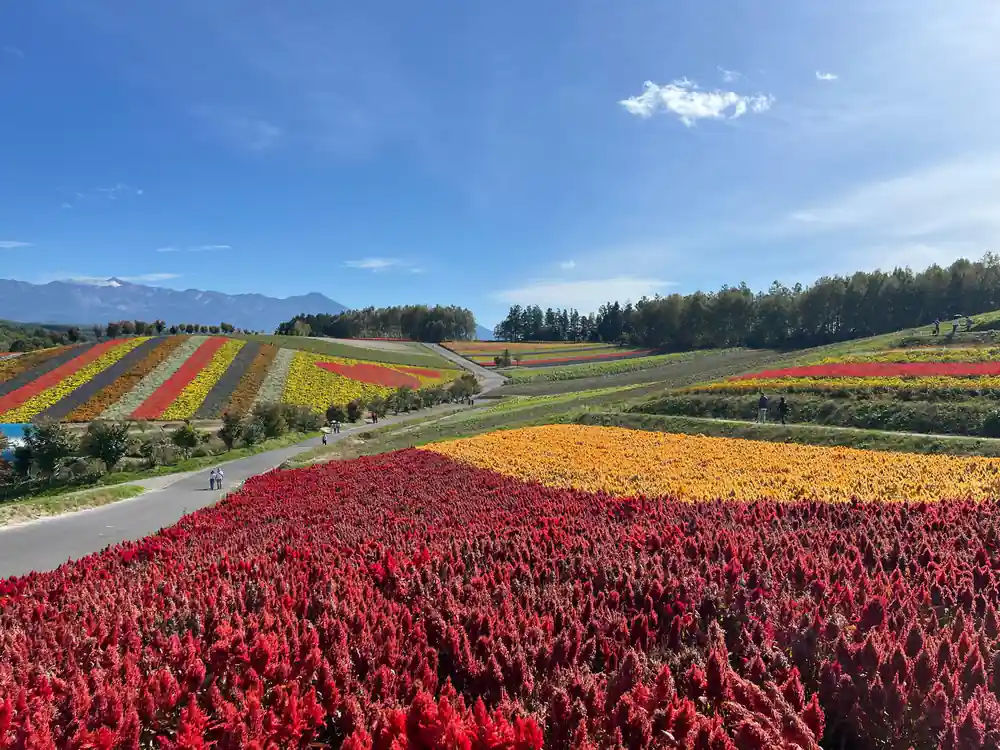
How long to spend in Furano and Biei comes down to what you want from a flower field. Shikisai-no-oka spreads fifteen hectares of panoramic flower gardens across its slope.[9] That is a lot of ground for one stop, so pick a path, climb a little, and let the view do the rest; different beds come into flower at different moments through the season.
If lavender is the goal, timing is everything. At Farm Tomita's Traditional Lavender Field the bloom runs from late June to late July, with the best viewing season from early to mid-July.[3] Outside that window the fields still give you Biei's other colours, and the hills carry the season themselves, from deep green summer to white winter.
In practice, the coach day sets the order for you: Patchwork Road, the Blue Pond, Shikisai-no-oka, a restaurant stop and Farm Tomita.[1] Where you have free time, spend it where the light is best and let the quieter stops be quick. A garden that delights you in sunshine can feel bleak in drizzle, so watch the sky as well as the clock.
1 day
From US$48, the Colored Hokkaido coach day links Patchwork Road, the Shirogane Blue Pond, Shikisai-no-oka and Farm Tomita.[1]
The Blue Pond Stop, Explained
The Shirogane Blue Pond is the stop most people photograph twice. It was created accidentally in 1988, when erosion control dams were built along the Biei River to protect against mudflows from the active volcano Tokachidake.[10] Dead Japanese larch and white birch stand upright in the water, the remains of a patch of forest that was once dry ground and now reads like a sculpture garden.[11]
The colour is physics rather than paint. Suspended aluminium hydroxide colloids in the water scatter blue light in a process called Rayleigh scattering, the same process that makes the sky appear blue.[12] The pond also had an unexpected moment of fame when it was featured in Apple's WWDC 2012 MacBook Pro with Retina Display introduction.[13] Behind the valley, Tokachidake stands at 2,077 m (6,814 ft) and last erupted in 2004.[14]
Light changes the water through the day, and in winter the pond is lit after dark. The Blue Pond winter illumination runs from October 24, 2025 to April 22, 2026, with lighting from 5:00 PM in October, November and January, 4:30 PM in December, 5:30 PM in February, 6:00 PM in March and 6:30 PM in April, and it continues until 9:00 PM.[15] On a summer coach day you see the pond in daylight, which is a very different colour from the winter photographs.
Hill Roads, Motion Sickness and What to Pack
Hokkaido's farm roads roll and dip rather than run straight, and the back of a coach feels every one of them. If you are prone to motion sickness, sit forward, look at the horizon rather than at your phone, and keep water within reach. Eating lightly at the restaurant stop rather than heavily also helps for the hillier stretches that follow lunch.
Pack for a place with real seasons. Biei has a cold continental climate with warm summers and freezing winters, so layers, a windproof shell and comfortable shoes cover most of the year.[6] Summer days can be hot in the open fields and cool in the shaded valley stops, and winter visits need proper boots for wet, icy ground near the pond.
The Return Leg and a Late Sapporo Arrival
The drive back is the quiet part of the day. Most people nap, edit photos, or watch the last of the farmland slide into suburbs, and the coach finishes its route with 2 drop-off locations in Sapporo.[1] The day is listed at 1 day, and starting times are shown when you check availability.[1] Keep the evening loose.
Book before you travel in the flower weeks or the winter illumination months, when both seats and hotel rooms get tight. The Colored Hokkaido tour is rated 4.56 from 122 reviews, and the listing offers Reserve now & pay later.[1] That flexibility suits Hokkaido, where a plan made in one season rarely looks the same in another.
From prices for Sapporo day tours to Furano and Biei
Each bar is a from price per traveller taken from a GetYourGuide listing.[1][4][5][16]
From prices per traveller in US dollars
From prices per traveller in US dollars, from these GetYourGuide listings.[1][4][5][16]
When to Go: Bloom and Light Windows
How the coach day runs
Sapporo meeting points
2 starting location options in Sapporo; pick the one closest to your hotel. Starting times appear when you check availability.[1]
Patchwork Road, Biei
Wheat, potatoes, beans and sugar beet are the four main crops in Biei's crop rotation, and they shape the patchwork hills.[7]
Shirogane Blue Pond
Created accidentally in 1988 when erosion control dams were built along the Biei River against mudflows from Tokachidake.[10]
Shikisai-no-oka and lunch
Shikisai-no-oka covers fifteen hectares of panoramic flower gardens.[9] The day also includes a local restaurant stop.[1]
Farm Tomita, then back
Farm Tomita's Traditional Lavender Field blooms from late June to late July, best viewed from early to mid-July.[3]
Ride the Colored Hokkaido day from Sapporo to Furano and Biei
from US$48Reserve now & pay later