At a glance
- From Sapporo it is about 1 hour 25 minutes by JR Limited Express to Asahikawa, then 60 to 70 minutes by Dohoku Bus route 39.[1]
- The Blue Pond is about 20 minutes from Biei Station on Dohoku Bus route 39, boarding the same service mid-route.[1]
- The Colored Hokkaido tour from Sapporo runs for 1 day with a live guide in English, Chinese, Japanese and Korean.[2]
- Lighting runs from October 24, 2025 to April 22, 2026, lit until 9:00 PM, with start times that vary by month.[3]
- At Farm Tomita's Traditional Lavender Field, lavender blooms from late June to late July, best from early to mid-July.[4]
- Top choice Furano & Biei Blue Pond from US$48 Duration1 day[2]Guide languagesEnglish, Chinese, Japanese, KoreanRating4.56 from 122 reviews[2]StopsPatchwork Road, Blue Pond, Shikisai No Oka, Farm TomitaCancellationFree cancellation, 24h before[2] Check availability
- Asahiyama Zoo & Blue Pond from US$48 Duration9 hours to 1 day[5]Guide languagesChinese, EnglishRating4.49 from 47 reviews[5]StopsAsahiyama Zoo, Shirahige Waterfall, Blue PondCancellationFree cancellation, 24h before[5] See this tour
- Biei Best 5 Photo Spots from US$60 Duration10 to 10.5 hours[6]Guide languagesEnglish, Korean, ChineseRating4.72 from 77 reviews[6]StopsBiei best 5 spots[6]CancellationFree cancellation, 24h before[6] See this tour
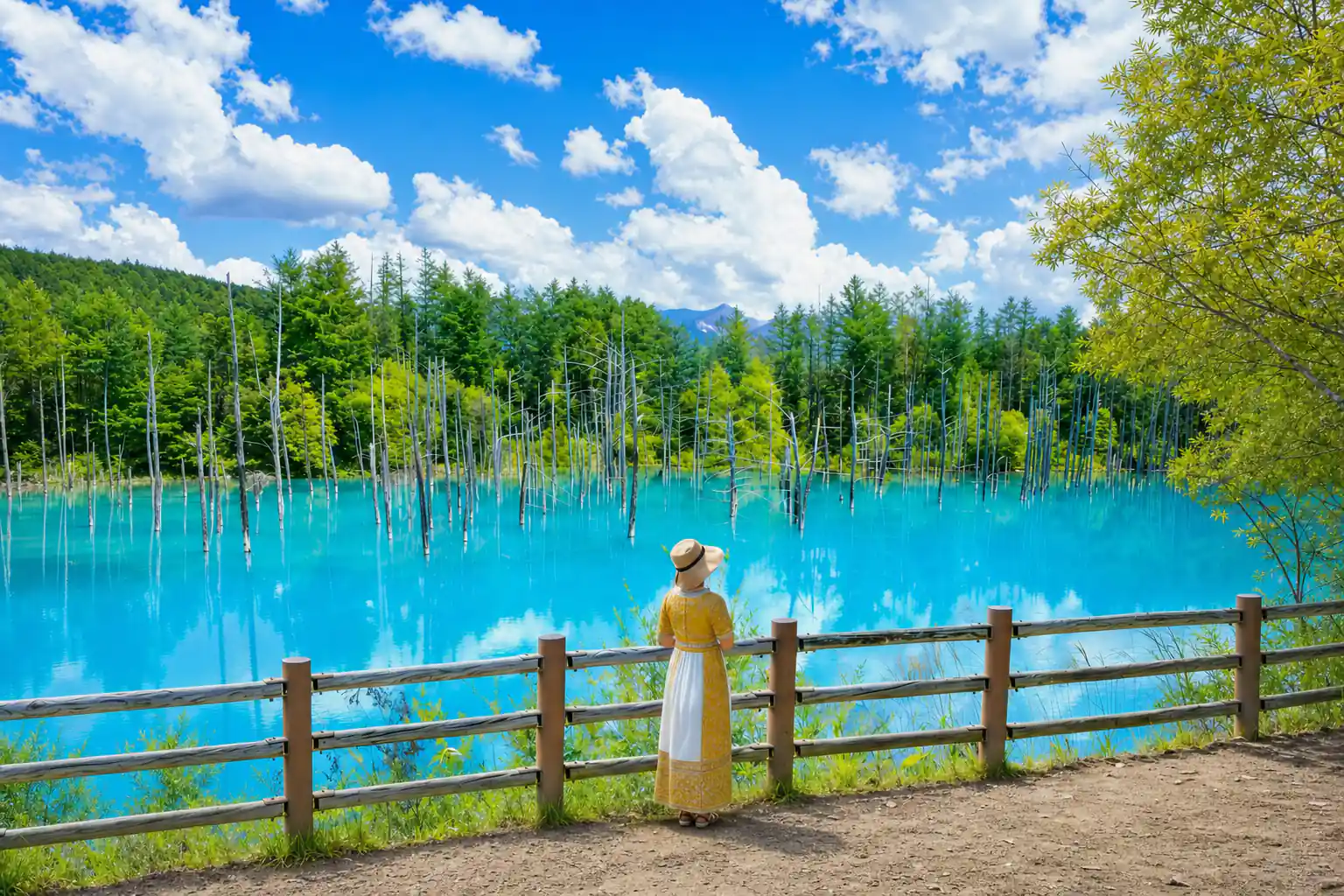
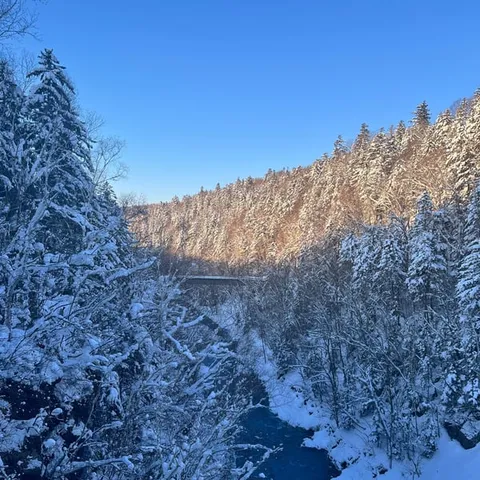
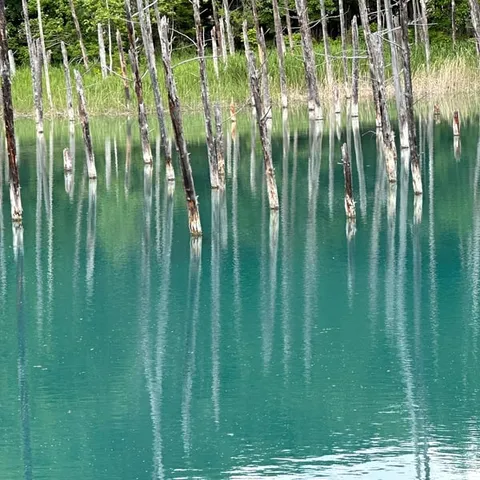
The pond was created accidentally. In 1988, erosion control dams were built along the Biei River to protect against mudflows from the active volcano Tokachidake.
Verdict: Tour for Ease, Bus for Freedom
Pre-booking checklist
On the day
- Note the return bus times at the stop before you walk down to the pond.
- Pack layers, gloves and a hat; Biei has freezing winters.[7]
- Wear shoes with grip, as paths and car parks can be icy from late autumn.
- Go early or late for softer light and calmer reflections on the water.
Why the Blue Pond Draws People to Biei
The Shirogane Blue Pond, known in Japanese as Aoiike, sits at the edge of the Shirogane onsen village in central Hokkaido, a quiet pocket of forest and hot spring hotels below the Tokachi mountains. Most travellers reach it from Biei, Asahikawa or Sapporo, and the road in from any of them passes farmland, shelter belts and low hills. It became famous well beyond Japan: the Blue Pond in Biei, Hokkaido was featured in Apple's WWDC 2012 MacBook Pro with Retina Display introduction.[8]
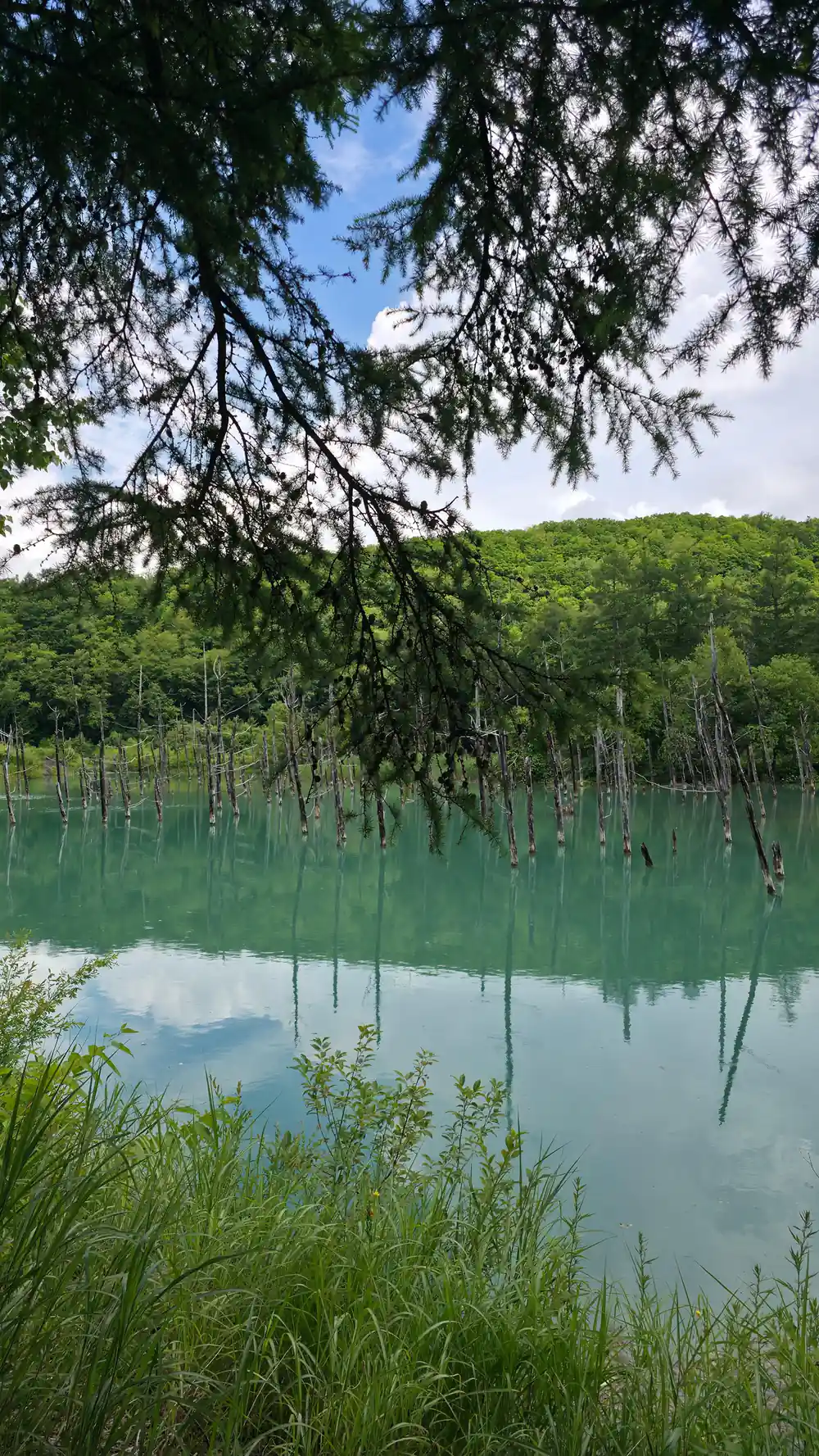
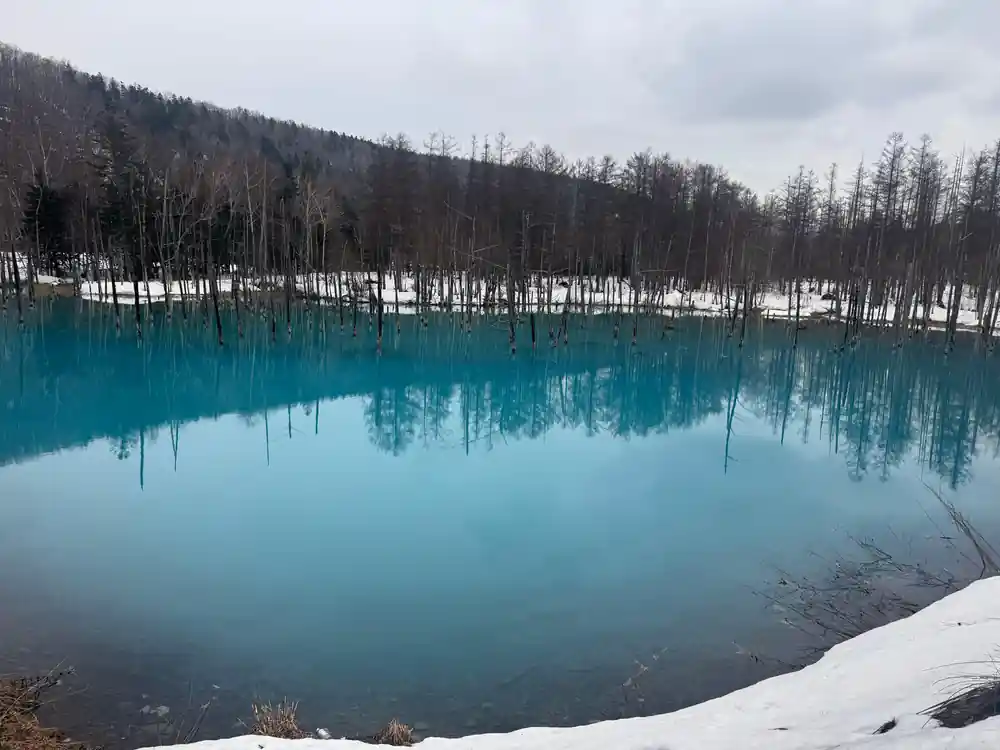
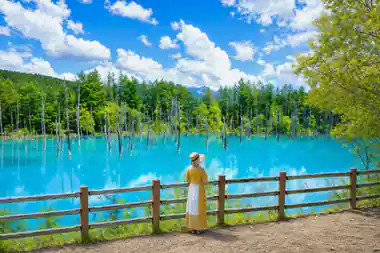
The water is the whole draw. On a still morning the pond reads as one flat sheet of blue, holding the pale trunks and the sky; when wind moves across it, the surface breaks into small waves and the colour softens toward grey-green. The Shirogane Blue Pond is blue because suspended aluminium hydroxide colloids in the water scatter blue light in a process called Rayleigh scattering.[9] Light and weather change the effect, so no two visits look quite the same.
The pond is younger than most people guess. The Blue Pond was created accidentally in 1988 when erosion control dams were built along the Biei River to protect against mudflows from the active volcano Tokachidake.[10] The dead Japanese larch and white birch trees standing in the water are what was once a dry patch of forest, now standing in the water like a sculpture garden.[11] They are the reason the pond photographs so well, and they are also a reminder of how recent all of this is.
Getting to Shirogane Blue Pond from Sapporo
The Sapporo to Shirogane Blue Pond route runs by rail to Asahikawa and then by bus, and it works well if you start early. From Sapporo the Blue Pond is about 1 hour 25 minutes by JR Limited Express to Asahikawa plus 60 to 70 minutes by bus.[1] Line up a morning departure, and the bus legs and the return journey still fit inside daylight, even on the shorter days of spring and autumn.
The bus leg is Dohoku Bus route 39, the service that links Asahikawa with Shirogane Onsen.[1] You ride it toward Shirogane Onsen and walk down to the pond from the stop. Check the timetable at Asahikawa Station before you commit to a return time, and keep a photo of the departure board on your phone, because the pond is not the place to be guessing when the next bus leaves.
If you would rather not juggle trains and buses, a guided day tour from Sapporo bundles the transfer, the stops and the timing into one booking. The Colored Hokkaido tour runs for 1 day with a live guide speaking English, Chinese, Japanese and Korean,[2] and it offers free cancellation up to 24 hours in advance and reserve now and pay later.[2] That makes for a different kind of day, spent looking out of the window instead of watching a clock.
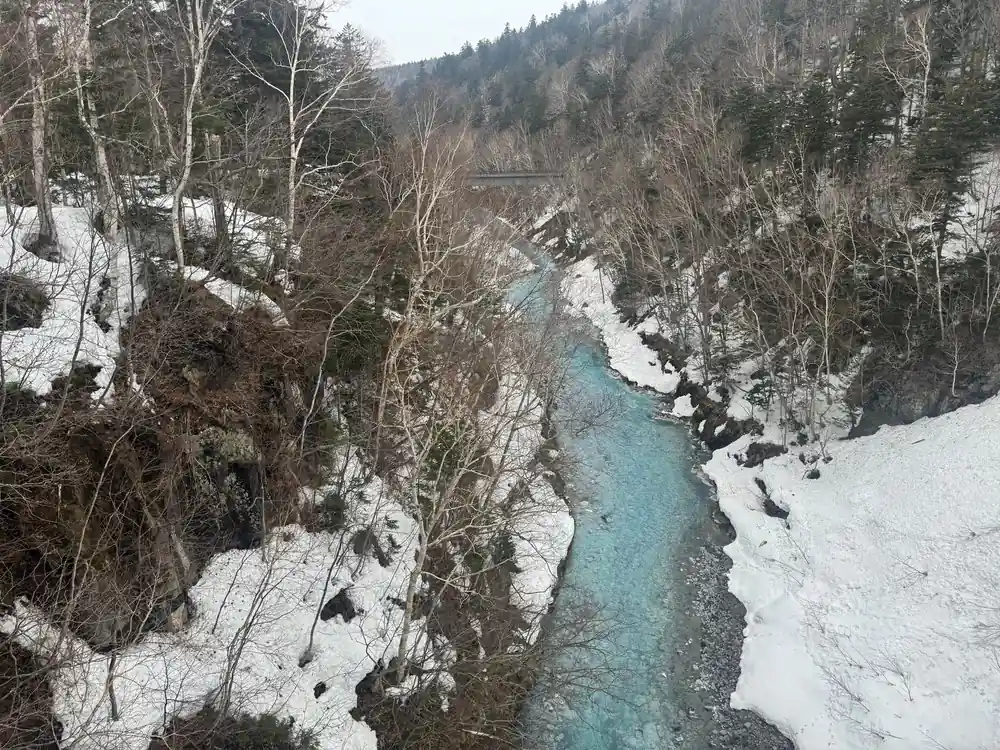
Pale trunks standing in the blue water on a still Biei morning.
Arriving from Biei or Asahikawa by Bus
Biei is the closest town to the water, and its station is the simplest starting point on the whole route. From Biei Station, the Blue Pond is about 20 minutes by Dohoku Bus route 39.[1] Boarding mid-route means you join the same service that has come from Asahikawa, so seats fill as it goes.
The town itself is small and slow in the best way. Biei has a population of 9,775 as of 31 December 2020,[12] and from the station you can walk to most of what you need: a bakery, a few restaurants and shops for the next leg of the trip. It makes a calm base if you want to see the pond in the evening light and again the next morning without a long transfer in between.
Asahikawa is the other practical base, and it is the railhead for the route, so you can ride up from Sapporo by express train and continue to the pond the same day.[1] Buses also run from Asahikawa Station toward Shirogane Onsen, and taxis and rental cars are available from both towns if you want to add the waterfall and a flower farm to the same outing.
Driving and Shirogane Blue Pond Parking
Driving gives you the most freedom and the easiest way to combine several stops in one loop. Shirogane Blue Pond parking is the practical detail that people leave until last, so treat it as part of the plan: drive up early, park where the signs direct you, and allow a short walk between the car and the water.
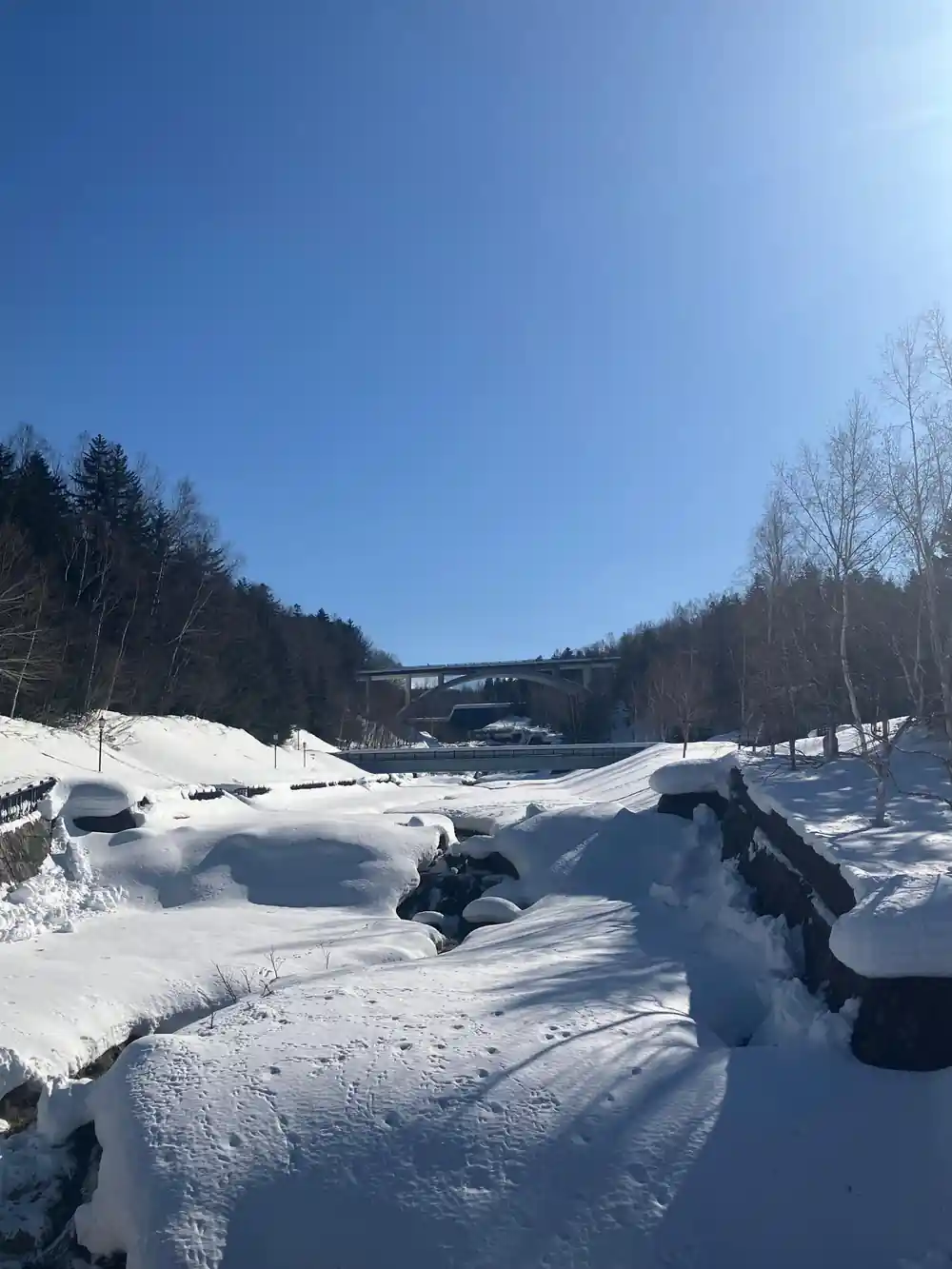
Winter changes the picture completely. Biei has a cold continental climate with warm summers and freezing winters,[7] so snow tyres, a flexible schedule and daylight driving are the sensible choices from late autumn onward. The road into Shirogane climbs into forest, and conditions there can differ from Sapporo, the coast or the airport, so check the forecast for the Biei area rather than for the city.
A car also makes a natural loop: the Blue Pond first, then the falls nearby, then the flower farms on the way back toward Biei and Furano. If you would rather leave the driving to someone else, the Sapporo day tours cover the same ground by coach, with the stops already set.[2]
from US$48
The Colored Hokkaido tour from Sapporo spends 1 day on Biei and Furano, with stops at the Blue Pond, Patchwork Road and Farm Tomita.[2]
What Else to See Around Biei and Furano
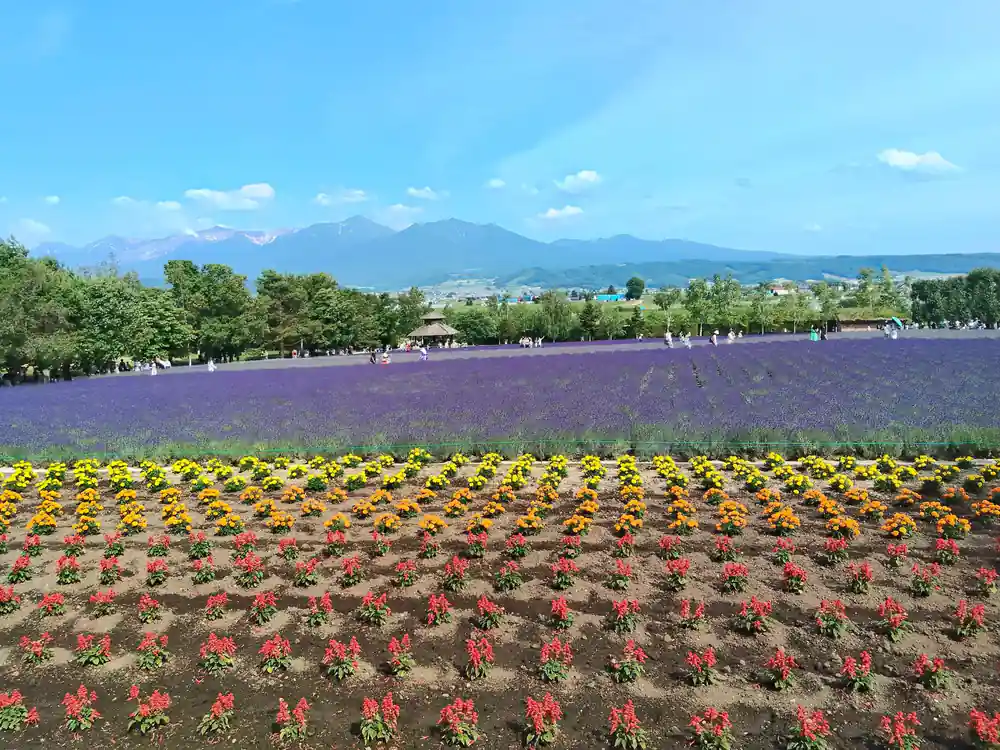
The drive between Biei and Furano runs through working farmland, and the fields themselves are the attraction. Wheat is one of the four main crops in Biei's crop rotation cycle, the others being potatoes, beans and sugar beet, and these form part of the patchwork landscape on Biei's hills.[13] Depending on the week you visit, the hillside blocks are green, gold, white or bare earth.
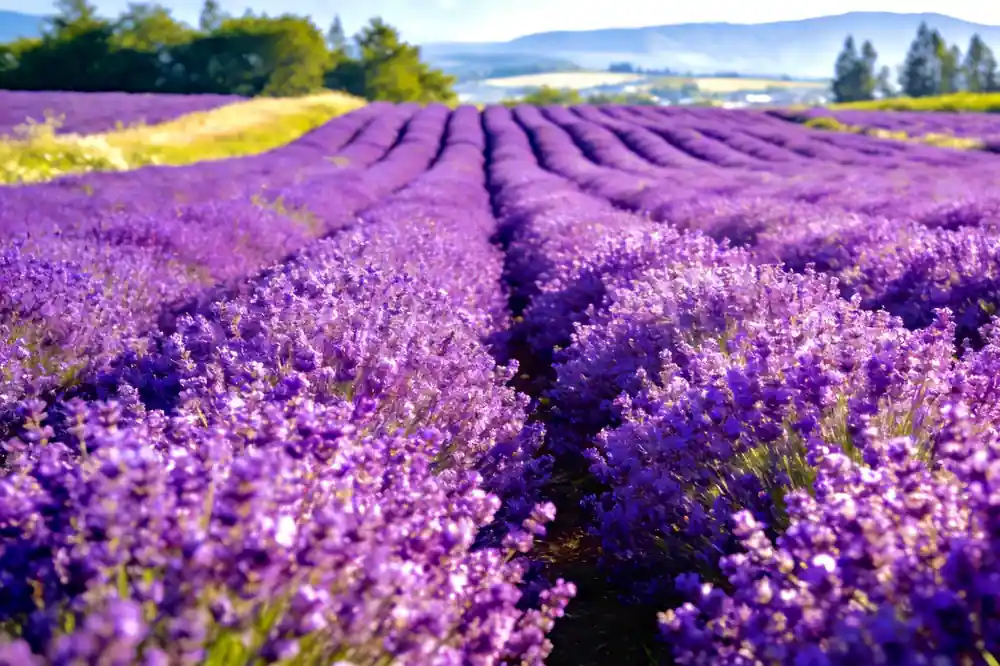
Shikisai-no-oka is a set of panoramic flower gardens in Biei, Hokkaido, spread across fifteen hectares of land.[14] Rows of colour run across the slope, and the layout lets you walk the ridges and look down over the beds. Farm Tomita is the other classic flower stop: at its Traditional Lavender Field, lavender blooms from late June to late July, with the best viewing season from early to mid-July.[4]
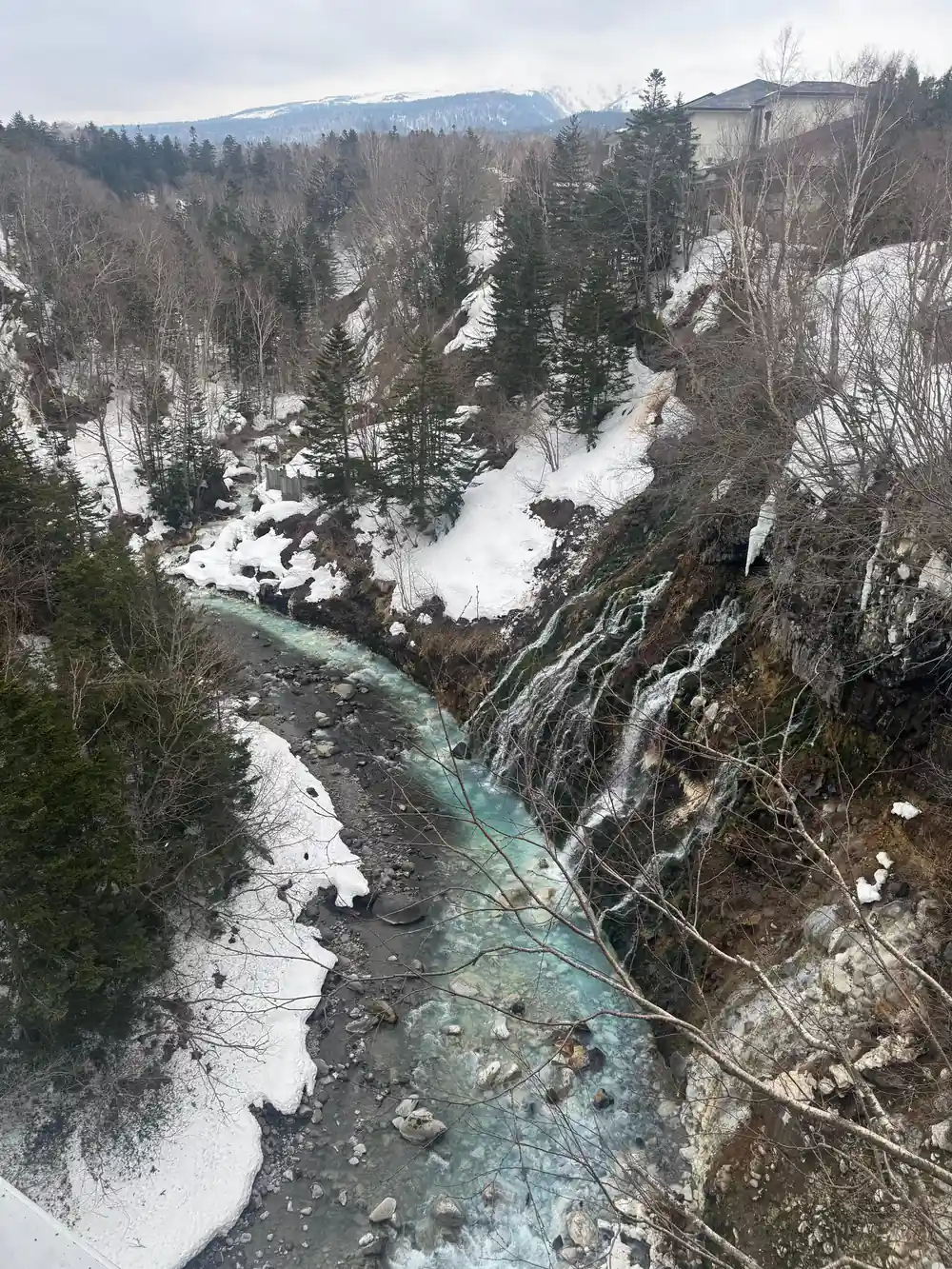
The waterfall close to the pond deserves its place on any itinerary. Shirahige Falls drops approximately 30 meters into the Biei River and is a rare subterranean stream waterfall whose water flows directly from cracks in the rock face.[15] The white threads of water are visible from the road bridge, so it is an easy stop on the way in or out, and above it all stands Tokachidake, which has an elevation of 2,077 m (6,814 ft) and last erupted in 2004.[16]
When to Go and What to Pack
Summer is flower season, and the lavender window is short and popular. At Farm Tomita's Traditional Lavender Field, lavender blooms from late June to late July, with the best viewing season from early to mid-July.[4] If those weeks matter to you, sort out accommodation and transport well in advance, and aim for the early hours if you want a quiet walk along the rows.
Winter brings the illumination and a very different mood. The Blue Pond winter illumination runs from October 24, 2025 to April 22, 2026, lit until 9:00 PM, with start times that vary by month.[3] Evening visits mean cold hands and long exposures, and a tripod or a steady ledge helps more than any setting on the camera.
Pack for the season rather than for the calendar. Layers are the local habit: a warm mid layer, a windproof shell, gloves, a hat and shoes with grip for ice, packed snow and slush. In summer, a light rain jacket and sun cream earn their space, and insect repellent is useful around the fields in the warmer weeks. Batteries dislike the cold, so keep a spare phone or camera battery in an inside pocket.
Guided Day Tours from Sapporo Compared
The Colored Hokkaido tour is the one booked from this site, and it covers a lot of ground in a single day. It runs for 1 day with a live guide speaking English, Chinese, Japanese and Korean, and its stops are Patchwork Road in Biei, the Shirogane Blue Pond, Shikisai No Oka, a local restaurant and Farm Tomita.[2] There are two starting location options in Sapporo and two drop-off locations at the end of the day.[2]
Other Sapporo departures suit different priorities. A zoo-focused tour runs 9 hours to 1 day with a live guide in Chinese and English, stopping at Asahiyama Zoo, the Tree of Ken and Mary, Shirahige Waterfall, the Blue Pond and Ningle Terrace.[5] A late-departure tour to five Biei spots runs 10 to 10.5 hours and is rated 4.72 from 77 reviews.[6] That one starts from US$60, while the zoo route and the Colored Hokkaido tour are both from US$48.[2][5][6]
Whichever you pick, the practical gain is the same: no timetable to memorise, no parking to look for, and no long walk back to a stop at dusk. The Colored Hokkaido tour offers free cancellation up to 24 hours in advance and reserve now and pay later,[2] so a weather-driven change of plan costs you nothing if you decide early.
From prices for Sapporo Biei and Blue Pond day tours
US dollar from prices of five Sapporo departures listed on GetYourGuide.[2][5][6][17][18]
Sapporo day tour from prices
US dollar from prices for Sapporo departures, as listed on GetYourGuide.[2][5][6][19]
When to plan your Blue Pond visit
Getting to the Blue Pond
Pick your base
Sapporo gives you the widest choice of tours, while Biei and Asahikawa put you closest to the water for early and late visits.[1]
Ride the train to Asahikawa
From Sapporo it is about 1 hour 25 minutes by JR Limited Express to Asahikawa.[1]
Take the bus to the pond
Dohoku Bus route 39 covers the rest, about 20 minutes from Biei Station or 60 to 70 minutes from Asahikawa.[1]
Drive and park early
A car lets you pair the pond with the falls and the flower farms, and arriving early leaves room for a slower look around.
Or join a day tour
The Colored Hokkaido tour runs for 1 day from Sapporo with a live guide in English, Chinese, Japanese and Korean.[2]
Make the Blue Pond the centre of your Hokkaido day
from US$48Reserve now & pay later