At a glance
- Suspended aluminium hydroxide colloids in the water scatter blue light in a process called Rayleigh scattering, the same effect that makes the sky look blue.[1]
- The pond was created accidentally in 1988, when erosion control dams were built along the Biei River to protect against mudflows from the active volcano Tokachidake.[2]
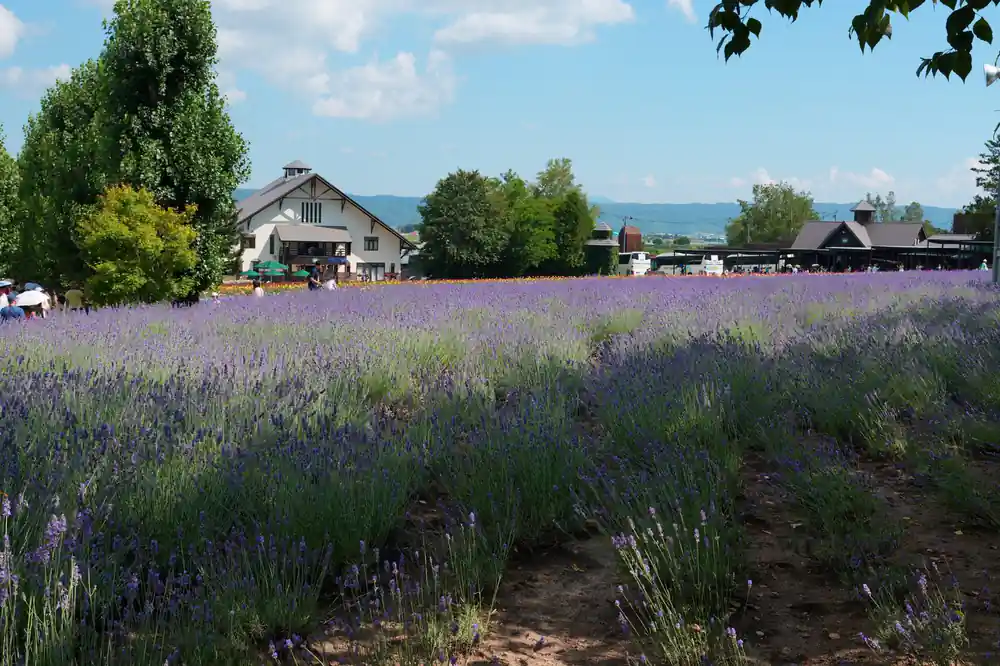
- At Farm Tomita's Traditional Lavender Field, lavender blooms from late June to late July, and the best viewing season runs from early to mid-July.[3]
- Colored Hokkaido: Furano Flower and Biei Blue Pond From Sapporo runs 1 day from US$48, rated 4.56 from 122 reviews.[4]
- The Blue Pond winter illumination runs from October 24, 2025 to April 22, 2026, with lighting until 9:00 PM.[5]
- Top choice Colored Hokkaido: Furano & Biei from US$48 Duration1 day[4]Rating4.56 from 122 reviews[4]Guide languagesEnglish, Chinese, Japanese, Korean[4]CancellationFree cancellation up to 24 hours before[4]Route focusBlue Pond, Shikisai No Oka, Farm Tomita[4] Check availability
- Asahiyama Zoo & Blue Pond from US$48 Duration9 hours - 1 day[6]Rating4.49 from 47 reviews[6]Guide languagesChinese, English[6]CancellationFree cancellation up to 24 hours before[6]Route focusAsahiyama Zoo, Shirahige Falls, Blue Pond[6] See this tour
- Biei Best 5 Photo Spots from US$60 Duration10 - 10.5 hours[7]Rating4.72 from 77 reviews[7]Guide languagesEnglish, Korean, Chinese[7]CancellationFree cancellation up to 24 hours before[7]Route focusBiei photo spots, late departure[7] See this tour
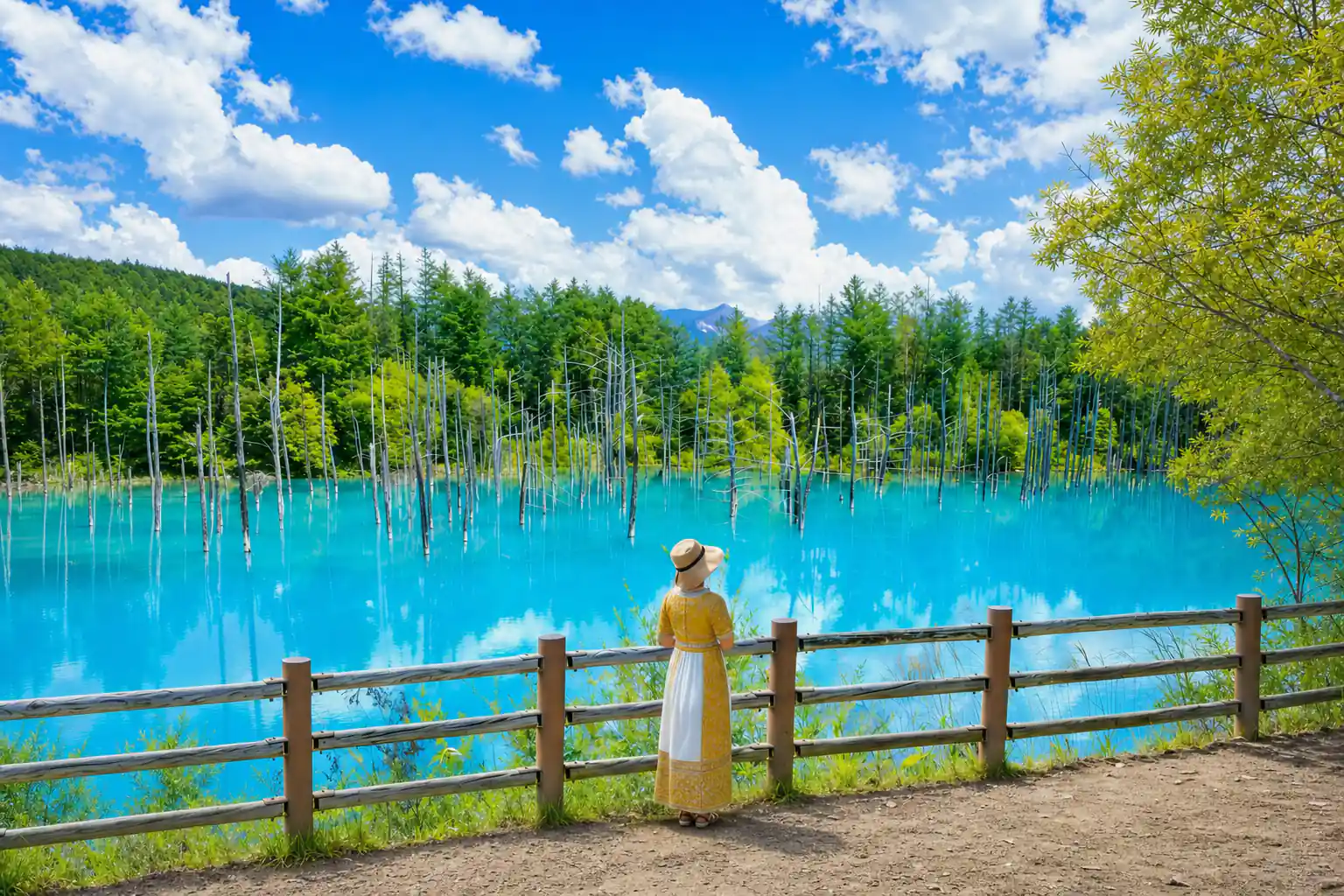
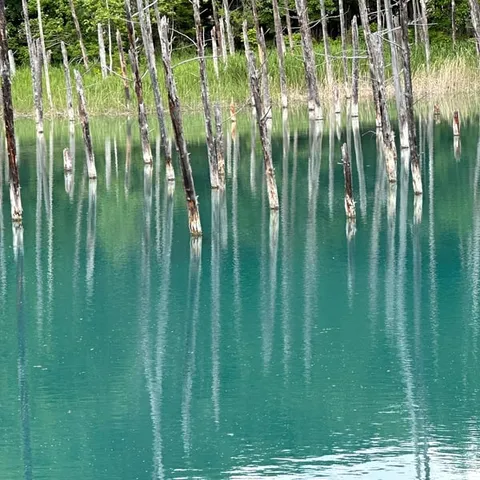
The brilliant blue of Shirogane Blue Pond in Hokkaido results from a phenomenon called Rayleigh scattering, the same process that makes the sky appear blue. When sunlight enters the water, it encounters suspended aluminium hydroxide colloids, microscopic particles left behind by volcanic minerals.
Is this tour right for a photography day?
Pre-booking checklist
Shirogane Blue Pond: Reading the Gravel path for Great Shots
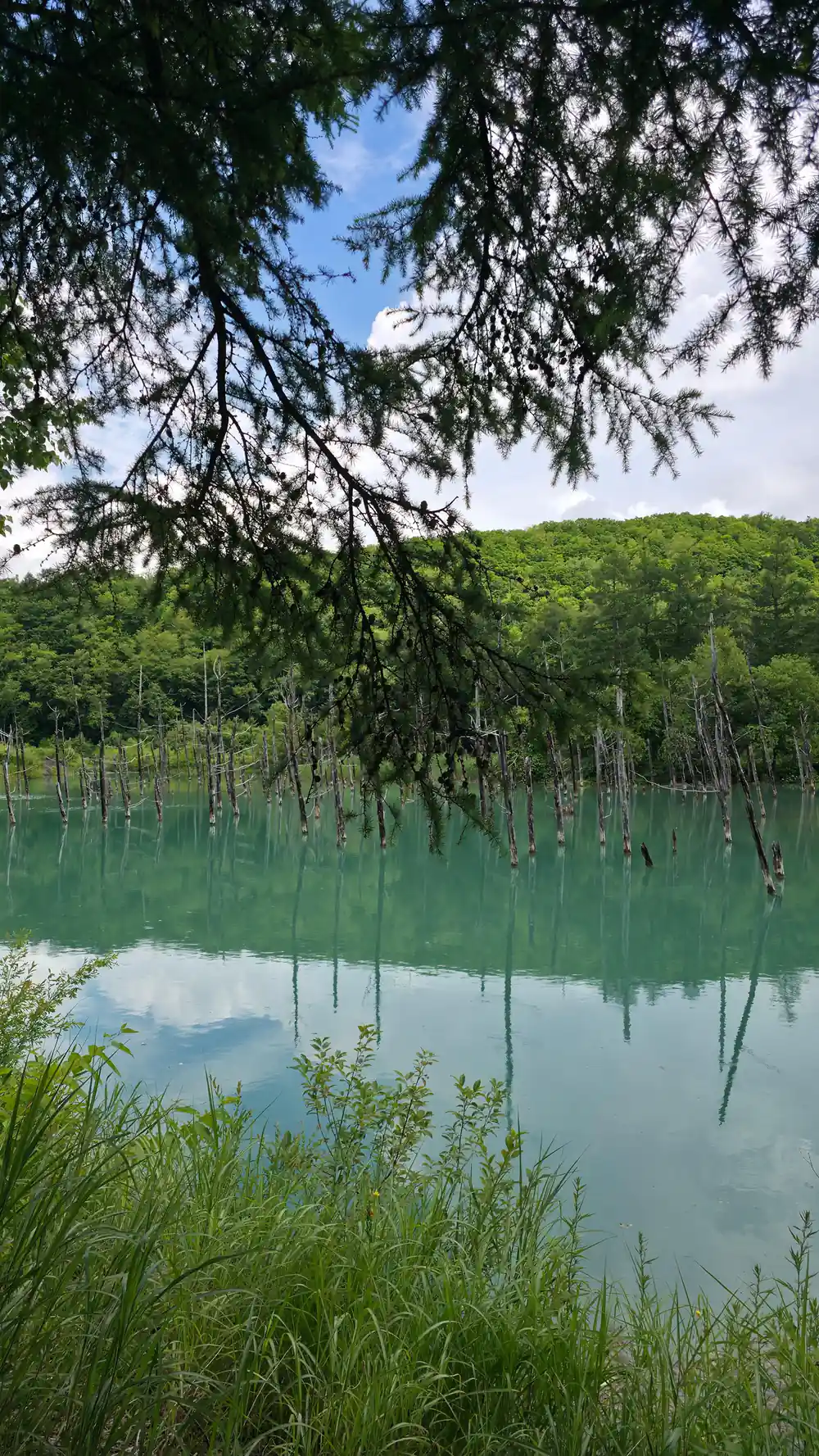
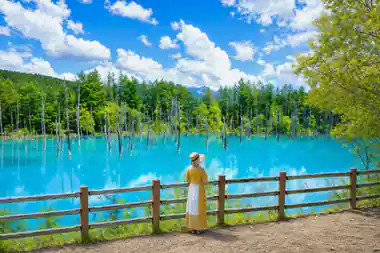
The Blue Pond, or Aoiike, sits beside the Shirogane Onsen area in Biei, a short walk from the road. Its colour is not a trick of editing. It comes from suspended aluminium hydroxide colloids in the water, which scatter blue light in a process called Rayleigh scattering, the same effect that makes the sky look blue.[1] The pond was created accidentally in 1988, when erosion control dams were built along the Biei River to protect against mudflows from the active volcano Tokachidake.[2] Tokachidake stands at 2,077 m (6,814 ft) and last erupted in 2004.[8] Dead Japanese larch and white birch stand in the water, a dry patch of forest that now looks like a sculpture garden.[9]
The gravel path gives you a handful of angles and no more, so treat it as a set of fixed viewpoints rather than a place to roam. Stand close to the rail and keep the wooden edge out of frame. Reflections are strongest when the air is still, so early mornings and sheltered corners work in your favour, and a polarising filter cuts glare when you would rather see tree trunks than sky in the water. The pond reached a worldwide audience after it appeared in Apple's WWDC 2012 MacBook Pro with Retina Display introduction, so plenty of people arrive knowing exactly what they want to shoot.[10] For shirogane blue pond (aoiike) photos, patience matters more than gear.
Phone Camera Settings for Lavender and Flower Fields
Flower fields are the easiest place to ruin a good phone shot, because the camera tries to expose the whole frame and flattens the colour. Tap to focus on a single row, then drag the exposure slider down until the flowers keep their depth. Turn on the grid, hold the horizon level, and let the rows run into a corner instead of lying flat across the middle. Digital zoom destroys texture, so step closer or shoot wide and crop later. If the wind picks up, take a short burst and keep the sharpest frame.
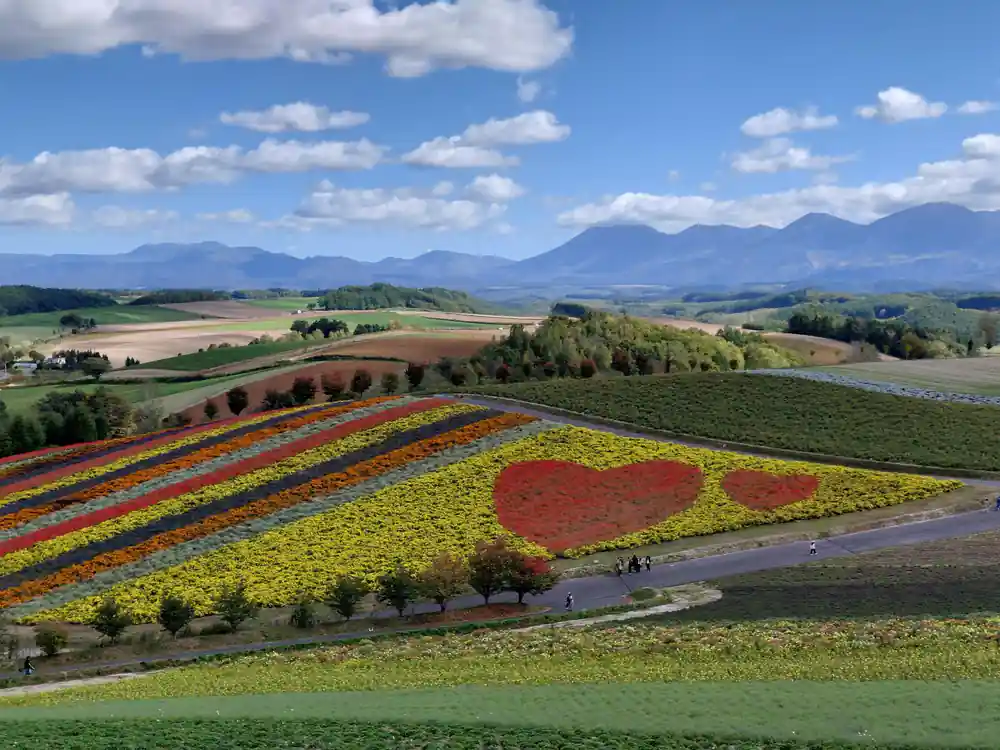
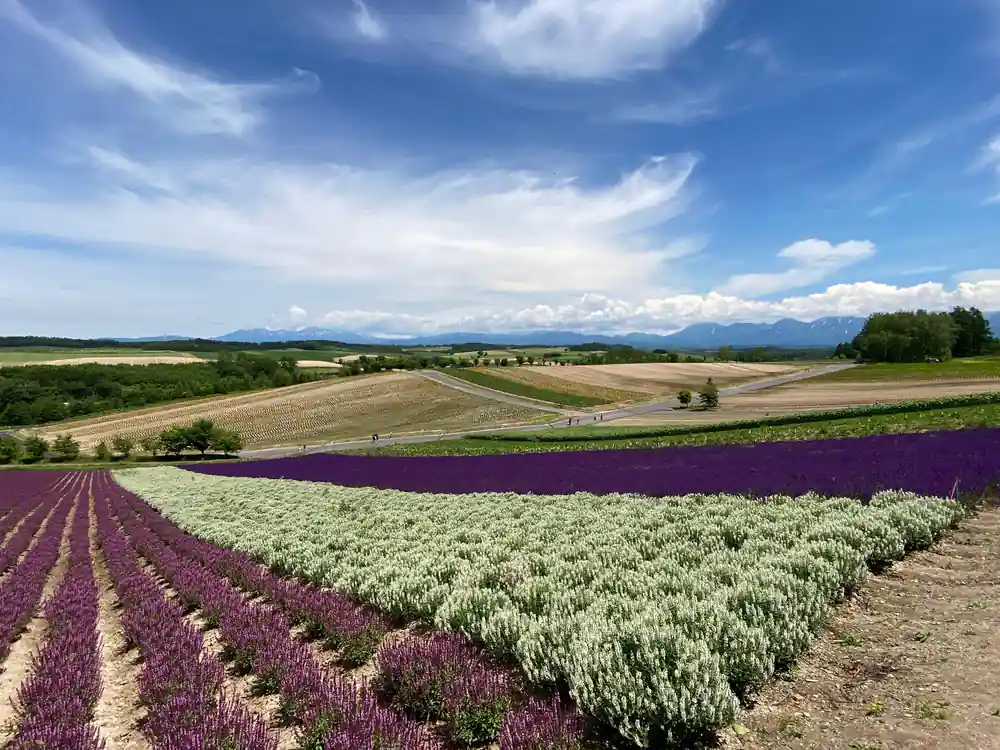
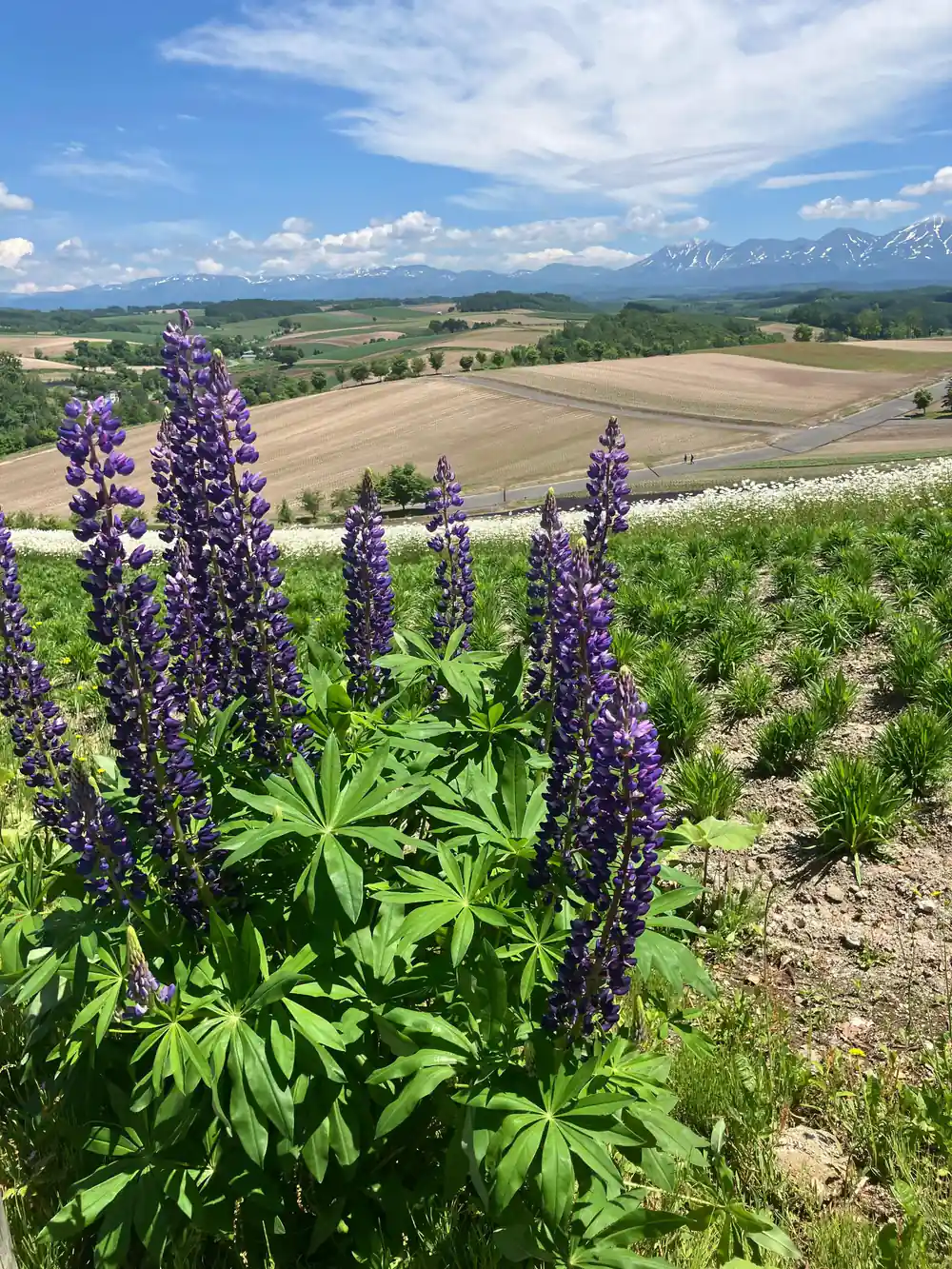
Timing does more for colour than any setting does. At Farm Tomita's Traditional Lavender Field, lavender blooms from late June to late July, with the best viewing season from early to mid-July.[3] Shikisai-no-oka spreads fifteen hectares of panoramic flower gardens across Oka-no-machi in Biei.[11] Pale colours blow out first, so meter for the lightest band and let the deeper rows fall away. Keep white balance fixed instead of letting the phone drift between warm and cool frames, and you will spend less time matching shots afterwards.
Dead larches and white birch standing in the blue water like a sculpture garden
Navigating Field Boundaries and Private Farmland
Biei's hills look like a patchwork quilt. Wheat is one of the four main crops in the crop rotation cycle, along with potatoes, beans and sugar beet, and together they form part of the patchwork landscape on the hills.[12] Those fields are workplaces, not backdrops. Stay on verges, paths and marked viewing areas, never step between rows of a planted field, and do not lift a fence rail for a cleaner angle. A longer lens lets you respect the boundary and still fill the frame.
Farm Tomita runs its lavender as a visitor garden, so the paths there are built for walking and the rules are posted at the entrances. Out along Patchwork Road the etiquette is quieter: use the parking that is provided, keep voices low near farm buildings, and never block a gate or a tractor track. Biei had a population of 9,775 as of 31 December 2020.[13] The fields you are photographing are worked land, and the seasons keep changing what grows in them.
Framing the Named Biei Trees
Single trees on these hills have names, among them the Seven Stars Tree, the Tree of Ken and Mary and the Christmas Tree. They appear on the stop lists of several Sapporo day tours, and each one is really a study in isolation: a lone shape on a bare slope with a field line behind it. Photograph them with a longer lens and a clean horizon, and wait for a cloud to pass if the light is flat. Do not walk into a crop to close the distance.
Because the trees are small, the temptation is to zoom in hard. Look instead at what surrounds them: a sweep of wheat going gold, a curve of road, a line of windbreak trees. Place the named tree off centre and let the field do the work. Patchwork Road gives you several of these shapes in one slow pass, and the light shifts quickly as the coach moves between hills, so keep your settings ready and the lens cap off.
from US$48
The Colored Hokkaido day tour from Sapporo runs 1 day and carries a 4.56 rating from 122 reviews.[4]
Managing Short Stops and Avoiding Peak Crowds
Coach stops are timed, and the Blue Pond is the one where minutes disappear fastest. Walk the gravel path first to find your angles, then return to the one you liked and work it properly instead of shooting everything once. If a viewpoint is crowded, a small shift sideways often clears the frame. Late June to late July is the lavender window, and the best viewing season at Farm Tomita's Traditional Lavender Field is early to mid-July, so expect company at the flower stops then.[3]
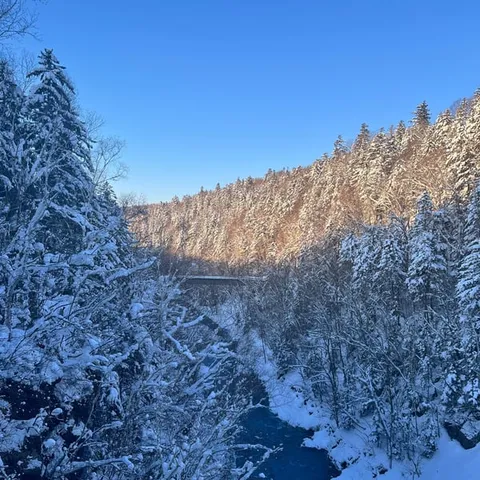
If you want to return under your own steam, the Blue Pond is about 20 minutes from Biei Station by Dohoku Bus route 39, and from Sapporo about 1 hour 25 minutes by JR Limited Express to Asahikawa plus 60 to 70 minutes by bus.[14] In winter the pond is lit for a season that runs from October 24, 2025 to April 22, 2026, with lighting until 9:00 PM and start times that shift month by month.[5] Biei has a cold continental climate with warm summers and freezing winters, so winter photography here calls for real cold weather clothing and a spare battery kept close to your body.[15]
Making the Most of a Single Day Across the Stops
The tour booked here, Colored Hokkaido: Furano Flower and Biei Blue Pond From Sapporo, runs 1 day and begins from two starting location options, then travels by bus and coach through Patchwork Road in Biei, Biei, Shirogane Blue Pond, Shikisai No Oka, a local restaurant and Farm Tomita, finishing at two drop-off locations.[4] It is listed from US$48, rated 4.56 from 122 reviews, with a live tour guide in English, Chinese, Japanese and Korean.[4] Reservations can be made now with payment later, and free cancellation applies up to 24 hours in advance.[4]
Pack one bag you can carry all day. A phone or compact camera, a spare battery, a microfibre cloth and a light rain shell cover most of what the route asks for. On the coach, use the travel time to review what you have shot and to name the frame you still want: the reflection without a ripple, the lavender row with a curve, the lone tree with a clean horizon. Two or three deliberate pictures at each stop will beat a hundred hurried ones.
Composition Principles Across the Tour
Three habits carry the whole day. First, find the line, whether that is a row of crops, the gravel path rail, the edge of a field or the horizon, and decide whether to run it level or on a diagonal. Second, give the colour a subject, because a frame of lavender with nothing anchoring it reads like wallpaper. Third, work from wide to tight at every stop, so you come home with both the scene and the detail.
Shirahige Falls is worth a detour if your day takes you past it: it drops approximately 30 meters into the Biei River and is a rare subterranean stream waterfall whose water flows directly from cracks in the rock face.[16] That steady flow suits a slower shutter and a steady hand. Back at the pond, keep the dead larches in the frame rather than shooting around them. They anchor the blue water, and with the patchwork hills and the lavender rows they cover the furano flower fields japan is famous for.
How three Sapporo day tours rate with travellers
GetYourGuide ratings out of 5 for the three tours compared above.[4][6][7]
Day tour prices from Sapporo
Amounts are the from prices of the listings in US dollars:[4][6][7][17]. Child rates are not itemised, so the from price is shown for both.
When to go for colour
Shooting plan step by step
Charge and pack the night before
Two batteries, a cloth and a card with space on it. Lay everything out so the morning is only about leaving.
Walk the stop before you shoot
At the Blue Pond, do a full loop of the gravel path first, then go back to the angle that held the reflection best.
Lock exposure on the flowers
Tap on a pale bloom, drag the exposure down slightly, and shoot a short burst so the wind does not win.
Shoot each stop wide then tight
One wide frame for the landscape and one detail frame for texture. Two good pictures beat fifty lazy ones.
Check the light before you board
Look at the sky, the wind and your last frame. If the light has changed, change your plan for the next stop.
See the full stop list and pick a date for the Furano and Biei day
from US$48Reserve now & pay later