At a glance
- A full-day coach trip from Sapporo with stops at Patchwork Road, Shirogane Blue Pond, Shikisai-no-oka, a local restaurant and Farm Tomita, from US$48.[1]
- It pays to keep some yen in easy reach for small farm stalls and roadside stands, where a card reader may simply not appear.
- Lavender at Farm Tomita's Traditional Lavender Field blooms from late June to late July, with the best viewing season from early to mid-July.[2]
- A pocket of coins and a few small notes covers the little things: a drink, an ice cream, a farm-gate vegetable box or a jar of jam you did not plan to buy.
- Lavender sachets and oils, melon sweets, cheese, wine and biscuits travel well; a boxed melon or a potted plant needs more thought and a lot more room.
- Top choice Colored Hokkaido day tour from US$48 Rating4.56 from 122 reviews[1]Guide languagesEnglish, Chinese, Japanese, Korean[1]Duration1 day[1]CancellationFree cancellation, 24 hours ahead[1]PaymentReserve now & pay later[1] Check availability
- Biei Best 5 Day Tour from US$60 Rating4.72 from 77 reviews[3]Guide languagesEnglish, Korean, Chinese[3]Duration10 - 10.5 hours[3]CancellationFree cancellation, 24 hours ahead[3]PaymentReserve now & pay later[3] See this tour
- Asahiyama Zoo & Blue Pond from US$48 Rating4.49 from 47 reviews[4]Guide languagesChinese, English[4]Duration9 hours - 1 day[4]CancellationFree cancellation, 24 hours ahead[4]PaymentReserve now & pay later[4] See this tour

Wheat is an important part of Biei’s agriculture. It is one of the four main crops that make up Biei’s crop rotation cycle, the others being potatoes, beans and sugar beet.
Is this day tour worth it for a souvenir run?
Money basics
Paying at Furano and Biei farm shops
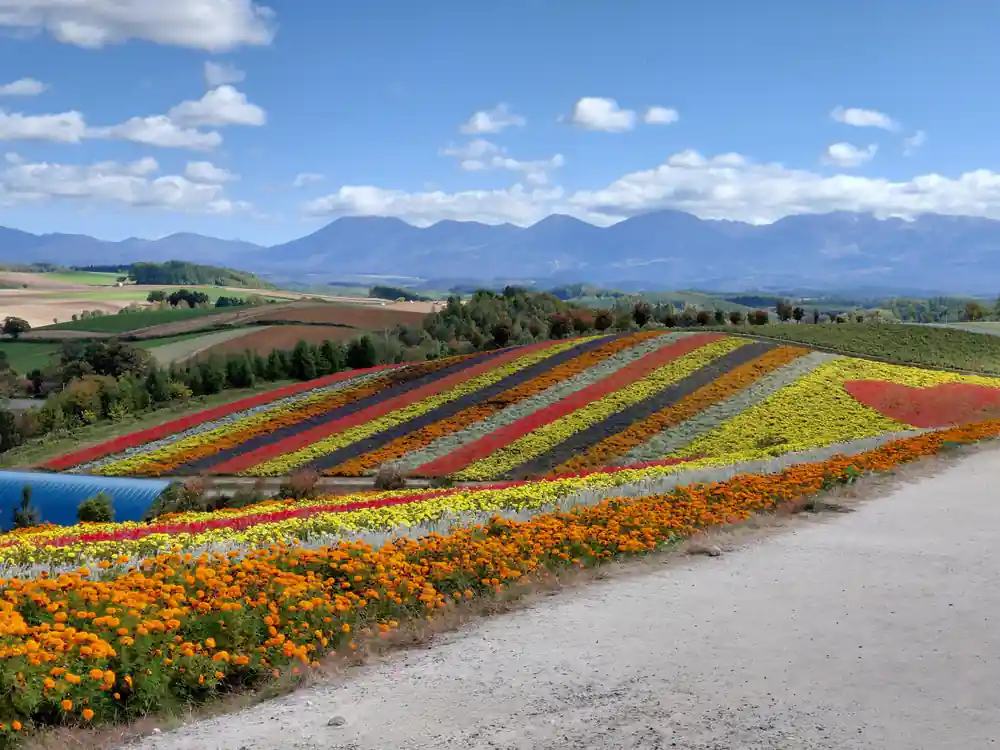
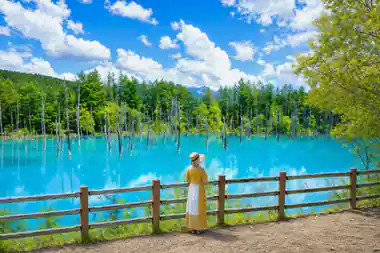
The Colored Hokkaido tour leaves Sapporo and spends a full day looping through the Furano and Biei countryside, with stops at Patchwork Road, the Shirogane Blue Pond, Shikisai-no-oka, a local restaurant and Farm Tomita before the coach turns back.[1] It starts from US$48, can be reserved now and paid later, and comes with free cancellation up to 24 hours in advance for a full refund.[1] A live guide travels with you in English, Chinese, Japanese and Korean.[1]
Out in the fields, payments split into two worlds. Indoor shops, farm visitor centres and larger restaurants usually handle cards without fuss. Open-air stalls, small farm gates and the stands beside a car park often do not, and the person behind the table may not have change for a large note. The answer is boring and it works: carry a modest amount of yen in small denominations, keep a card for the bigger buys, and treat that card as a backup rather than the plan.
You do not need a fortune. Think of the day's cash as covering a drink, an ice cream, a couple of small souvenirs and one thing you did not expect to want, with a little slack on top.
Finding cash between the stops
Sapporo is where to sort out cash. Convenience stores, banks, hotel front desks and the airport are the straightforward places to draw yen, and the machines there are used to foreign cards. Once the coach is out among the fields the options thin out quickly, and the stops are timed, so a hunt for an ATM eats into the minutes you would rather spend among the flowers.
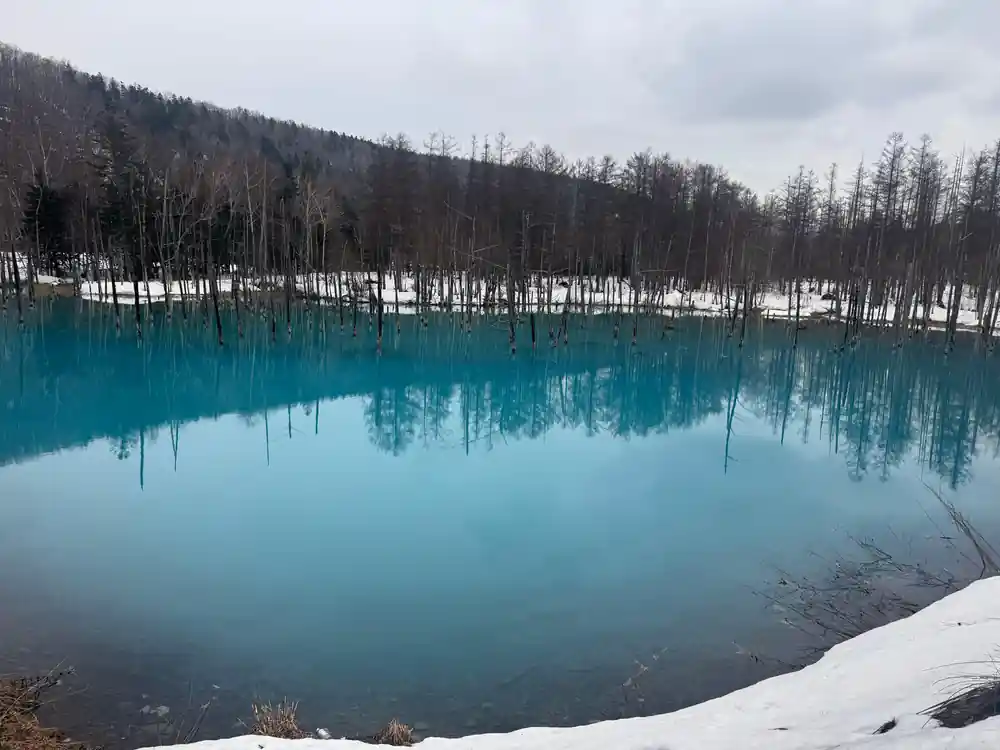
If you are travelling under your own steam, the timing is worth knowing. From Biei Station the Blue Pond is about 20 minutes by Dohoku Bus route 39, and from Sapporo it is about 1 hour 25 minutes by JR Limited Express to Asahikawa plus 60 to 70 minutes by bus.[5] Those buses run to a timetable, so buy what you like while you are standing in front of it rather than promising yourself a second visit.

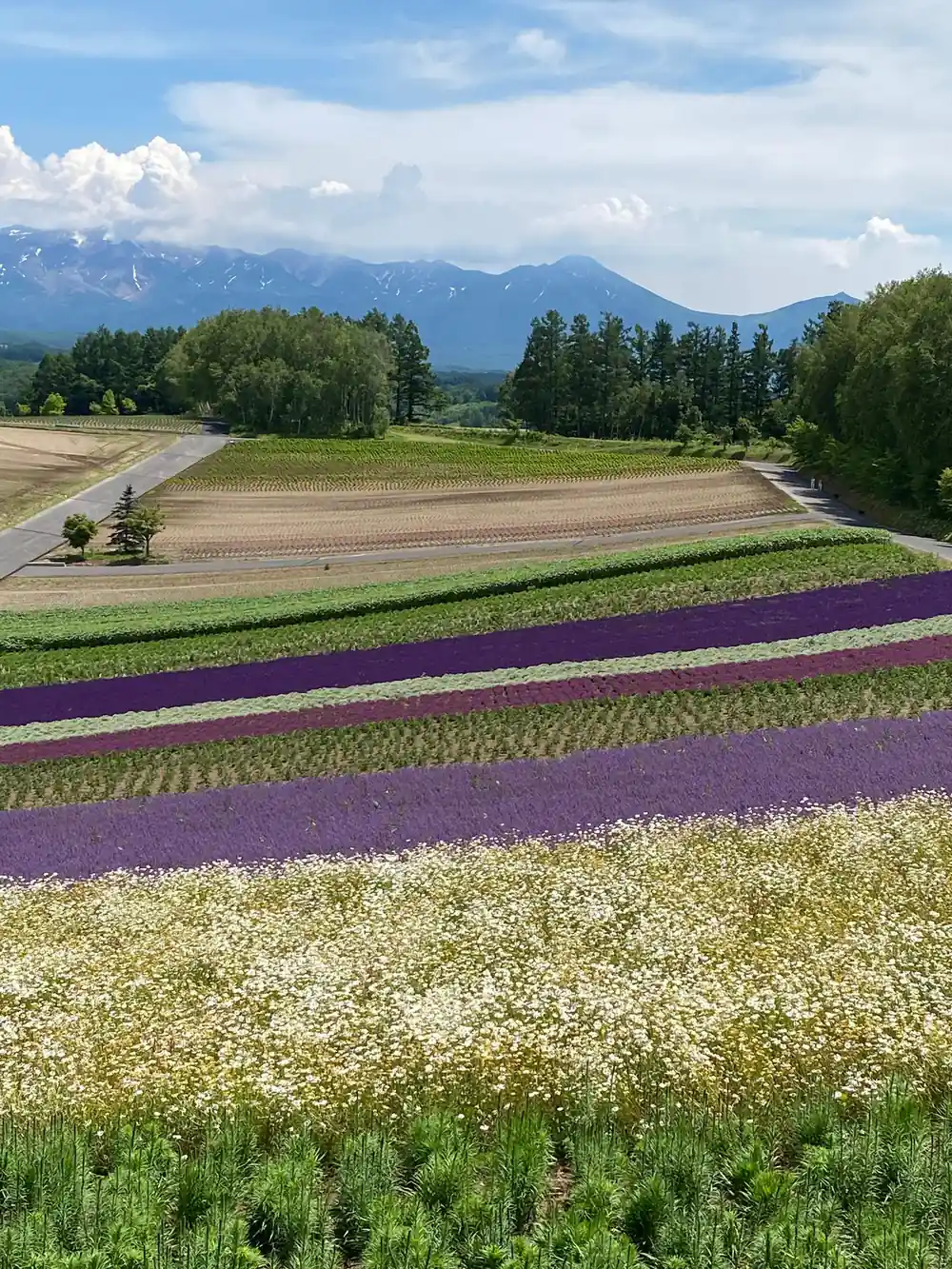
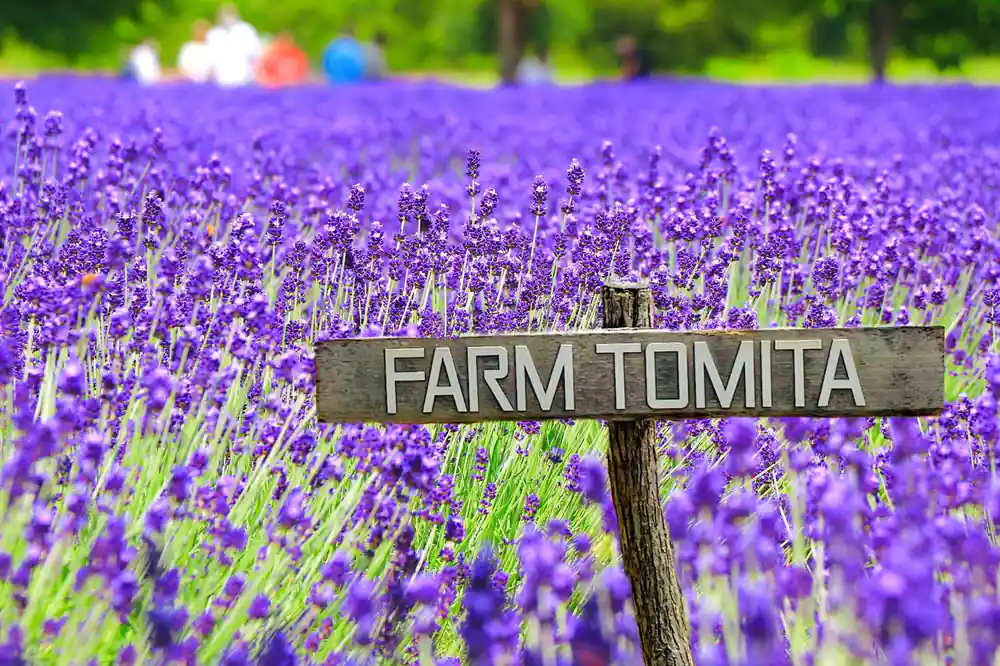
Lavender rows at a Furano farm, where a small cash purchase can beat waiting for a card machine.
What is actually made in Furano and Biei
This is farming country, and the souvenirs come out of the fields. Lavender is the headline: at Farm Tomita's Traditional Lavender Field the lavender blooms from late June to late July, with the best viewing season from early to mid-July.[2] Everything downstream of that flower, from dried bunches and sachets to oils, soaps and small cushions, is what most bags end up carrying home.
The rest comes from the crop rotation. Wheat is one of the four main crops in Biei's cycle, along with potatoes, beans and sugar beet, and those crops form part of the patchwork landscape on the hills.[6] Biei has a cold continental climate with warm summers and freezing winters.[7] On the shelves you will find flour and biscuits, potato snacks, bean sweets and beet sugar sitting alongside the lavender.
Shikisai-no-oka, another stop on the route, spreads its panoramic flower gardens across fifteen hectares of hillside outside Biei.[1][8] There is a shop and a cafe on site, and the planting changes through the season, so what sits on the shelves moves with the growing year.
Souvenirs you can carry out of Japan
A few habits keep a haul manageable. Check your own country's import rules before you buy, keep the receipts together in one envelope, and choose the shelf-stable version when you are unsure: lavender oil instead of a lavender plant, biscuits instead of a melon.
Weight and shape matter as much as paperwork. Glass bottles of wine or oil are heavy, ceramics need padding, and a boxed melon takes up most of a carry-on. Packing cubes and a folded tote bag make the difference between a tidy bag and a mess at the check-in desk.
If your day ends in Furano town rather than Sapporo, Furano Marche by the station, with its adjoining building, is an easy place to spend a last hour, with regional food, sweets and crafts under one roof. Opening hours there are worth checking before you build an afternoon around it, and the smaller shops keep their own schedules.
from US$48
The Colored Hokkaido day tour from Sapporo, rated 4.56 from 122 reviews, with guides in English, Chinese, Japanese and Korean.[1]
What sells out in peak season
When the lavender is out at Farm Tomita's Traditional Lavender Field, from late June to late July, the farm shops are at their liveliest.[2] Dried bunches, sachets and lavender soft serve are the things people reach for first. Buying the item you like when you first see it is safer than assuming it will still be on the shelf at the next stop.
Food follows its own calendar. Melon turns up in the summer itineraries too: a Furano bus tour built around lavender and an all-you-can-eat melon buffet starts from US$46.[9] Farm stands along the way sell it by the slice as well, which is the cheapest way to try it. If you want a melon to take home, buy it late in the day and keep it out of the sun.
None of this needs to be complicated. A rough budget, a little cash and a bag with room left in it will carry you through the day comfortably.
A cash and card plan for tour day
Think in two pockets. In one, a card and a backup card. In the other, yen in small notes and a handful of coins. Coins are genuinely useful in Japan, for lockers, vending machines and the little trays at the till, so do not leave them in the hotel room.
Draw cash before the tour, not during it. The day runs for 1 day with a fixed set of stops, so time at each place is short.[1] A farm shop till moves faster than an ATM that may not be there at all.
Guides on this tour speak English, Chinese, Japanese and Korean, so asking whether a stall takes cards is easy.[1] It is a normal question in a country where both habits sit side by side.
Getting fresh purchases home
Fresh items need a plan. Cut flowers, potted plants, fruit and dairy are the awkward ones, and a warm coach seat is unkind to all of them. If you are set on a boxed melon, buy it at the last stop of the day rather than the first.
Farm Tomita is the last stop on the Colored Hokkaido route before the coach heads back towards Sapporo, so the heaviest and most fragile buys can ride home with you instead of being carried around all day.[1] Shikisai-no-oka comes earlier, which makes it the place for small, light things.[1]
If you would rather not carry anything on a train or bus, private transfers between Sapporo city and New Chitose Airport start from US$149[10], another airport transfer option starts from US$99[11], a one-way airport transfer starts from US$150[12] and a transfer between the airport and Sapporo city starts from US$177.[13] From Furano, a private transfer to the airport starts from US$363.[14]
From-prices of Sapporo day tours
From-prices in US dollars for Sapporo day tour listings that reach the Blue Pond and the Furano flower fields.[1][3][4][15]
Day tour from-prices per person
From-prices in US dollars for these tour listings.[1][3][4][15]
When to plan your Furano and Biei shopping
Money on the day
Cash out in Sapporo
Convenience stores, banks, hotel front desks and the airport are the easy places to draw yen. Once the coach leaves the city, options thin out fast.
Split your money
Keep a card, a backup card and your yen in different pockets, so one lost item does not end the day's shopping.
Buy the light things early
Shikisai-no-oka comes before Farm Tomita on the route, so take small souvenirs there and leave bulky buys for later.[1]
Heavy buys last
Farm Tomita is the last stop before the coach heads back, which suits boxed food and anything fragile.[1]
Ask about cards
Guides speak English, Chinese, Japanese and Korean, so it is easy to ask whether a stall takes cards before you commit.[1]
Furano flowers, Biei blue water and one long day from Sapporo
from US$48Reserve now & pay later