At a glance
- The Blue Pond was created accidentally in 1988, when erosion control dams were built along the Biei River to protect against mudflows from the active volcano Tokachidake.[1]
- The blue comes from suspended aluminium hydroxide colloids that scatter blue light, a process called Rayleigh scattering, the same effect that makes the sky look blue.[2]
- The pond in Biei appeared in Apple's WWDC 2012 MacBook Pro with Retina Display introduction, a moment recorded on a photographer's blog.[3]
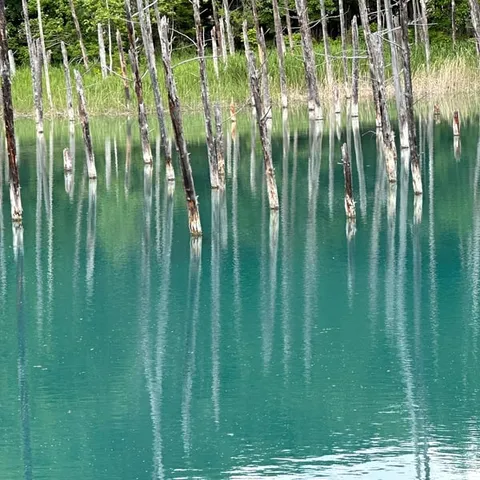
- Dead Japanese larch and white birch trees still stand in the water, the remains of a patch of forest that was once dry land and now looks like a sculpture garden.[4]
- The Colored Hokkaido tour runs for 1 day from US$48, with guides speaking English, Chinese, Japanese and Korean and free cancellation up to 24 hours in advance.[5]
- Top choice Furano, Biei and Blue Pond from US$48 Rating4.56 from 122 reviews[5]LanguagesEnglish, Chinese, Japanese, Korean[5]Duration1 day[5]CancellationFree cancellation up to 24 hours[5] Check availability
- Biei Best 5 Photo Spots from US$60 Rating4.72 from 77 reviews[6]LanguagesEnglish, Korean, Chinese[6]Duration10 to 10.5 hours[6]CancellationFree cancellation up to 24 hours[6] See this tour
- Zoo, Waterfall, Blue Pond from US$48 Rating4.49 from 47 reviews[7]LanguagesChinese, English[7]Duration9 hours to 1 day[7]CancellationFree cancellation up to 24 hours[7] See this tour
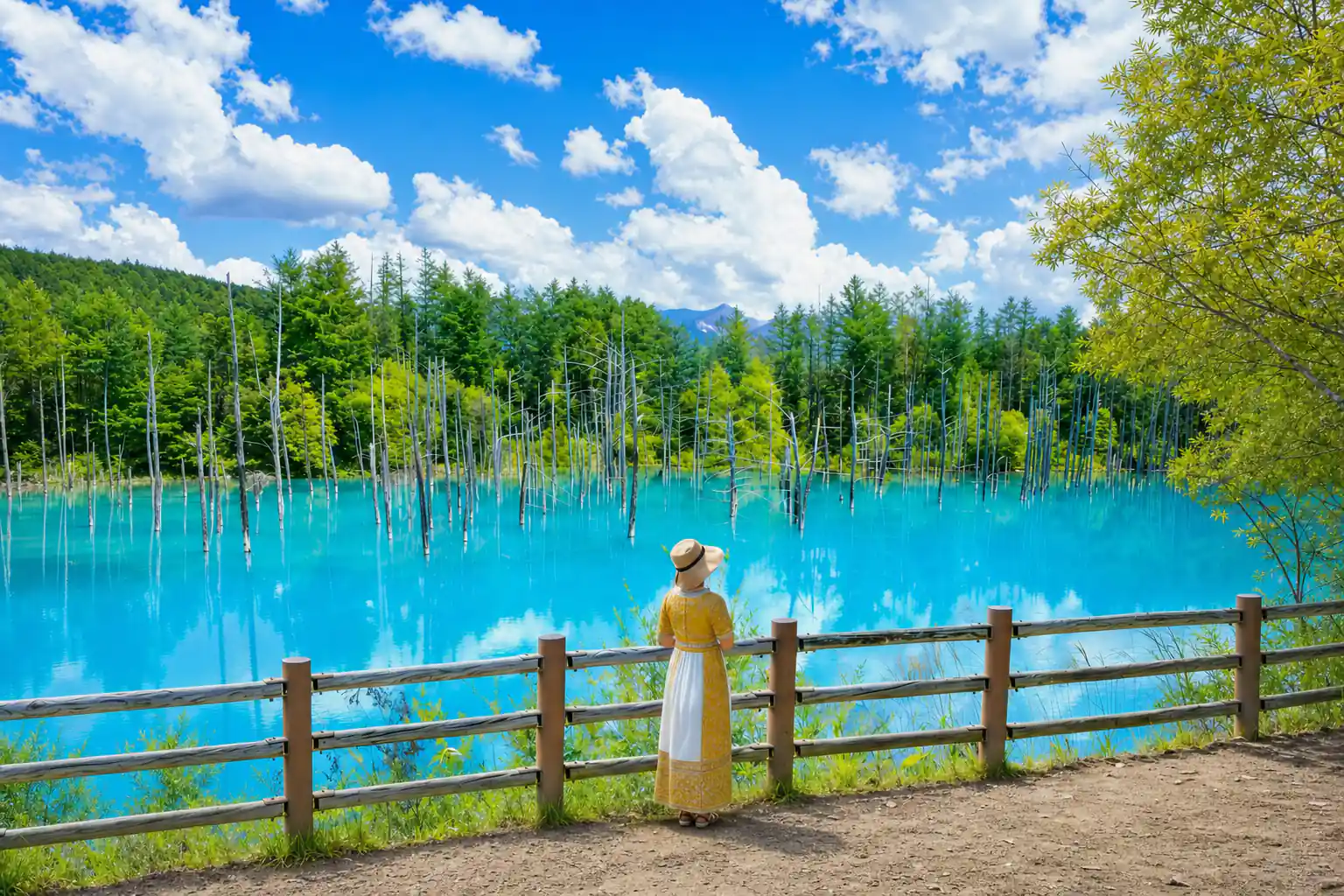
The pond was created accidentally. In 1988, erosion control dams were built along the Biei River to protect against mudflows from the active volcano Tokachidake.
Is the Blue Pond worth a day from Sapporo?
Before setting off
On the day
- Blue reads strongest in bright light; overcast days turn the water grey
- Biei has warm summers and freezing winters, so dress for the season[10]
- The pond is a short walk from the road, so allow a few minutes on foot
- Stay on the paths and out of the planted rows around the flower fields
A Pond That Nobody Knew
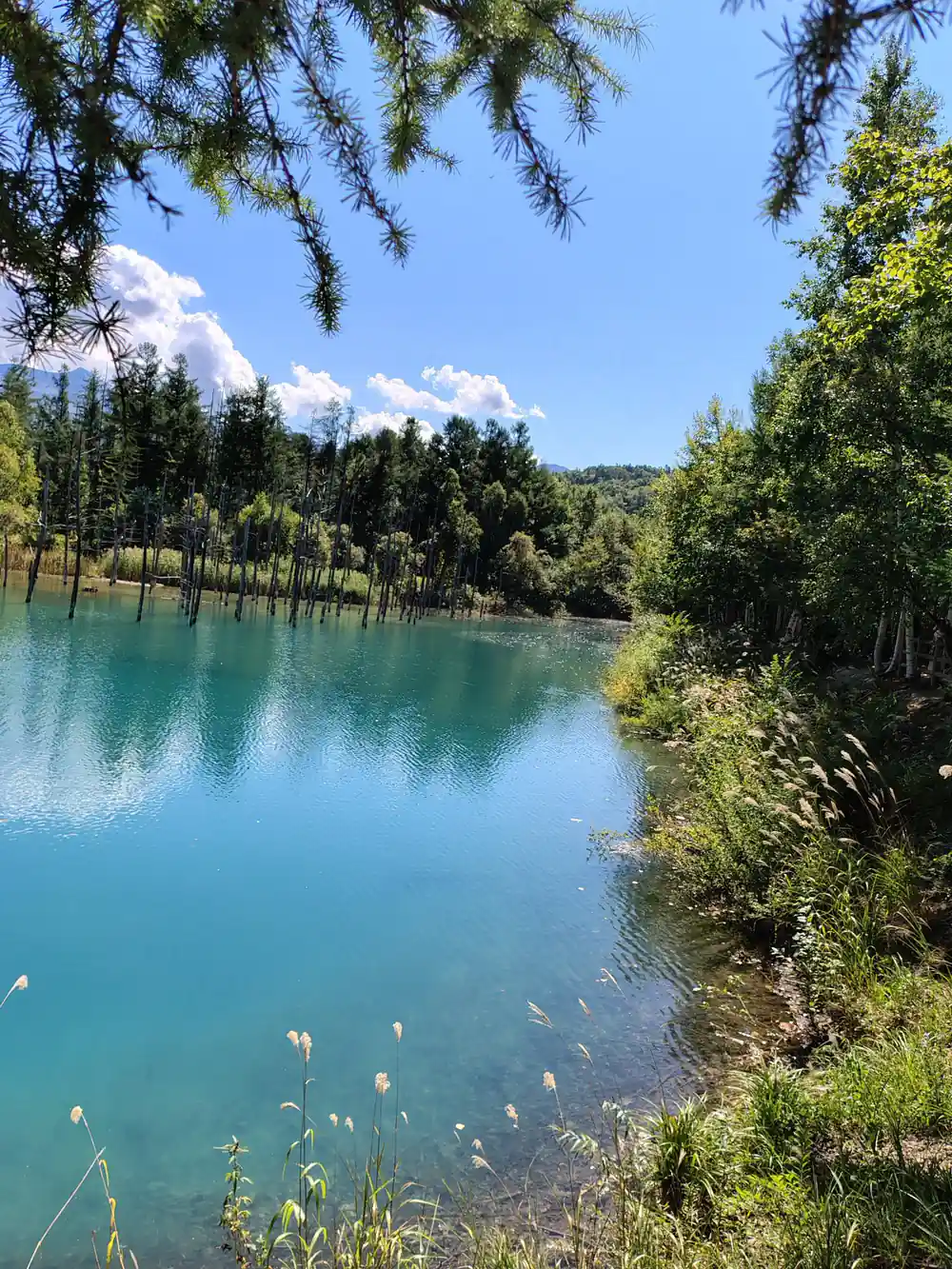
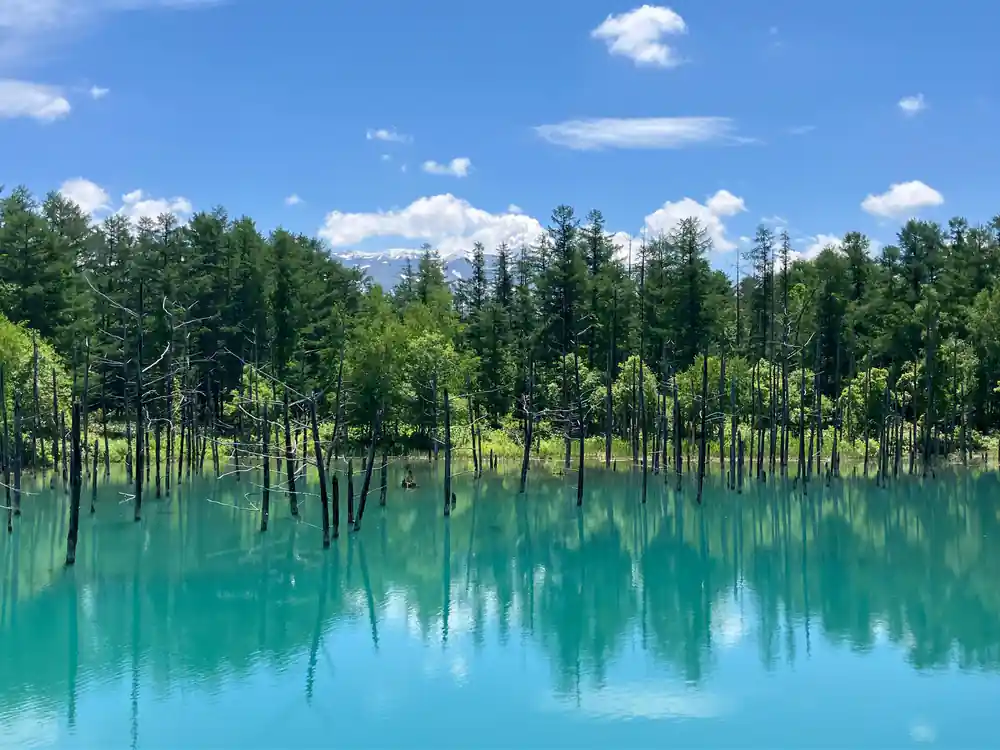
The Shirogane Blue Pond sits in a quiet fold of land above Biei, in the hills of central Hokkaido. It was created accidentally in 1988, when erosion control dams were built along the Biei River to protect against mudflows from the active volcano Tokachidake.[1] Dead Japanese larch and white birch trees still stand in the water. They are the remains of a patch of forest that was once dry land and now stands in the blue water like a sculpture garden.[4] The bank is short, the water is still, and on a grey day the whole scene looks almost monochrome.
Nothing here was designed as an attraction. Biei is a farming town with a population of 9,775 as of 31 December 2020, and the hills around it are worked in a crop rotation of wheat, potatoes, beans and sugar beet.[11][12] The pond arrived as one more piece of practical engineering in that working landscape, built to hold back mud and water rather than to be looked at. It was, at first, simply a place people drove past on the way to somewhere else.
That is worth remembering when you stand on the bank with a camera. The view that travels around the world arrived by accident, and the hills behind it are still doing their ordinary job.
The Photographer Who Saw What Others Missed
The colour is the first thing anyone asks about. The pond is blue because suspended aluminium hydroxide colloids in the water scatter blue light, a process called Rayleigh scattering, the same effect that makes the sky look blue.[2] Those particles come from volcanic minerals, and they go on working whatever the weather does. The blue deepens and fades through the day, turning milky in flat light and startlingly bright when the sun comes through, and photographers who worked this valley learned to wait for the version they wanted.
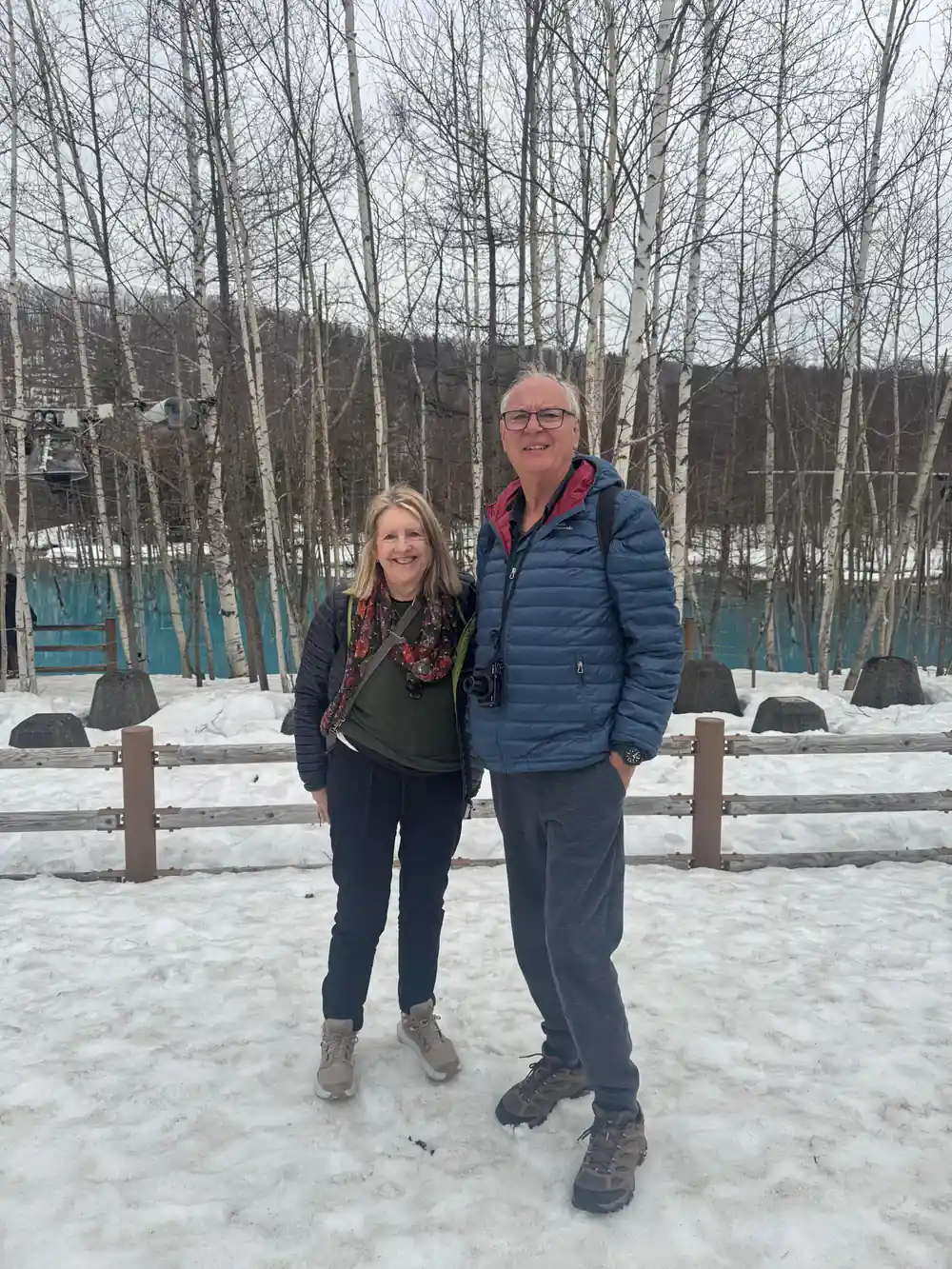
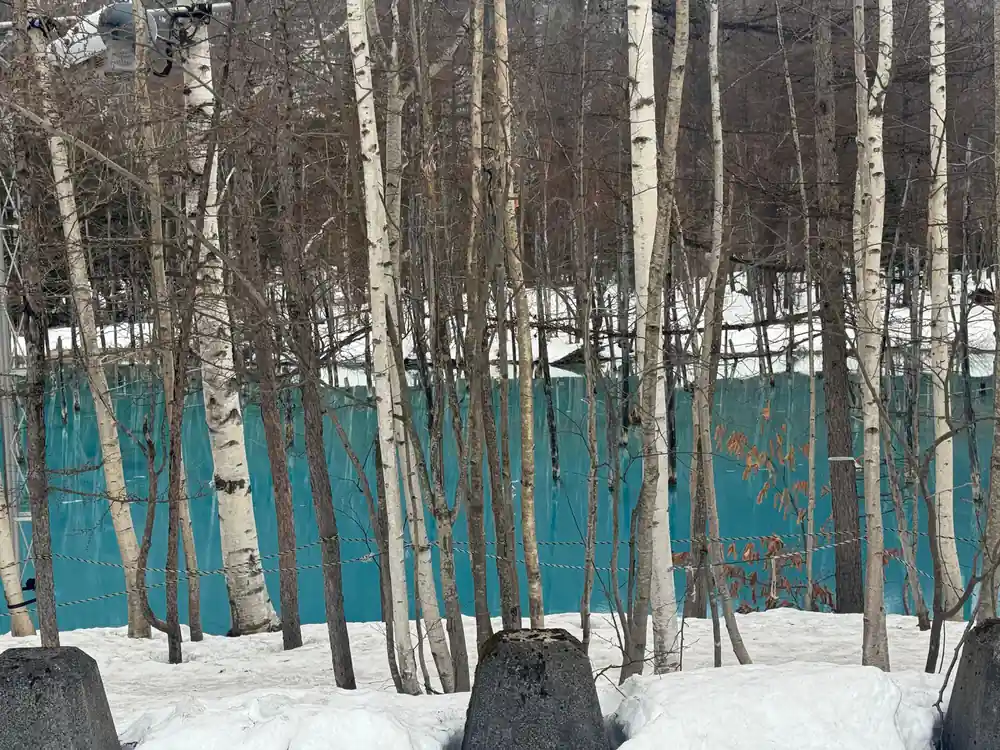
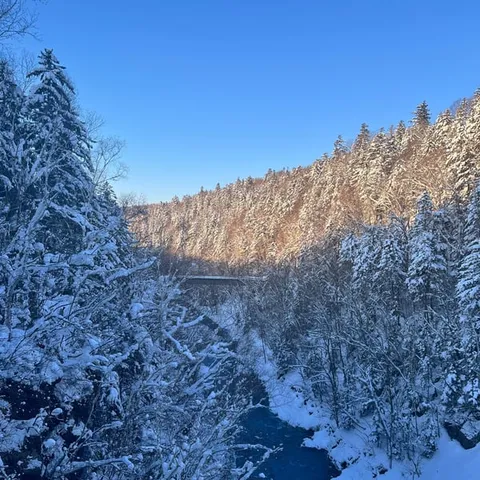
Winter changes everything. Biei has a cold continental climate with warm summers and freezing winters, so the pond can sit under snow and ice while the dead trees stand through it.[10] A low sun, bare larch, white banks and still water make a picture that has almost nothing in common with the summer scene. The two versions look like different places, and that is what a camera can carry away from here.
Dead larch and birch standing in the blue water of the Shirogane Blue Pond.
The Image That Reached a Global Audience
The moment the pond left the local guidebooks and turned up on screens elsewhere is recorded on a photographer's blog. The Blue Pond in Biei appeared in Apple's WWDC 2012 MacBook Pro with Retina Display introduction.[3] A bright, high-resolution screen showing still blue water and silver trees does a particular kind of work. It is calm, it is slightly strange, and it gives no clue where in the world it was taken. A scene with no context is easy to wonder about.
Once a scene has a name, it can be found, and this one is not hard to reach. From Biei Station the pond is about 20 minutes by Dohoku Bus route 39, and from Sapporo it is about 1 hour 25 minutes by JR Limited Express to Asahikawa plus 60 to 70 minutes by bus.[9] That is a long but doable day out of the city, and it fits neatly into an itinerary built around the Biei and Furano hills. The pond is one stop on a route that people were already travelling.
Furano, Flowers and the Wider Area
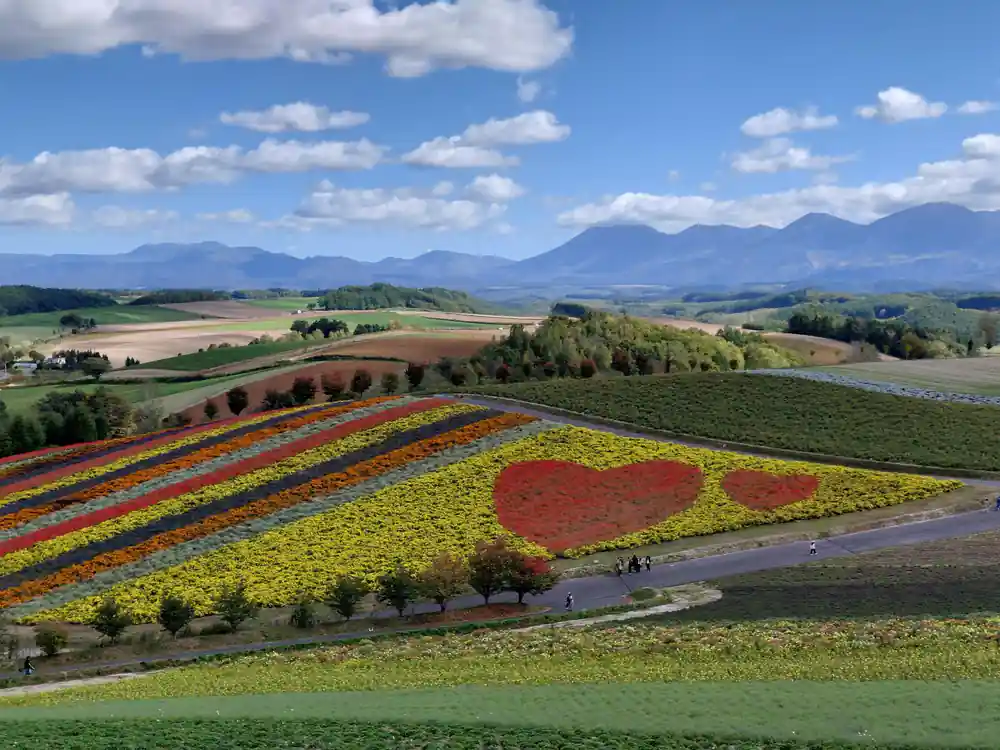
The pond is rarely the only stop once people are up here. Shikisai-no-oka is a set of panoramic flower gardens spread across fifteen hectares on the hills outside Biei.[13] At Farm Tomita, lavender in the Traditional Lavender Field blooms from late June to late July, with the best viewing season from early to mid-July.[14] Between them they fill the middle of a summer day, and both sit close to the same coach route.
The rest of the year those fields are working farmland, with wheat, potatoes, beans and sugar beet moving through the crop rotation that gives the hills their patchwork look.[12] A coach day from Sapporo ties several of these places together. The Colored Hokkaido tour stops at Patchwork Road, Shirogane Blue Pond, Shikisai No Oka, a local restaurant and Farm Tomita.[5] Between the stops you get the part no photograph shows: the long, folded, green country in between.
Spring and autumn are quieter, and the hills change through the season while the pond keeps its blue. If the flowers are the reason you came, midsummer is the window; if the blue water is the whole point, any month will do.
1988
Erosion control dams built along the Biei River to protect against mudflows from the active volcano Tokachidake created the pond by accident.[1]
What Tourism Left Behind
A place that turns up on a screen becomes a place people want to stand in. The practical result at the pond is a short walk from the road, a lot of cameras pointed the same way, and a scene small enough to take in at a glance. In winter, when the trees are lit, the bank fills up quickly and the same few metres of ground get shared by everyone who came for the shot.
The fields that make the photographs are someone's summer work. Keep to paths and gravel paths, stay out of planted rows, carry your rubbish away with you, and give way to the people who live and farm here. The view is the easy part; the goodwill of the neighbours is worth more than the picture.
Social Media and the Slow Spread of a Photo
Winter gave the pond a second life. The Blue Pond winter illumination runs from October 24, 2025 to April 22, 2026, with the lights on until 9:00 PM.[8] Lighting starts at 5:00 PM in October, November and January, at 4:30 PM in December, at 5:30 PM in February, at 6:00 PM in March and at 6:30 PM in April.[8] Snow, uplights and dark water make a version of the pond that looks nothing like a summer postcard, and it keeps photographers coming back in the coldest months.
A photograph spreads when it is easy to recognise and easy to copy, and this one has a simple shape: blue water, bare trees, snow on the bank. The valley offers more of the same. Shirahige Falls, a short way up the road, drops approximately 30 meters into the Biei River and is a rare subterranean stream waterfall, with its water flowing directly from cracks in the rock face.[15] Visitors who come for one blue pool usually end up photographing the waterfall too, and if you bring a tripod expect to share the bank with other photographers, all after the same reflection.
Planning Your Visit Today
Getting there on public transport is possible but slow. From Biei Station the pond is about 20 minutes by Dohoku Bus route 39, and from Sapporo it is about 1 hour 25 minutes by JR Limited Express to Asahikawa plus 60 to 70 minutes by bus.[9] A coach tour takes the timetable problem away. The Colored Hokkaido: Furano Flower and Biei Blue Pond tour from Sapporo runs for 1 day, costs from US$48, has guides speaking English, Chinese, Japanese and Korean, and offers free cancellation up to 24 hours in advance and reserve now and pay later.[5]
Choose your season by what you want to see. Lavender at Farm Tomita's Traditional Lavender Field is in bloom from late June to late July, best in early to mid-July.[14] The winter illumination runs from October 24, 2025 to April 22, 2026.[8] Biei has a cold continental climate with warm summers and freezing winters, so pack for the season you book, and expect the pond to look different from every photograph you have seen of it.[10]
Whatever month you choose, the stop itself is short: a look, a few photographs, a walk back to the coach. It is the drive there and back, and the company of the hills, that fills the day.
From-prices for Blue Pond and Biei day tours
From-prices in US dollars for these day tours to the Blue Pond and the Biei and Furano area.[5][6][16][17][18]
What a Biei and Furano day out costs
Amounts are from-prices in US dollars for these listings. No separate child rate is published, so the child figure repeats the from-price.[5][6][7][16]
When to go to the Blue Pond
Plan your Blue Pond trip
Pick a season
Lavender peaks in midsummer, the illumination runs in winter, and the pond itself holds its colour year round.
Choose how you travel
A coach day from Sapporo takes the timetable guesswork out of reaching Biei and Furano.
Book your seat
The Colored Hokkaido tour from Sapporo can be reserved now and paid later, with free cancellation up to 24 hours in advance.[5]
Pack for the light
Blue reads strongest in bright light. Bring a layer for the wind, and something waterproof for the hills.
Combine your stops
Pair the pond with Shirahige Falls, Shikisai-no-oka and Farm Tomita on the same day out from Sapporo.
Ride from Sapporo to Furano, Biei and the Blue Pond
from US$48Reserve now & pay later